
 EN
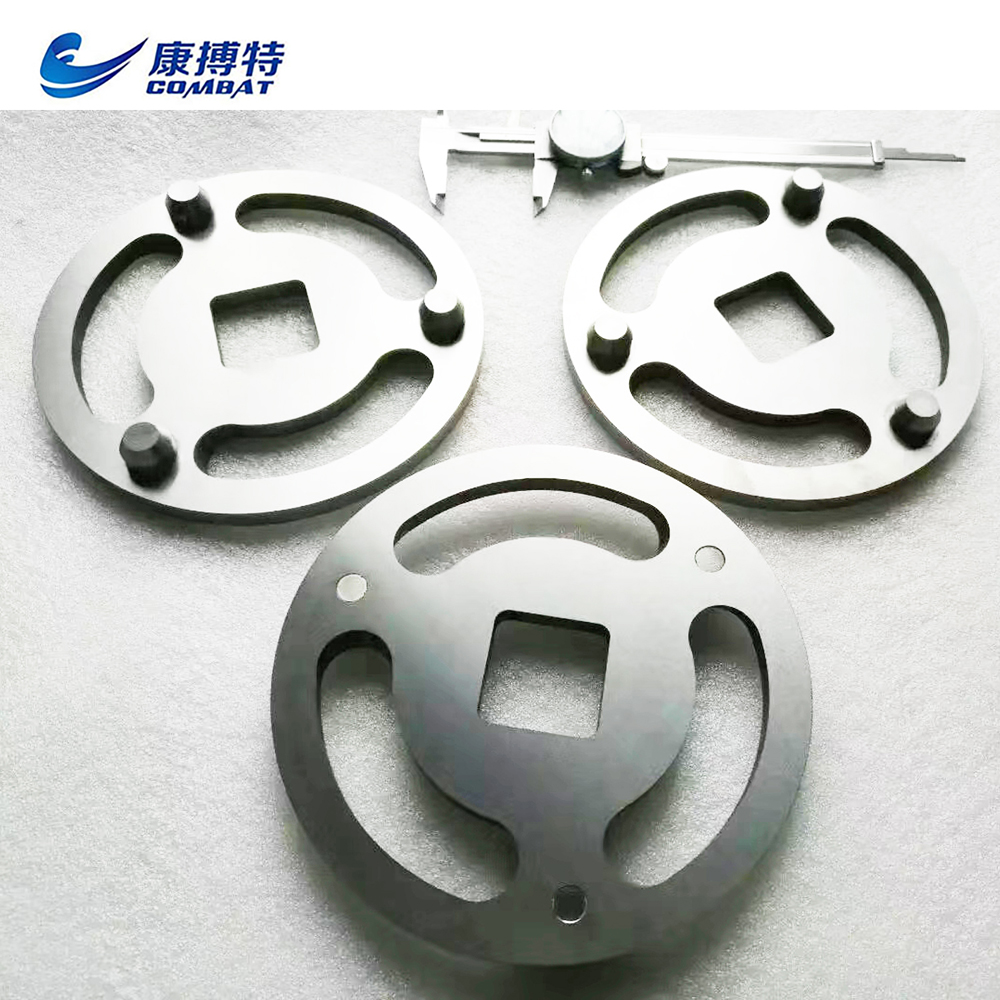
When engineers and procurement specialists evaluate materials for high-wear environments, few options match the durability and mechanical consistency of tungsten carbide alloy. This material has become a cornerstone in industries where component surfaces face relentless abrasion, impact, and erosion. Understanding how it performs in wear resistance applications requires looking beyond surface-level hardness ratings and examining the full mechanical and microstructural picture that makes this alloy so effective under demanding conditions.

Tungsten carbide alloy is not a single uniform material but rather a family of composite structures, typically combining tungsten carbide particles with a metallic binder such as cobalt or nickel. This combination produces a material that balances extreme hardness with sufficient toughness to survive real-world operating conditions. In wear resistance applications specifically, this balance is what separates tungsten carbide alloy from purely brittle ceramics or softer metallic alternatives. The following sections explore the mechanisms, performance characteristics, and application contexts that define how this alloy behaves when wear is the primary engineering challenge.
The Mechanical Foundation of Wear Resistance in Tungsten Carbide Alloy
Hardness as the Primary Wear Barrier
The wear resistance of tungsten carbide alloy begins with its exceptional hardness. On the Vickers scale, grades of tungsten carbide alloy typically range from 1200 to over 1800 HV, depending on grain size and binder content. This places it well above tool steels, chrome alloys, and most engineering ceramics in practical hardness comparisons. Hardness directly resists the micro-cutting and plowing mechanisms that cause abrasive wear, which is why tungsten carbide alloy outperforms softer materials in sliding and scratching contact scenarios.
The tungsten carbide grains themselves carry most of the load-bearing hardness, while the metallic binder phase holds the structure together and prevents crack propagation. This dual-phase architecture means that tungsten carbide alloy does not simply resist wear through hardness alone but also through a controlled energy-absorption mechanism. When abrasive particles contact the surface, the hard carbide grains deflect and fracture the abrasive rather than allowing it to cut deeply into the substrate.
Grain size plays a significant role in determining how tungsten carbide alloy performs in specific wear scenarios. Finer grain structures tend to produce higher hardness and better resistance to fine abrasive particles, while coarser grain structures offer improved toughness against impact-driven wear. Selecting the right grain size for a given application is therefore a critical engineering decision that directly affects wear life.
Fracture Toughness and Its Role in Sustained Performance
Hardness alone does not guarantee long service life in wear resistance applications. A material that is extremely hard but brittle will chip, crack, and spall under cyclic loading or impact, leading to accelerated material loss. Tungsten carbide alloy addresses this limitation through its fracture toughness, which is significantly higher than that of monolithic ceramics. The metallic binder phase, typically cobalt, provides ductility that absorbs energy at crack tips and prevents catastrophic fracture.
In applications involving both abrasion and impact, such as mining equipment, crusher liners, and drilling components, this toughness is what allows tungsten carbide alloy to maintain dimensional integrity over extended service periods. The material resists not only the gradual removal of surface material through abrasion but also the sudden material loss caused by impact-induced cracking. This combination is rare among hard materials and is a primary reason why tungsten carbide alloy is specified for the most demanding wear environments.
The ratio of binder content to carbide content can be adjusted to shift the balance between hardness and toughness. Higher binder content increases toughness at some cost to hardness, while lower binder content maximizes hardness for purely abrasive environments. This tunability makes tungsten carbide alloy a versatile solution across a wide spectrum of wear resistance applications.
Performance Across Different Wear Mechanisms
Abrasive Wear Resistance
Abrasive wear is the most common form of material degradation in industrial equipment, occurring when hard particles or rough surfaces slide against a component and progressively remove material. Tungsten carbide alloy excels in this regime because its carbide grains are harder than most naturally occurring abrasives, including quartz, silica, and alumina. When these particles contact a tungsten carbide alloy surface, they are unable to cut effectively into the material, resulting in dramatically lower wear rates compared to steel or cast iron alternatives.
In two-body abrasion, where a hard surface slides against the component, tungsten carbide alloy demonstrates wear rates that can be ten to one hundred times lower than hardened steel, depending on the specific conditions. In three-body abrasion, where loose abrasive particles are trapped between two surfaces, the performance advantage remains substantial, though the exact ratio depends on particle hardness, size, and applied load. These performance differences translate directly into longer component life and reduced maintenance frequency in production environments.
Industries such as aggregate processing, cement production, and mineral extraction rely heavily on tungsten carbide alloy for components like wear plates, nozzles, pump liners, and cutting inserts precisely because of this abrasive wear resistance. The material's ability to maintain tight dimensional tolerances over extended service periods also reduces process variability, which is a significant operational benefit beyond simple cost savings.
Erosive and Sliding Wear Performance
Erosive wear occurs when a stream of particles or fluid impacts a surface at velocity, progressively removing material through repeated micro-impact events. Tungsten carbide alloy performs exceptionally well in erosive wear conditions, particularly at low to moderate impact angles where abrasive cutting mechanisms dominate. The high hardness of the carbide phase prevents individual particles from embedding or cutting deeply, while the toughness of the binder phase resists the fatigue-driven material removal that occurs under repeated impact.
At high impact angles, where erosion transitions toward a more impact-dominated mechanism, the performance of tungsten carbide alloy depends more heavily on its fracture toughness. Grades with higher binder content tend to perform better under these conditions, as the increased ductility absorbs impact energy more effectively. This is why selecting the appropriate grade of tungsten carbide alloy for a specific erosive environment requires careful analysis of particle velocity, impact angle, and particle hardness.
Sliding wear, which occurs in seals, bearings, and guide components, is another area where tungsten carbide alloy demonstrates strong performance. Its low coefficient of friction against many counterface materials, combined with its resistance to adhesive wear mechanisms, makes it suitable for precision sliding contact applications. The material maintains surface finish over extended service periods, which is critical in sealing applications where surface degradation leads to leakage and system failure.
Application Contexts Where Tungsten Carbide Alloy Delivers Maximum Value
Mining, Drilling, and Cutting Tools
The mining and drilling industries represent some of the most severe wear environments encountered in industrial practice. Rock cutting, ore processing, and drilling operations expose components to continuous abrasion, impact, and sometimes corrosive conditions simultaneously. Tungsten carbide alloy has been the material of choice for drill bits, cutting inserts, and wear-facing components in these industries for decades, and its dominance reflects the genuine performance advantages it delivers in these conditions.
In rotary drilling, tungsten carbide alloy inserts embedded in drill bits maintain their cutting geometry far longer than steel alternatives, reducing the frequency of bit changes and the associated downtime. In tunnel boring and road milling, tungsten carbide alloy picks and cutters resist the combined abrasion and impact of rock and aggregate contact, enabling continuous operation over extended periods. The economic value of this wear resistance is substantial when measured against the cost of equipment downtime and component replacement.
The ability of tungsten carbide alloy to be precision-ground and shaped into complex geometries also enables optimized cutting tool designs that improve process efficiency. This manufacturability, combined with wear resistance, makes it a uniquely practical material for high-performance tooling applications.
Fluid Handling and Process Equipment
Pumps, valves, nozzles, and flow control components in industries handling abrasive slurries, high-velocity fluids, or corrosive media benefit significantly from tungsten carbide alloy construction. In slurry pump applications, impellers and liners made from tungsten carbide alloy maintain their hydraulic geometry over extended service periods, preserving pump efficiency and reducing energy consumption. This is a measurable operational benefit that justifies the higher initial material cost.
Spray nozzles used in sandblasting, thermal spraying, and industrial cleaning applications are another area where tungsten carbide alloy delivers clear performance advantages. The bore geometry of a nozzle directly affects spray pattern and process quality, and tungsten carbide alloy nozzles maintain their bore dimensions far longer than steel or ceramic alternatives. This dimensional stability translates into consistent process output and reduced scrap rates in precision applications.
In valve seats and sealing surfaces exposed to abrasive media, tungsten carbide alloy provides the combination of hardness and surface finish retention needed to maintain reliable sealing performance. The material's resistance to both abrasive wear and corrosion in many chemical environments makes it suitable for demanding process industry applications where component failure has significant safety or production consequences.
Factors That Influence Wear Performance in Service
Grade Selection and Microstructural Variables
Not all tungsten carbide alloy grades perform equally in every wear resistance application. The specific combination of carbide grain size, binder type, and binder content determines the wear behavior of a given grade in a specific environment. Engineers specifying tungsten carbide alloy for wear applications must match the grade to the dominant wear mechanism, the severity of the operating conditions, and any secondary requirements such as corrosion resistance or thermal stability.
Cobalt-bonded tungsten carbide alloy offers the best combination of hardness and toughness for most wear applications and is the most widely used grade family. Nickel-bonded grades provide improved corrosion resistance in acidic or oxidizing environments at some cost to toughness. Mixed binder systems and alternative carbide additions such as titanium carbide or tantalum carbide can further tailor the performance profile for specific application requirements.
The manufacturing process also influences wear performance. Sintering conditions, powder quality, and post-processing steps such as grinding and coating all affect the final microstructure and surface condition of tungsten carbide alloy components. Consistent manufacturing quality is essential to achieving predictable wear life in service, which is why sourcing from qualified suppliers with documented process controls is important for critical wear applications.
Operating Conditions and Environmental Factors
The wear performance of tungsten carbide alloy in service is not determined solely by the material itself but also by the operating conditions it encounters. Temperature, contact stress, sliding speed, and the nature of the abrasive or erosive medium all influence how quickly material is removed and how long a component will last. Understanding these variables is essential for accurate service life prediction and cost-benefit analysis.
At elevated temperatures, the binder phase in tungsten carbide alloy can soften, reducing the support it provides to the carbide grains and potentially accelerating wear. For high-temperature wear applications, grades with higher melting point binders or additional carbide phases that improve thermal stability should be considered. In corrosive environments, the binder phase is often the weak point, as it is more susceptible to chemical attack than the carbide phase, which can lead to binder leaching and accelerated grain pullout.
Lubrication conditions also affect wear performance significantly. In dry sliding contact, tungsten carbide alloy relies entirely on its hardness and surface finish to resist wear. In lubricated conditions, the material's ability to maintain a smooth surface finish supports hydrodynamic or boundary lubrication regimes that further reduce wear rates. Designing systems to maintain adequate lubrication where possible can substantially extend the service life of tungsten carbide alloy components.
FAQ
What makes tungsten carbide alloy more wear-resistant than hardened steel?
Tungsten carbide alloy achieves significantly higher hardness than even the most heavily heat-treated steels, with Vickers hardness values typically two to four times greater. This hardness directly resists the micro-cutting and plowing mechanisms that cause abrasive wear. Additionally, the dual-phase microstructure of tungsten carbide alloy, combining hard carbide grains with a tough metallic binder, provides a level of fracture resistance that prevents the chipping and spalling that would occur in a purely brittle hard material. The result is a material that resists both gradual abrasive removal and sudden impact-driven material loss far more effectively than hardened steel.
How does binder content affect the wear resistance of tungsten carbide alloy?
Binder content controls the balance between hardness and toughness in tungsten carbide alloy. Lower binder content, typically below ten percent by weight, produces higher hardness and better resistance to fine abrasive wear but reduces toughness and impact resistance. Higher binder content, above fifteen percent, improves toughness and impact resistance but reduces hardness and abrasive wear resistance. For applications involving pure abrasion with minimal impact, low-binder grades are preferred. For applications combining abrasion and impact, such as mining and drilling, intermediate binder content grades typically offer the best overall service life.
Can tungsten carbide alloy be used in corrosive wear environments?
Yes, tungsten carbide alloy can perform well in corrosive wear environments, but grade selection is critical. Standard cobalt-bonded grades are susceptible to cobalt leaching in acidic conditions, which weakens the binder phase and accelerates wear. For corrosive environments, nickel-bonded tungsten carbide alloy grades offer significantly better chemical resistance while maintaining most of the hardness and wear resistance of cobalt-bonded grades. In highly aggressive chemical environments, additional surface treatments or coatings may be applied to further protect the binder phase. Proper grade selection based on the specific corrosive medium is essential for achieving acceptable service life.
How does tungsten carbide alloy compare to ceramics in wear resistance applications?
Tungsten carbide alloy and engineering ceramics such as alumina or silicon carbide both offer high hardness, but they differ significantly in fracture toughness. Ceramics are generally more brittle and prone to catastrophic fracture under impact or thermal shock, which limits their use in applications involving dynamic loading. Tungsten carbide alloy provides comparable or superior hardness in many grades while offering substantially higher fracture toughness, making it more reliable in applications where both abrasion and impact are present. In purely abrasive, low-impact environments, some ceramics can compete with tungsten carbide alloy on wear resistance, but the broader applicability and greater reliability of tungsten carbide alloy under mixed loading conditions make it the preferred choice for most industrial wear applications.
Table of Contents
- The Mechanical Foundation of Wear Resistance in Tungsten Carbide Alloy
- Performance Across Different Wear Mechanisms
- Application Contexts Where Tungsten Carbide Alloy Delivers Maximum Value
- Factors That Influence Wear Performance in Service
-
FAQ
- What makes tungsten carbide alloy more wear-resistant than hardened steel?
- How does binder content affect the wear resistance of tungsten carbide alloy?
- Can tungsten carbide alloy be used in corrosive wear environments?
- How does tungsten carbide alloy compare to ceramics in wear resistance applications?