
 EN
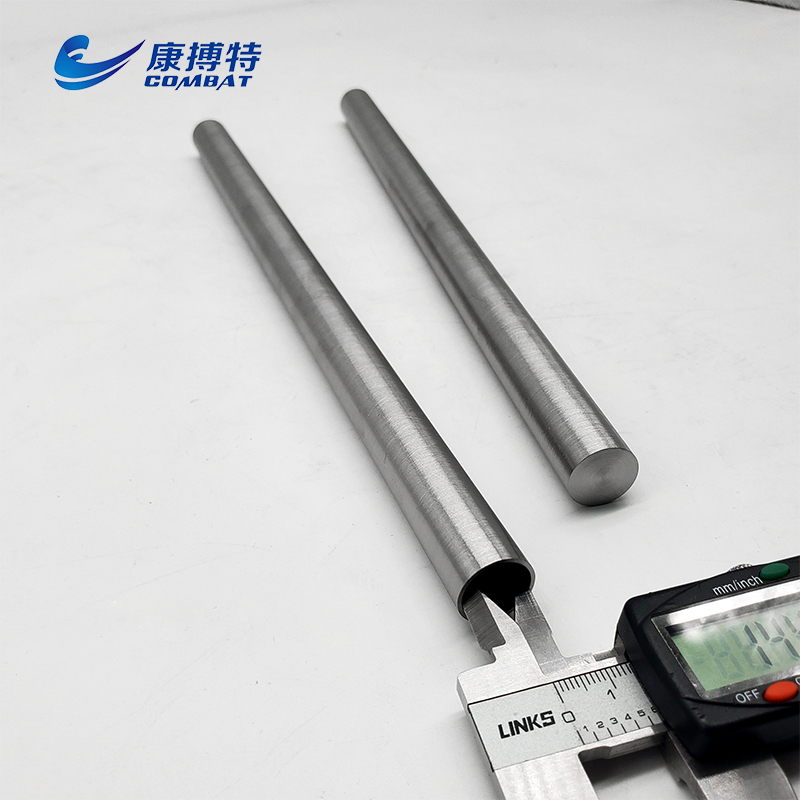
In the world of high-temperature industrial processing, the choice of materials is never arbitrary. Every component inside a furnace system must endure relentless thermal stress, chemical exposure, and mechanical pressure — often simultaneously. Among the many materials evaluated for these extreme conditions, the tungsten tube has consistently proven to be one of the most reliable and technically justified solutions available to engineers and system designers today.

Understanding why a tungsten tube is selected for furnace applications requires looking beyond surface-level material comparisons. It demands a closer examination of how tungsten behaves at extreme temperatures, how its structural and chemical properties align with furnace engineering requirements, and why alternatives consistently fall short when operating conditions push past the boundaries that other metals can safely tolerate. This article explores each of these dimensions in detail.
The Thermal Properties That Make a Tungsten Tube Indispensable
Melting Point and Structural Stability at Extreme Heat
Tungsten holds the highest melting point of all known metallic elements, sitting at approximately 3,422 degrees Celsius. This is not merely an impressive statistic — it is the defining reason why a tungsten tube remains structurally sound in environments where steel, molybdenum, and even many ceramics begin to deform, creep, or fail entirely. Furnace systems operating above 1,600 degrees Celsius require tubular components that maintain dimensional precision, and the tungsten tube delivers exactly that.
At temperatures where most metals lose their yield strength and begin to plastically deform under load, tungsten retains a remarkably high proportion of its original mechanical strength. This property, known as hot strength or high-temperature tensile retention, allows a tungsten tube to serve as a load-bearing or flow-directing element inside a furnace without requiring constant replacement or structural reinforcement from surrounding materials.
Engineers designing vacuum furnaces, sintering furnaces, and crystal growth systems routinely specify a tungsten tube for zones where temperature peaks are both sustained and predictable. The stability of tungsten at these temperatures reduces the frequency of maintenance shutdowns, which is a critical operational consideration in continuous industrial production environments.
Low Vapor Pressure and Contamination Control
One of the more technical but critically important properties of a tungsten tube is its exceptionally low vapor pressure at high temperatures. In furnace systems designed for semiconductor processing, powder metallurgy, or advanced alloy production, contamination from evaporating component materials can destroy an entire production batch. Tungsten's vapor pressure remains negligibly low even at temperatures above 2,000 degrees Celsius, making the tungsten tube a contamination-safe choice for sensitive thermal processes.
This characteristic distinguishes tungsten from metals like copper, nickel, or even certain grades of stainless steel, which begin releasing measurable vapor concentrations at much lower temperatures. When a furnace is processing materials where purity is non-negotiable — such as in the production of optical components, aerospace-grade alloys, or medical implant materials — the low vapor pressure of the tungsten tube ensures that the processed material remains uncontaminated throughout the thermal cycle.
Mechanical and Physical Advantages Inside Furnace Environments
High Density and Dimensional Integrity Under Thermal Cycling
A tungsten tube possesses an exceptionally high density, approximately 19.3 grams per cubic centimeter. While this makes it heavier than most alternative tube materials, it also contributes to the component's resistance to physical deformation under combined thermal and mechanical stress. In furnace systems that undergo repeated thermal cycling — heating up and cooling down as part of batch processing — materials with lower density and structural cohesion tend to develop micro-cracks, warping, or joint failures over time.
The tungsten tube maintains its geometric integrity through thousands of thermal cycles when properly fabricated and installed. This longevity translates directly to cost savings, as furnace operators can rely on a single tungsten tube installation for extended periods rather than managing frequent component replacements. In capital-intensive industrial operations, this durability is a compelling economic justification beyond the material's pure performance attributes.
Thermal Conductivity and Heat Distribution Efficiency
Tungsten offers moderate thermal conductivity — sufficient to allow controlled heat transfer through the walls of a tungsten tube without creating destructive thermal gradients that could cause cracking or localized overheating. This balance is important in furnace design, where precise thermal uniformity across a processing zone directly affects product quality. A tungsten tube can channel heat, carry process gases, or act as a thermocouple protection sheath without significantly distorting the furnace's thermal profile.
In heating element configurations, the tungsten tube can also serve as a protective housing for more delicate heating elements, absorbing and redistributing radiant and conductive heat while shielding the internal components from direct exposure to reactive atmospheres or mechanical contact. This dual protective and conductive role is one of the reasons engineers find the tungsten tube so versatile within complex furnace architectures.
Chemical Resistance and Atmosphere Compatibility
Performance in Vacuum and Inert Gas Atmospheres
Furnace systems commonly operate under controlled atmospheres — either high vacuum, inert gas environments such as argon or hydrogen, or reducing gas mixtures. In these conditions, the tungsten tube performs with exceptional stability. Tungsten does not oxidize in the absence of oxygen, and under inert or reducing atmospheres at any operating temperature, a tungsten tube maintains its surface integrity, wall thickness, and mechanical properties without degradation.
This compatibility with vacuum and inert gas furnace environments makes the tungsten tube a standard component in applications such as vacuum heat treatment, crystal growth under controlled conditions, high-temperature calibration equipment, and advanced ceramic sintering. The confidence that the tube material will not introduce foreign chemical species or decompose under process conditions gives furnace operators precise control over the overall thermal and chemical environment.
Resistance to Hydrogen Embrittlement at Elevated Temperatures
Many metals, including several high-strength steels and refractory alloys, suffer from hydrogen embrittlement — a phenomenon where hydrogen atoms diffuse into the metal lattice and cause brittleness, cracking, and eventual failure. Tungsten, while not entirely immune to hydrogen interactions at lower temperatures, shows excellent resistance to hydrogen embrittlement when operating at the high temperatures typical of furnace applications. This makes the tungsten tube well-suited for use in hydrogen atmosphere furnaces, which are common in the sintering of hard metals, the reduction of metal oxides, and the annealing of precision components.
When a furnace system must cycle between hydrogen-rich and inert atmospheres as part of its process sequence, the tungsten tube provides a structurally reliable conduit or protective component without the risk of sudden embrittlement-related failure that could cause costly downtime or safety incidents. This reliability in hydrogen atmospheres is a distinguishing property that elevates the tungsten tube above many competing refractory materials.
Practical Applications of Tungsten Tube in Furnace System Design
Thermocouple Protection and Temperature Measurement Accuracy
One of the most prevalent uses of a tungsten tube within a furnace system is as a protective sheath for thermocouple assemblies. Accurate temperature measurement is the foundation of process control in any thermal system, and thermocouples operating at extreme temperatures must be shielded from direct exposure to reactive atmospheres, mechanical damage, and thermal shock. A tungsten tube provides this protection without introducing significant thermal lag or measurement distortion, preserving the responsiveness and accuracy of the temperature sensor inside.
In applications where temperatures exceed the safe operating range of conventional thermocouple sheaths made from alumina or Inconel, the tungsten tube becomes the only viable protection solution. Its combination of high-temperature stability, chemical inertness in controlled atmospheres, and precise dimensional tolerances makes it ideal for housing tungsten-rhenium thermocouples and similar high-temperature sensing elements that are integral to modern furnace process control.
Gas Flow Routing and Process Atmosphere Delivery
Beyond its role as a structural or protective component, the tungsten tube also serves as a conduit for introducing process gases directly into the high-temperature zones of a furnace. Whether delivering a stream of argon for atmosphere control, introducing reactive gases for chemical vapor deposition, or routing cooling gases in specific zones, the tungsten tube provides a dimensionally stable, non-reactive pathway that survives the full operating temperature range of the furnace without degradation.
The ability to machine and fabricate a tungsten tube to precise dimensions — including controlled inner diameter tolerances — means that gas flow rates can be accurately designed into the component itself. This is particularly valuable in research and development furnace systems, where experimental process parameters must be replicated with high precision across multiple trial runs. The tungsten tube's dimensional consistency under repeated high-temperature exposure ensures that gas flow characteristics do not change over time, maintaining experimental reproducibility.
FAQ
Why is a tungsten tube preferred over ceramic tubes in certain furnace applications?
While ceramic tubes offer excellent oxidation resistance and electrical insulation, they are brittle and prone to thermal shock cracking in applications involving rapid temperature changes or mechanical vibration. A tungsten tube, by contrast, offers superior ductility at very high temperatures, better resistance to thermal cycling damage, and the ability to withstand mechanical loads that would fracture ceramic alternatives. In vacuum or inert atmosphere furnaces above 2,000 degrees Celsius, the tungsten tube is often the only structurally viable option.
Can a tungsten tube be used in oxidizing furnace atmospheres?
Tungsten oxidizes rapidly in the presence of oxygen at elevated temperatures, forming volatile tungsten trioxide above approximately 500 degrees Celsius. For this reason, a tungsten tube is not recommended for use in air-atmosphere or oxidizing furnace environments without protective coatings or enclosures. Its optimal performance is achieved in vacuum, inert gas, or reducing atmosphere conditions where oxidation is not a factor. Operators considering a tungsten tube for their system must verify that the furnace atmosphere is compatible with tungsten's oxidation sensitivity.
How does the cost of a tungsten tube compare to other refractory tube materials?
A tungsten tube typically carries a higher initial cost than molybdenum, graphite, or alumina ceramic tubes due to the complexity of tungsten ore processing, sintering, and precision machining. However, when evaluated on a total cost-of-ownership basis — accounting for extended service life, reduced replacement frequency, lower contamination risk, and minimized furnace downtime — the tungsten tube often delivers a more economical outcome over the full operational lifespan of a furnace system. The decision should therefore be based on performance requirements and lifecycle economics rather than purchase price alone.
What fabrication considerations apply when selecting a tungsten tube for a furnace system?
Because tungsten is a brittle material at room temperature, the fabrication of a tungsten tube requires specialized powder metallurgy processes including cold isostatic pressing, sintering, and hot rotary swaging or extrusion to achieve the density and grain structure necessary for high-temperature performance. Wall thickness uniformity, surface finish, and end preparation are critical quality parameters that affect both the thermal performance and the structural longevity of the tungsten tube in service. Buyers should request material certification, dimensional inspection reports, and density verification data when sourcing a tungsten tube for critical furnace applications.
Table of Contents
- The Thermal Properties That Make a Tungsten Tube Indispensable
- Mechanical and Physical Advantages Inside Furnace Environments
- Chemical Resistance and Atmosphere Compatibility
- Practical Applications of Tungsten Tube in Furnace System Design
-
FAQ
- Why is a tungsten tube preferred over ceramic tubes in certain furnace applications?
- Can a tungsten tube be used in oxidizing furnace atmospheres?
- How does the cost of a tungsten tube compare to other refractory tube materials?
- What fabrication considerations apply when selecting a tungsten tube for a furnace system?