
 EN
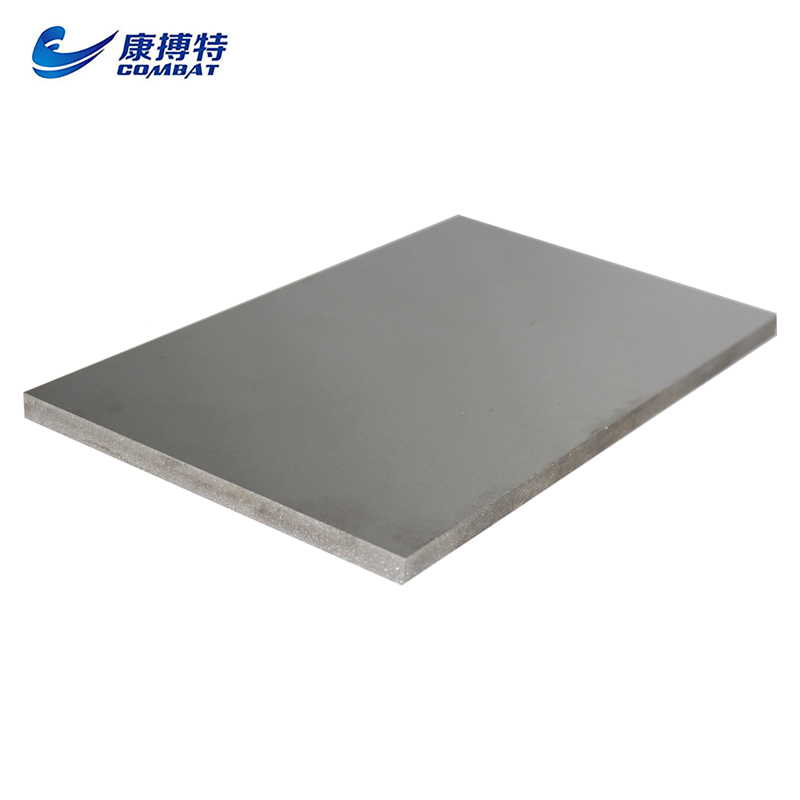
When engineers and materials scientists search for a metal that can endure extreme temperatures, resist corrosion, and maintain structural integrity under intense mechanical stress, one material consistently rises to the top of the shortlist. The molybdenum plate has earned a singular reputation in high-performance industrial applications, particularly in environments where conventional metals such as steel or even titanium would degrade, warp, or fail entirely. Understanding why this material has become so indispensable requires a close look at its physical and chemical properties and how those properties translate into real-world engineering value.
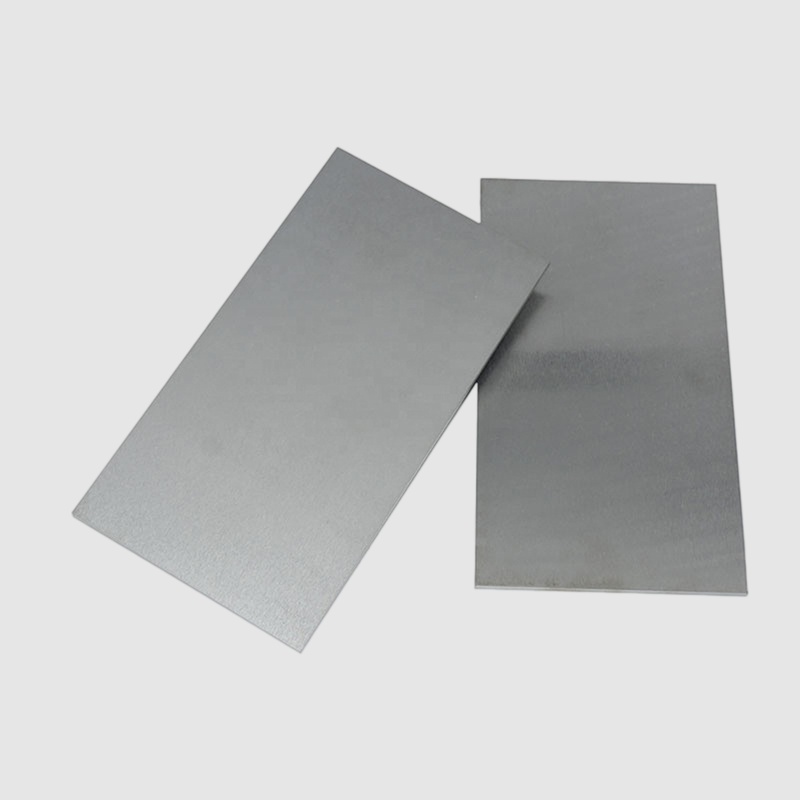
The broad adoption of molybdenum plate across furnace construction and aerospace manufacturing is not the result of marketing trends or coincidental industry preferences. It is driven by a converging set of scientific and engineering reasons that make this refractory metal uniquely suited for two of the most demanding application environments in modern industry. This article explores those reasons in depth, examining why molybdenum plate has become a foundational material in high-temperature furnaces and precision aerospace components alike.
The Physical Properties That Drive Industrial Adoption
Exceptional High-Temperature Performance
Molybdenum has a melting point of approximately 2,623 degrees Celsius, placing it among the highest of all commercially practical metals. This property alone makes molybdenum plate a natural candidate for environments where sustained exposure to extreme heat is unavoidable. In industrial furnaces used for sintering, annealing, or crystal growth, operating temperatures can exceed 1,800 degrees Celsius. At those levels, most metals lose their mechanical strength rapidly, but molybdenum plate retains a significant portion of its tensile strength and hardness even as temperatures climb.
This thermal resilience extends to dimensional stability. In furnace applications, thermal cycling — the repeated process of heating and cooling — creates stress that can cause materials to expand, contract, and eventually crack or distort. Molybdenum plate exhibits a relatively low coefficient of thermal expansion, which means it resists the dimensional changes that would compromise the structural integrity of furnace components such as heating elements, muffle plates, boats, and support trays. Furnace designers rely on this predictability to maintain tight tolerances in processes that depend on controlled thermal environments.
In aerospace applications, the same high-temperature performance translates into suitability for engine components, heat shields, and structural parts that experience intense thermal loads during operation. Jet engines and rocket propulsion systems generate temperatures that push material science to its limits. The molybdenum plate provides a reliable solution where the combination of heat resistance and mechanical strength is non-negotiable.
Superior Mechanical Strength and Density Ratio
One of the reasons molybdenum plate is so highly valued in aerospace engineering is its favorable strength-to-weight characteristics. While molybdenum is denser than aluminum or titanium, it offers a substantially higher modulus of elasticity and greater resistance to deformation under load. For aerospace components where structural rigidity under stress is critical, the molybdenum plate delivers performance that lighter metals cannot match under high-temperature conditions.
The hardness and wear resistance of molybdenum plate also make it attractive for parts that experience friction, abrasion, or repetitive mechanical contact. In aerospace, this matters for components in guidance systems, propulsion hardware, and structural brackets that must remain dimensionally precise across thousands of operational cycles. The material does not yield or creep under load in the way that softer metals do, which preserves the geometric accuracy that precision aerospace engineering demands.
In furnace environments, mechanical strength at elevated temperatures is equally critical. Molybdenum plate components used as furnace hearths, base plates, or radiation shields must support substantial loads while operating at temperatures that would cause steel to soften and deform. The ability of molybdenum plate to maintain its mechanical properties at service temperatures gives engineers the confidence to design load-bearing furnace components around it without excessive safety margins that would add unnecessary weight or cost.
Chemical Stability in Demanding Environments
Resistance to Thermal Oxidation Under Controlled Atmospheres
One important characteristic that shapes how molybdenum plate is used in furnaces is its behavior in relation to oxygen. Molybdenum does oxidize when exposed to air at elevated temperatures, forming molybdenum trioxide above approximately 600 degrees Celsius. This means that open-air use of molybdenum plate at high temperatures is limited. However, in the context of industrial furnaces, this is rarely a constraint. High-temperature furnaces used in metallurgy, semiconductor manufacturing, and advanced ceramics processing typically operate under vacuum, hydrogen, or inert gas atmospheres. Within these controlled environments, molybdenum plate performs with extraordinary stability, free from the oxidation that would degrade less chemically stable materials.
Vacuum furnaces used for sintering refractory metals, growing sapphire crystals, or heat-treating specialty alloys are among the most common applications where molybdenum plate serves as the primary structural and functional material. The ability to use the full high-temperature capability of molybdenum without chemical degradation in these controlled environments is a major reason for its dominant position in premium furnace construction. The economics of molybdenum plate investment are justified by its long service life and stable performance under repeated high-temperature cycles.
Corrosion Resistance in Industrial Processing Environments
Beyond oxidation, molybdenum plate exhibits strong resistance to a wide range of chemical environments. It shows excellent resistance to hydrochloric acid, various alkalis, and many molten metal systems. In industrial furnaces used for processing reactive metals such as titanium, tungsten, or rare earth alloys, molybdenum plate can withstand incidental chemical exposure that would corrode or contaminate other metal components. This chemical inertness helps maintain the purity of materials being processed, which is critical in industries where contamination at the parts-per-million level can render an entire batch unacceptable.
In aerospace, chemical resistance plays a role in component durability and reliability. Aerospace systems are exposed to fuel residues, hydraulic fluids, atmospheric moisture at high altitudes, and oxidizing combustion gases. While molybdenum plate is rarely used in ambient-temperature structural applications due to cost considerations, its deployment in propulsion components and thermal protection systems benefits from its ability to maintain integrity in chemically aggressive environments. This resistance to chemical attack complements the material's thermal and mechanical properties to create a comprehensive performance profile.
Why Furnace Builders Depend on Molybdenum Plate
Furnace Component Design and Molybdenum Plate Applications
In the construction of high-temperature industrial furnaces, molybdenum plate is used in a variety of functional components. Heating zone liners and muffle tubes fabricated from molybdenum plate allow furnace chambers to achieve and sustain temperatures in the range of 1,400 to 2,200 degrees Celsius. The molybdenum plate provides the thermal barrier and structural backbone for these extreme-temperature zones. Compared to graphite, which is also used in high-temperature furnaces, molybdenum plate offers superior resistance to contamination and better compatibility with hydrogen atmospheres.
Radiation shielding within vacuum furnaces represents another major application. Stacked layers of molybdenum plate act as radiation shields that reflect thermal energy back into the heating zone, improving furnace efficiency and reducing energy consumption. This thermal management role takes advantage of molybdenum's high reflectivity at elevated temperatures and its ability to withstand the thermal cycling between processing runs without warping or losing dimensional accuracy. Furnace manufacturers have standardized around molybdenum plate for this application because of its proven long-term reliability.
Support structures, boats, and carriers made from molybdenum plate are used to hold workpieces during heat treatment. These components must be dimensionally stable, chemically non-reactive with the workpiece, and capable of enduring thousands of thermal cycles. The consistency of molybdenum plate across these performance parameters is why it has displaced many alternative materials in premium furnace configurations. The total cost of ownership calculation, which accounts for replacement frequency, process reliability, and product quality, consistently favors molybdenum plate over cheaper alternatives that require more frequent replacement.
Thermal Conductivity and Its Role in Furnace Efficiency
Molybdenum plate offers moderate thermal conductivity, which is well-suited to the demands of furnace component design. Components that need to distribute heat evenly across a work zone benefit from the thermal conductivity of molybdenum, which helps prevent hot spots that could cause uneven processing results. At the same time, when molybdenum plate is used as a radiation shield, its emissivity characteristics allow it to function effectively as a thermal barrier. This dual capability — acting as either a conductor or a shield depending on design configuration — gives furnace engineers considerable flexibility when designing thermal management systems around molybdenum plate.
The ability to machine molybdenum plate into complex geometries with tight tolerances also contributes to its value in furnace design. Precision-machined molybdenum plate components can be fitted into furnace assemblies with minimal gap tolerances, reducing thermal losses and improving the uniformity of the thermal environment inside the furnace chamber. This manufacturability, combined with the material's inherent thermal properties, allows furnace builders to achieve performance specifications that would be impossible with more brittle or less thermally stable materials.
Aerospace Applications Where Molybdenum Plate Excels
Propulsion System Components
In aerospace propulsion, molybdenum plate is used in the construction of components that must survive the thermal and mechanical environment of rocket and jet engine operation. Nozzle inserts, thrust chamber liners, and combustion hardware fabricated from or lined with molybdenum plate can withstand the intense heat and pressure of high-energy propellants. The combination of high melting point, low thermal expansion, and structural rigidity makes molybdenum plate an appropriate material for these critical applications, where component failure would have catastrophic consequences.
The use of molybdenum plate in rocket propulsion components also reflects the material's compatibility with many common propellant systems. The chemical inertness of molybdenum plate in contact with highly reactive propellants reduces the risk of contamination or catalytic reactions that could alter propellant performance. Engineers working on high-performance propulsion systems therefore regard molybdenum plate as a trustworthy material choice for components where both thermal and chemical stability are required simultaneously.
Structural and Thermal Protection Roles
Beyond propulsion, molybdenum plate finds application in aerospace thermal protection systems, structural supports within high-temperature zones, and heat exchanger components. Hypersonic vehicles and re-entry spacecraft encounter aerodynamic heating that generates surface temperatures beyond the capability of most structural metals. Thermal protection systems that incorporate molybdenum plate can absorb and dissipate this heat while maintaining the structural form needed to protect the vehicle and its payload.
Structural brackets and support frames in aerospace applications benefit from the stiffness and dimensional stability of molybdenum plate under conditions where thermal gradients create significant mechanical stress. The predictable behavior of molybdenum plate under these conditions simplifies structural analysis and allows engineers to design with confidence. This predictability is a significant advantage in an industry where certification of materials and components requires extensive testing and documentation of performance under defined conditions.
Molybdenum plate is also used in the manufacture of sputtering targets and semiconductor processing hardware deployed in the aerospace supply chain. The production of advanced sensors, microelectronics, and navigation systems used in aerospace relies on manufacturing processes where molybdenum plate plays a behind-the-scenes but essential role. This upstream influence in the aerospace supply chain further illustrates the breadth of applications where molybdenum plate delivers irreplaceable value.
FAQ
Why is molybdenum plate preferred over stainless steel in high-temperature furnaces?
Stainless steel loses mechanical strength rapidly above approximately 800 degrees Celsius and cannot survive the operating temperatures common in advanced industrial furnaces. Molybdenum plate retains its structural integrity and dimensional stability at temperatures exceeding 1,800 degrees Celsius in controlled atmospheres. This thermal performance gap makes molybdenum plate the practical choice for high-temperature furnace components where stainless steel would soften, deform, or fail entirely.
Does molybdenum plate require special handling or processing conditions?
Molybdenum plate should be machined, welded, and processed using methods appropriate for refractory metals. It is susceptible to oxidation above 600 degrees Celsius in air, so high-temperature applications should use controlled atmospheres such as hydrogen, vacuum, or inert gas. Machining typically requires carbide tooling and careful control of cutting parameters to avoid edge cracking, as molybdenum plate has a ductile-to-brittle transition temperature that must be considered during fabrication.
What thickness and grades of molybdenum plate are typically used in aerospace applications?
The thickness and grade of molybdenum plate selected for aerospace applications depend on the specific loading, thermal, and chemical conditions of the component. Pure molybdenum plate is used in applications requiring maximum purity and conductivity, while alloy grades such as TZM (molybdenum-titanium-zirconium) are preferred where higher creep resistance and strength at elevated temperatures are required. Thickness typically ranges from thin sheet formats for thermal shielding to heavier plate formats for structural components, with selection driven by detailed engineering analysis of the application environment.
How does the cost of molybdenum plate compare to other refractory metals for similar applications?
Molybdenum plate is generally more cost-effective than tungsten for many high-temperature applications due to its lower density and easier machinability, which reduce both material costs and fabrication expenses. While it is significantly more expensive than common structural metals like steel, the total cost of ownership analysis in demanding applications typically favors molybdenum plate because of its long service life, low maintenance requirements, and the high cost of process downtime that would result from using inferior materials. For furnace and aerospace applications, the performance justification for molybdenum plate investment is well-established.
Table of Contents
- The Physical Properties That Drive Industrial Adoption
- Chemical Stability in Demanding Environments
- Why Furnace Builders Depend on Molybdenum Plate
- Aerospace Applications Where Molybdenum Plate Excels
-
FAQ
- Why is molybdenum plate preferred over stainless steel in high-temperature furnaces?
- Does molybdenum plate require special handling or processing conditions?
- What thickness and grades of molybdenum plate are typically used in aerospace applications?
- How does the cost of molybdenum plate compare to other refractory metals for similar applications?