
 EN
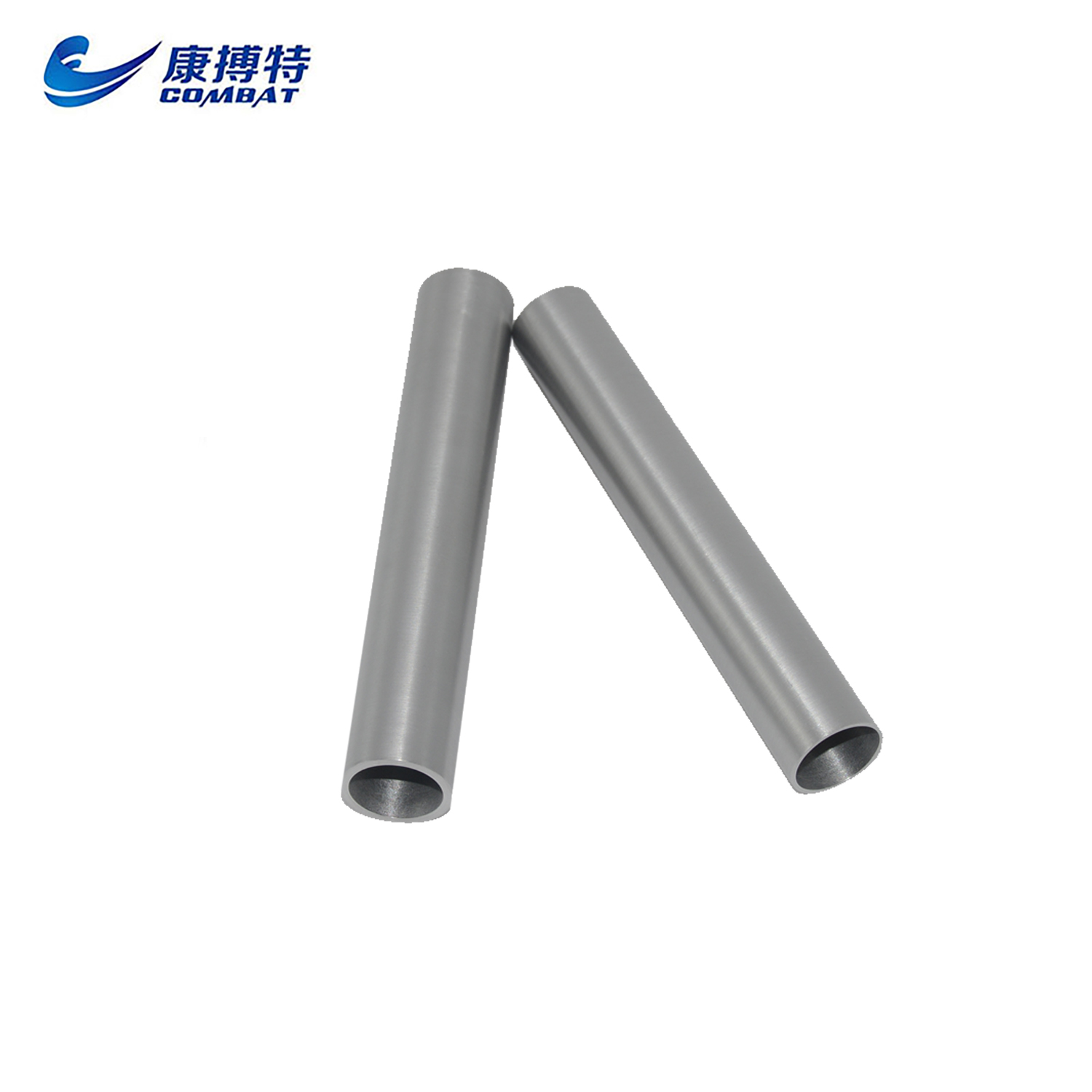
In demanding industrial environments where temperatures soar beyond what conventional metals can tolerate, engineers and materials specialists consistently turn to refractory metals for reliable structural performance. Among these materials, the molybdenum tube stands out as a particularly capable component, combining an exceptionally high melting point with mechanical rigidity and chemical resistance that few other tubular products can match. Understanding how this material behaves under sustained thermal and structural stress is essential for any engineer designing systems that operate in extreme heat environments.

This article explores the specific performance characteristics of a molybdenum tube in high temperature structural applications, walking through the material science behind its thermal stability, its mechanical behavior at elevated temperatures, its resistance to environmental degradation, and the practical scenarios where it delivers measurable value. Whether you are evaluating materials for furnace components, semiconductor processing equipment, or aerospace assemblies, this in-depth examination will help clarify what to expect from a molybdenum tube under real operating conditions.
Thermal Performance and Structural Integrity at Elevated Temperatures
The Melting Point Advantage of Molybdenum
Molybdenum has a melting point of approximately 2623 degrees Celsius, placing it firmly within the refractory metal class alongside tungsten and rhenium. For a molybdenum tube used in structural roles, this extraordinary thermal threshold means the material retains its solid-state properties at temperatures that would cause steel, nickel superalloys, or even many ceramic materials to deform or fail structurally. This thermal headroom is not merely theoretical — it directly translates into operational reliability in furnaces, vacuum chambers, and high-performance heating systems.
In practical terms, a molybdenum tube can be used continuously at temperatures reaching 1700 degrees Celsius in controlled or inert atmospheres without experiencing creep deformation at the rates observed in competing metals. This makes it an intelligent choice for load-bearing tubular structures inside industrial heat-treatment furnaces, sintering systems, and crystal growth equipment where dimensional accuracy must be preserved over long service cycles. The thermal stability of the molybdenum tube is one of its most commercially significant attributes.
Thermal Conductivity and Heat Distribution
Beyond its melting point, a molybdenum tube also performs favorably in terms of thermal conductivity. Molybdenum conducts heat approximately three to four times more effectively than stainless steel, which means that when used as a structural conduit or heat-transfer element, the tube can distribute thermal energy more evenly across a system. This property reduces localized hot spots, which are a primary cause of thermal fatigue and cracking in other tubular structural materials.
The high thermal conductivity of a molybdenum tube is particularly valuable in applications such as heating element support tubes, electrode holders in glass melting furnaces, and process tubes in hydrogen atmosphere furnaces. In each of these scenarios, controlled and uniform heat transfer is as critical as raw temperature resistance. The material's ability to manage heat flow structurally rather than just endure it sets the molybdenum tube apart from alternatives with higher melting points but lower conductivity, such as certain ceramics.
Mechanical Behavior Under High Temperature Stress
Tensile Strength Retention at Extreme Temperatures
One of the defining performance metrics for any structural material is how well it retains mechanical strength as temperature increases. A molybdenum tube maintains a meaningful fraction of its room-temperature tensile strength well into the 1000-to-1400 degree Celsius range. This retained strength at temperature is superior to most austenitic stainless steels and nickel-based alloys, which typically experience dramatic strength reduction at temperatures above 800 degrees Celsius.
This strength retention allows a molybdenum tube to bear structural loads — whether from the weight of furnace furniture, the mechanical forces of rotating kiln components, or the thermal expansion stresses within complex assemblies — without yielding or permanently deforming. Engineers specifying tubular structural elements for high temperature load paths benefit directly from this characteristic, as it reduces the need for oversized cross-sections or additional support structures that add weight and complexity.
Creep Resistance and Long-Term Dimensional Stability
Creep, the slow plastic deformation of a material under constant stress at elevated temperature, is the primary failure mechanism for structural elements in long-duration high-heat applications. A molybdenum tube exhibits significantly lower creep rates at temperatures between 1000 and 1600 degrees Celsius compared to metals like Inconel or stainless steel, making it better suited for applications where geometry must remain stable over thousands of operating hours.
This creep resistance is directly tied to molybdenum's body-centered cubic crystal structure and the strong metallic bonding that persists at high temperatures. For structural tubes inside vacuum sintering furnaces or zone-refining systems, where any deformation in the tube geometry could compromise process outcomes or trigger mechanical interference, the creep performance of a molybdenum tube provides essential reliability assurance over the equipment's service life.
It should be noted that while creep resistance is excellent in inert or reducing atmospheres, the specific thermal cycling profile and applied stress levels will always influence actual long-term behavior. Engineers designing with molybdenum tube components should account for these operating variables in their structural calculations to get the most accurate performance prediction.
Chemical Resistance and Environmental Durability
Oxidation Behavior and Atmosphere Sensitivity
A critical performance limitation that must be understood before specifying a molybdenum tube in any high temperature structural application is its behavior in oxidizing atmospheres. Above approximately 400 degrees Celsius, molybdenum begins to oxidize in air or oxygen-rich environments, forming molybdenum trioxide, which is volatile and can lead to rapid material loss. This oxidation sensitivity is a fundamental material property that governs where a molybdenum tube can and cannot be deployed effectively.
As a result, the molybdenum tube performs best and demonstrates its full structural potential when used in vacuum environments, hydrogen atmospheres, inert gas environments such as argon or nitrogen, or in applications where it is shielded from oxidizing species. This is why the molybdenum tube is so widely adopted inside vacuum furnaces, hydrogen atmosphere sintering systems, and semiconductor diffusion furnaces — environments where its oxidation vulnerability is managed through process design rather than material modification.
Resistance to Hydrogen Embrittlement and Chemical Attack
Unlike some refractory metals, molybdenum is highly resistant to hydrogen embrittlement, a property that makes the molybdenum tube particularly valuable in hydrogen atmosphere furnaces used for metal powder processing, bright annealing, and reduction of metal oxides. The tube maintains its structural integrity and ductility even after prolonged hydrogen exposure at elevated temperatures, a performance characteristic that gives it a practical service advantage over materials like titanium in these environments.
In terms of resistance to chemical attack, a molybdenum tube shows good stability against many molten metals and glasses, making it applicable in crucible support structures and electrode tubes in glass-melting furnaces. However, it is reactive with halogens and certain sulfur-containing atmospheres at high temperatures, so application engineers must verify chemical compatibility before deployment in reactive process environments. Understanding these boundaries allows designers to leverage the full performance envelope of the molybdenum tube without encountering unexpected degradation.
Key Industrial Applications Where Molybdenum Tube Delivers Results
Vacuum and Controlled Atmosphere Furnace Components
The vacuum furnace industry is one of the most established and high-volume users of the molybdenum tube in structural roles. Within these furnaces, the tube serves as support rods for heating element arrays, structural spacers between hot zone layers, and process tubes through which workpieces or gases pass during thermal treatment. The combination of high temperature strength, low vapor pressure, and compatibility with vacuum environments makes the molybdenum tube an almost ideal structural material in this context.
In hydrogen atmosphere furnaces used for powder metallurgy and hard metal production, the molybdenum tube similarly provides durable structural function across thousands of operating cycles. The ability to withstand repeated thermal cycling — from room temperature to over 1400 degrees Celsius and back — without cracking or losing dimensional accuracy is a performance attribute that significantly extends equipment service life and reduces maintenance frequency and cost.
Semiconductor and Electronics Manufacturing Equipment
In semiconductor fabrication, ultra-pure process environments and precise thermal management are non-negotiable. The molybdenum tube finds structural roles in diffusion furnaces, ion implantation systems, and epitaxial growth reactors where it serves as a process tube, support structure, or heating element enclosure. Its low thermal expansion coefficient relative to many ceramics helps maintain tight mechanical tolerances across wide temperature swings, contributing to process repeatability and yield.
The relatively low vapor pressure of molybdenum at extreme temperatures also makes the molybdenum tube appropriate for environments where contamination from evaporated metal species must be minimized. In crystal growth systems such as those used for sapphire or silicon carbide production, the tube's thermal stability and chemical compatibility with the growth atmosphere allow it to provide consistent structural support across very long, uninterrupted process runs that can last dozens of hours.
Aerospace and Defense Thermal Systems
In aerospace structural applications, particularly those involving re-entry vehicle thermal management, rocket propulsion testing, or high-temperature actuator housings, the molybdenum tube provides structural depth in temperature regimes beyond the capability of nickel superalloys. Aerospace engineers designing heat shields, nozzle assemblies, or high-temperature flow conduits consider the molybdenum tube when the thermal and mechanical demands exceed what lighter structural metals can sustain.
The high density of molybdenum compared to aluminum or titanium is a trade-off that must be evaluated in weight-critical aerospace designs. However, in ground-test rigs, propulsion test stands, and ground support equipment operating at extreme temperatures, this weight trade-off is less consequential than in flight hardware, and the structural reliability of the molybdenum tube becomes the dominant selection driver.
FAQ
At what temperature range can a molybdenum tube be used structurally?
A molybdenum tube can perform structural functions at temperatures up to approximately 1700 degrees Celsius when used in vacuum or inert/reducing atmospheres. In oxidizing environments, usable temperature is severely limited to below 400 degrees Celsius due to the onset of accelerated oxidation. The exact service temperature will depend on the applied load, atmosphere chemistry, and the required service life.
Does a molybdenum tube require special machining or joining processes?
Yes, machining a molybdenum tube requires carbide tooling and controlled cutting parameters to avoid surface cracking, as molybdenum has limited ductility at room temperature in some product forms. Joining methods include electron beam welding, laser welding, and brazing with appropriate filler metals compatible with high-temperature service. Mechanical fastening using molybdenum hardware is also common in furnace assembly applications.
How does a molybdenum tube compare to a tungsten tube for structural use at high temperatures?
Tungsten has a higher melting point and better strength retention above 1700 degrees Celsius, but it is significantly denser, harder to machine, and more brittle than molybdenum. A molybdenum tube offers better workability, lower density, and higher thermal conductivity, making it the preferred choice for most structural applications below 1700 degrees Celsius. Tungsten is typically reserved for the most extreme temperature applications where its higher melting point is genuinely necessary.
Can a molybdenum tube be reused after high-temperature service?
In many cases, yes. A molybdenum tube used in vacuum or inert atmospheres can be inspected, cleaned, and reused across multiple service cycles, particularly if it has not experienced oxidation damage or mechanical overload. However, after extended service at very high temperatures, dimensional inspection and non-destructive evaluation are recommended to verify that creep deformation or surface degradation have not compromised structural fitness for the intended application.