
 EN
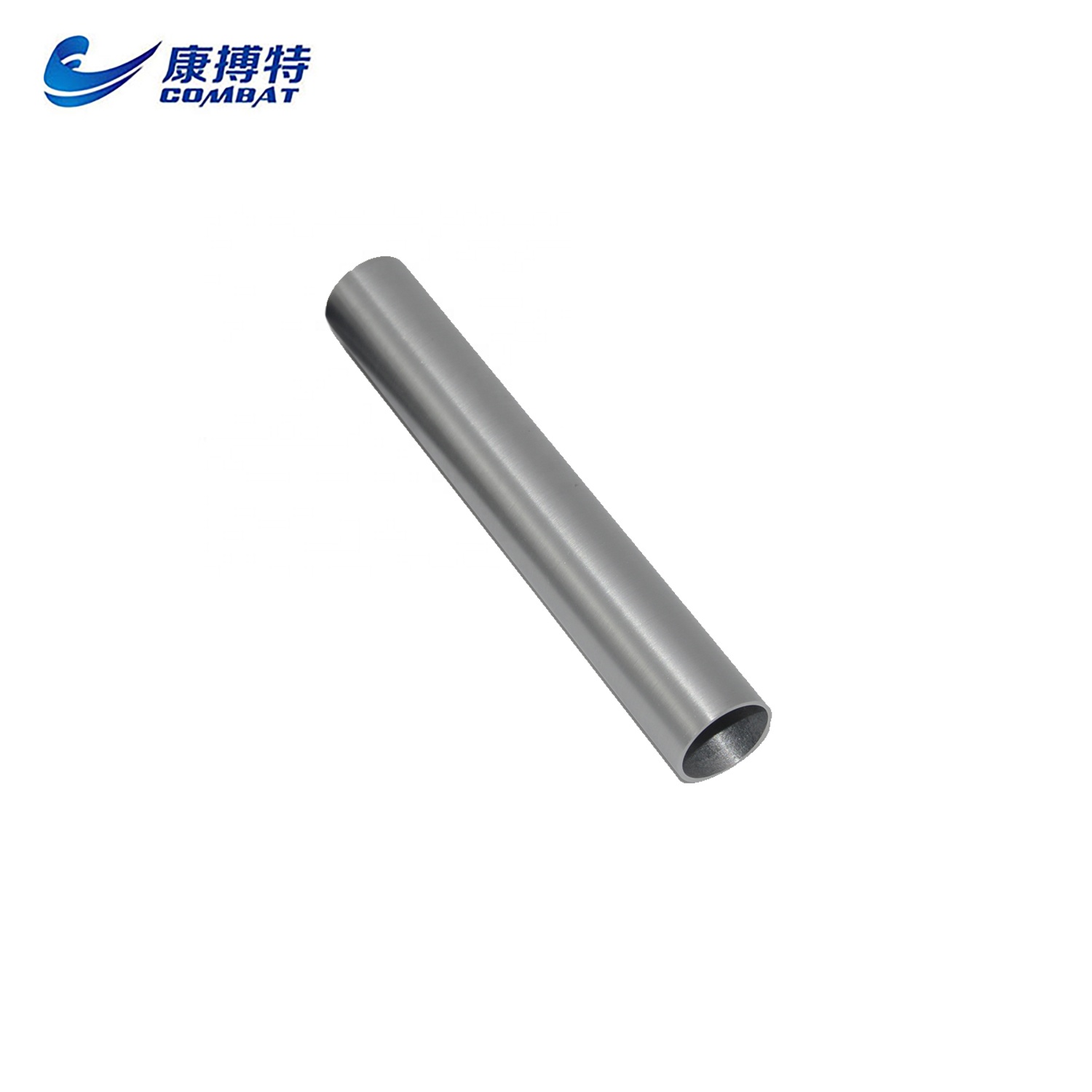
The mechanical strength of a molybdenum tube is not a fixed property determined solely by the base metal itself. It is the result of a complex interplay between raw material purity, manufacturing processes, microstructural development, and the operating conditions the component is ultimately subjected to. For engineers and procurement specialists working in high-temperature industrial applications, understanding these factors is essential to selecting the right molybdenum tube for each specific use case.

Molybdenum is recognized across industries for its exceptional resistance to elevated temperatures, its high melting point of approximately 2,623 degrees Celsius, and its impressive stiffness-to-weight ratio. However, translating these inherent material properties into reliable mechanical performance within a fabricated molybdenum tube requires careful control across every stage of production and application. This article examines the key factors that define and influence the mechanical strength of molybdenum tube products, offering a structured framework for making well-informed engineering and sourcing decisions.
The Role of Raw Material Composition and Purity
Base Metal Purity and Its Effect on Strength
The purity of molybdenum used in tube production has a direct and measurable effect on its final mechanical properties. High-purity molybdenum, typically defined as containing 99.95% or greater molybdenum content, tends to exhibit consistent grain growth behavior during sintering and processing, which supports predictable tensile and yield strength values. Impurities such as oxygen, nitrogen, carbon, and trace metallic contaminants can act as stress concentrators within the metal matrix, reducing ductility and lowering the threshold at which fracture occurs.
Oxygen contamination is of particular concern in molybdenum tube production because it forms molybdenum oxides at grain boundaries, which significantly weakens intergranular cohesion. Even relatively small oxygen concentrations, in the range of tens to hundreds of parts per million, can cause notable reductions in impact toughness and elongation at break. Producers who maintain tight control over raw material sourcing and employ hydrogen-atmosphere sintering or vacuum processing are better positioned to deliver tubes with superior mechanical integrity.
Sulfur and phosphorus, though often present in trace amounts, can also promote embrittlement in molybdenum tube products when they segregate to grain boundaries during thermal processing. Their concentration must be controlled and verified through chemical analysis before production begins, especially for components intended for high-stress structural applications.
Alloying Additions and Strengthening Mechanisms
Pure molybdenum, while already strong, can be further enhanced through controlled alloying. The most well-established alloying approach involves the addition of lanthanum oxide, producing what the industry refers to as Mo-La or lanthanum-doped molybdenum. The fine dispersion of lanthanum oxide particles within the molybdenum matrix pins grain boundaries and resists grain coarsening at elevated temperatures, which preserves mechanical strength well beyond the temperatures at which undoped molybdenum would experience significant softening.
Titanium-zirconium-molybdenum alloys, commonly designated TZM, represent another important category. The addition of titanium and zirconium in small percentages introduces fine carbide and oxide precipitates that impede dislocation movement, resulting in a molybdenum tube with higher recrystallization temperatures and greater high-temperature tensile strength compared to commercially pure molybdenum. TZM tubes are frequently selected for furnace components, rocket nozzles, and other high-performance environments where sustained mechanical loads at elevated temperature are expected.
The selection of base composition must therefore be matched to the anticipated service environment. An application demanding mechanical strength primarily at room temperature may be satisfied by pure molybdenum, while one requiring sustained load-bearing above 1,000 degrees Celsius will typically warrant an alloyed molybdenum tube to avoid premature creep or yield.
Manufacturing Process Variables and Their Influence
Powder Metallurgy Consolidation and Sintering Density
Most molybdenum tube products are manufactured using powder metallurgy routes, beginning with the compaction of fine molybdenum powder into a green body followed by high-temperature sintering. The density achieved after sintering is one of the most critical determinants of subsequent mechanical performance. A fully dense molybdenum tube, approaching the theoretical density of 10.28 grams per cubic centimeter, exhibits significantly higher tensile strength, fatigue resistance, and impact toughness compared to one with residual porosity.
Porosity acts as an internal stress raiser, particularly under cyclic loading or impact conditions. Even isolated spherical pores can initiate crack propagation under mechanical stress, while irregular or elongated pores are far more damaging to strength. Sintering conditions including temperature, hold time, atmosphere composition, and heating rate must be carefully optimized to maximize density while avoiding excessive grain growth that would otherwise reduce strength and ductility.
Isostatic pressing, either cold or hot, is frequently employed to improve the uniformity of green density prior to sintering, which in turn leads to more homogeneous final densities and more consistent mechanical property distributions throughout the length and wall thickness of a molybdenum tube. This is particularly important for longer tube products where variability in density from end to end could compromise structural reliability in service.
Rotary Swaging, Rolling, and Extrusion Effects
Following sintering, molybdenum tube blanks typically undergo mechanical working operations such as rotary swaging, rolling, or extrusion to achieve final dimensional specifications and to impart beneficial microstructural changes. These thermomechanical working operations are pivotal in defining the mechanical strength of the finished molybdenum tube because they break down the coarse as-sintered grain structure and introduce a refined, elongated grain morphology that improves strength along the working direction.
Reduction ratios during tube drawing or swaging strongly influence the degree of work hardening and the texture developed within the material. Higher reduction ratios generally produce stronger tubes with greater tensile strength along the tube axis, but they also increase the risk of introducing residual stresses and surface defects if the process is not well controlled. Intermediate annealing steps are often used to restore sufficient ductility between reduction passes, enabling further deformation without cracking while maintaining a balanced strength-ductility profile.
The working temperature also plays a significant role. Molybdenum has a ductile-to-brittle transition temperature, and mechanical working below this temperature carries the risk of fracture during forming. Controlled hot or warm working above the transition temperature ensures that the material can be shaped without failure while still benefiting from grain refinement and work hardening that contribute to enhanced mechanical properties in the final molybdenum tube.
Microstructure and Grain Structure Considerations
Grain Size and Its Relationship to Mechanical Strength
Grain size is one of the most directly observable microstructural parameters that correlates with the mechanical strength of a molybdenum tube. The Hall-Petch relationship, well established in materials science, describes how finer grain sizes lead to higher yield strength because grain boundaries act as barriers to dislocation motion. In molybdenum, this relationship is particularly relevant because the material operates at high homologous temperatures where thermally activated processes can facilitate grain boundary sliding and creep.
A fine, equiaxed grain structure is generally desirable for applications requiring high room-temperature tensile strength, while a slightly elongated grain structure oriented along the tube axis may offer advantages under axial loading at moderate temperatures. The key is to avoid abnormal grain growth, which occurs when certain grains consume their neighbors and grow to sizes dramatically larger than the surrounding matrix. Abnormal grains create local regions of weakness and anisotropy that can dramatically reduce the overall mechanical reliability of a molybdenum tube.
Controlling grain structure requires attention not only during sintering but also during any subsequent annealing operations. Over-annealing at excessively high temperatures or for excessively long periods can cause grain coarsening that erases the strengthening benefits achieved through prior mechanical working. Producers must therefore balance stress relief against the risk of grain growth to deliver a molybdenum tube with optimal mechanical properties.
Recrystallization and Its Impact on Tube Performance
Recrystallization is a critical phenomenon that every engineer specifying a molybdenum tube for high-temperature service must understand. When molybdenum is heated above its recrystallization temperature, typically in the range of 1,100 to 1,200 degrees Celsius for worked material, the deformed grain structure transforms into a new set of strain-free grains. This transformation eliminates the work hardening that was introduced during tube fabrication, leading to a significant reduction in strength and an increase in ductility.
The recrystallization temperature of a molybdenum tube can be raised through alloying, as discussed earlier, or through the introduction of fine dispersoids that pin grain boundaries and delay the onset of recrystallization. Understanding whether a tube will operate above or below its recrystallization temperature during service is therefore fundamental to predicting its in-service mechanical behavior. Components used in continuous high-temperature environments, such as furnace heating elements or high-vacuum heat shields, will inevitably recrystallize over time, and their design must account for the post-recrystallization strength rather than the as-fabricated strength.
The recrystallized condition also introduces a concern known as 'orange peel' surface roughening and intergranular fracture susceptibility, which can compromise the wall integrity of a molybdenum tube subjected to internal or external pressure cycling. Specifying the appropriate alloy grade and understanding the expected thermal history of the application are therefore inseparable from mechanical strength assessment.
Dimensional Parameters and Geometric Influence on Strength
Wall Thickness, Outer Diameter, and Strength Distribution
The geometry of a molybdenum tube is not merely a dimensional specification — it directly influences how mechanical loads are distributed through the tube wall and where stress concentrations are most likely to develop. Thick-walled tubes with high wall-to-diameter ratios distribute hoop stresses more uniformly and are less susceptible to buckling under external compressive loads. Thin-walled tubes, while lighter and more thermally responsive, are more vulnerable to localized deformation under non-uniform loading or differential thermal expansion.
Dimensional tolerances on the outer diameter, inner diameter, and wall thickness uniformity also influence mechanical performance. Eccentricity, where the wall varies in thickness around the circumference, creates regions of locally reduced strength that can initiate failure under pressure or bending loads. Tight tolerance control during tube drawing and finishing operations is therefore essential for producing a molybdenum tube that delivers mechanically predictable performance across its entire cross-section.
Surface finish also plays a role. Rough or scratched surfaces on a molybdenum tube can act as stress concentration sites that reduce fatigue life and lower the effective fracture toughness of the component under cyclic or impact loading. Electropolishing, grinding, or other finishing operations that improve surface quality can therefore contribute meaningfully to the practical mechanical performance of the finished product.
Straightness and Residual Stress in Finished Tubes
Straightness deviation in a molybdenum tube introduces bending moments under axial loads, effectively reducing the load at which yielding or buckling will occur compared to a perfectly straight tube under the same conditions. For long tubes used as structural members in furnace retorts or vacuum processing chambers, controlling straightness within specified tolerances is a practical mechanical strength concern, not merely an aesthetic one.
Residual stresses locked in during fabrication can either improve or reduce mechanical performance depending on their sign and distribution. Compressive residual stresses at the tube surface, which can be introduced by controlled peening or final drawing passes, improve resistance to fatigue crack initiation. Tensile residual stresses, conversely, reduce effective fracture toughness and can promote stress corrosion in environments where molybdenum is susceptible to oxidative attack. Post-processing stress relief treatments, when properly executed, can reduce harmful residual stress without significantly compromising the work-hardened strength of the molybdenum tube.
Operating Environment and Service Condition Factors
Elevated Temperature and Creep Resistance
The temperature at which a molybdenum tube operates fundamentally governs its effective mechanical strength. At room temperature, molybdenum exhibits excellent tensile strength and stiffness. As temperature rises above approximately 700 degrees Celsius, strength begins to decline at an accelerating rate as thermally activated deformation mechanisms, including dislocation climb and grain boundary diffusion, become increasingly active. The rate of this decline depends on alloy composition, grain size, and the applied stress level.
Creep, the time-dependent deformation that occurs under sustained stress at elevated temperatures, is a primary failure mode for molybdenum tube components in long-term high-temperature service. Creep resistance is improved by fine grain sizes at moderate temperatures and by oxide dispersion strengthening or solid solution alloying at the highest service temperatures. Engineers must evaluate the expected operating temperature and stress level together, rather than treating mechanical strength as a temperature-independent property of their chosen molybdenum tube grade.
Thermal cycling, where the tube repeatedly heats and cools during operation, introduces additional mechanical challenges through thermal fatigue. Differential thermal expansion between the molybdenum tube and adjoining components of dissimilar materials creates cyclic stresses that accumulate over time, eventually initiating fatigue cracks if the stress amplitude exceeds the material's fatigue limit. Selecting a molybdenum tube grade with good ductility and fatigue resistance is critical in such applications.
Atmospheric Exposure and Oxidation Effects
Molybdenum forms volatile MoO3 when exposed to oxidizing atmospheres above approximately 600 degrees Celsius. This oxidation process does not simply discolor the surface — it actively removes material and can cause progressive thinning of tube walls, reducing the effective mechanical cross-section and accelerating failure under load. For a molybdenum tube operating in air or in an environment with significant oxygen partial pressure, protective coatings or inert atmosphere environments are necessary to preserve mechanical integrity over time.
Hydrogen embrittlement is another atmospheric concern, particularly relevant when a molybdenum tube is used within hydrogen-rich processing atmospheres or as part of hydrogen furnace equipment. While molybdenum is generally more resistant to hydrogen embrittlement than many steels, the presence of certain impurities in both the gas stream and the tube material can amplify susceptibility. Careful specification of tube purity and hydrogen gas cleanliness is therefore part of managing mechanical strength in hydrogen service environments.
In vacuum applications, the operating atmosphere concern is reversed — the absence of oxidizing species helps preserve the clean metallic surface of the molybdenum tube, supporting stable mechanical performance over long service lives. This is one reason why vacuum furnaces and electron beam processing equipment rely heavily on molybdenum tube components for structural and functional applications at extreme temperatures.
FAQ
What is the most important factor affecting the mechanical strength of a molybdenum tube?
No single factor exclusively determines mechanical strength — it results from the combination of raw material purity, alloy composition, processing history, microstructural characteristics, and operating conditions. However, for most industrial applications, the thermomechanical processing route, including working ratios, working temperatures, and subsequent annealing, tends to have the greatest practical influence on the final mechanical properties of a molybdenum tube because it governs grain structure, work hardening, and residual stress simultaneously.
How does the operating temperature change the mechanical behavior of a molybdenum tube?
As operating temperature increases, the tensile strength and yield strength of a molybdenum tube decrease progressively due to thermally activated deformation mechanisms. Above the recrystallization temperature, work-hardened strength is eliminated and replaced by the lower, grain-size-dependent strength of the recrystallized microstructure. Creep resistance also decreases at higher temperatures, meaning that sustained loads that would be tolerated at room temperature may cause unacceptable deformation over time at elevated service temperatures.
Can alloying genuinely improve the mechanical strength of a molybdenum tube at high temperatures?
Yes, alloying is one of the most effective strategies for improving the high-temperature mechanical performance of a molybdenum tube. Alloys such as TZM and lanthanum-doped molybdenum raise the recrystallization temperature, improve creep resistance, and maintain higher strength at service temperatures where pure molybdenum would begin to soften significantly. The choice of alloy should be matched to the specific temperature range and stress conditions of the intended application for best results.
How does wall thickness influence the mechanical strength of a molybdenum tube under pressure loading?
Wall thickness directly influences how hoop and radial stresses are distributed through a molybdenum tube under internal or external pressure. Thicker walls reduce the peak stress experienced at the tube's inner surface for a given pressure, improving resistance to yielding and fatigue crack initiation. However, increasing wall thickness also increases mass and can introduce greater residual stress gradients during fabrication. Optimal wall thickness must therefore be determined based on the specific pressure loads, temperature conditions, and fatigue requirements of each application rather than adopting a single universal guideline.
Table of Contents
- The Role of Raw Material Composition and Purity
- Manufacturing Process Variables and Their Influence
- Microstructure and Grain Structure Considerations
- Dimensional Parameters and Geometric Influence on Strength
- Operating Environment and Service Condition Factors
-
FAQ
- What is the most important factor affecting the mechanical strength of a molybdenum tube?
- How does the operating temperature change the mechanical behavior of a molybdenum tube?
- Can alloying genuinely improve the mechanical strength of a molybdenum tube at high temperatures?
- How does wall thickness influence the mechanical strength of a molybdenum tube under pressure loading?