
 EN
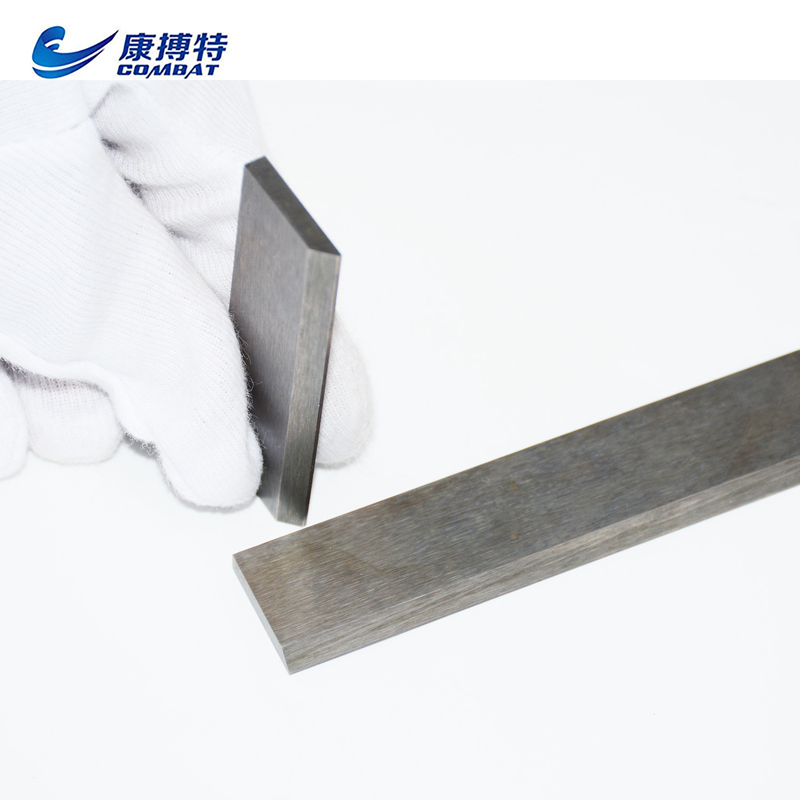
The performance of a tungsten carbide alloy product is never determined by raw material selection alone. From the moment powders are blended to the final surface treatment applied before shipment, every processing step shapes the mechanical properties, wear resistance, and service life that end users depend on. Understanding which techniques genuinely move the performance needle is essential for engineers, procurement specialists, and product designers working in demanding industrial environments.

This article examines the key processing techniques that have a measurable, proven impact on tungsten carbide alloy performance. Rather than offering a broad survey of metallurgy, the focus here is practical: what happens at each stage, why it matters, and how decisions made during processing translate directly into the hardness, toughness, density, and dimensional precision of the finished component. Whether you are evaluating suppliers, specifying components, or optimizing your own production workflow, these insights will help you make better-informed decisions.
Powder Preparation and Its Role in Final Properties
Particle Size Distribution and Its Downstream Effects
The foundation of any high-performance tungsten carbide alloy product is the quality and consistency of the starting powder. Particle size distribution is one of the most critical variables at this stage. Finer powders, typically in the submicron to low-micron range, produce denser microstructures with smaller grain sizes after sintering, which directly translates into higher hardness values. However, extremely fine powders also introduce challenges related to agglomeration and handling, which must be managed carefully to avoid defects in the green compact.
Coarser powders, by contrast, tend to yield tougher grades of tungsten carbide alloy with better resistance to fracture under impact loading. The selection of particle size is therefore not a matter of 'finer is always better' but rather a deliberate engineering choice aligned with the intended application. Cutting tools, for example, often benefit from ultrafine grades, while mining and drilling components may perform better with medium or coarse grain structures that absorb shock without cracking.
Consistent particle size distribution across production batches is equally important. Variability in powder characteristics leads to inconsistent sintering behavior, which in turn produces components with unpredictable mechanical properties. Rigorous powder characterization using laser diffraction or sedimentation analysis is a standard quality control step in high-performance tungsten carbide alloy manufacturing.
Binder Selection and Mixing Homogeneity
Cobalt remains the dominant binder used in tungsten carbide alloy production, though nickel and iron-based binders are used in specific corrosion-resistant or magnetic-sensitive applications. The binder content, typically ranging from 3% to 25% by weight, has a profound effect on the balance between hardness and toughness. Lower binder content pushes the alloy toward maximum hardness and wear resistance, while higher binder content improves fracture toughness and impact resistance.
Achieving a homogeneous distribution of binder throughout the carbide powder matrix is critical. Inadequate mixing leads to binder-rich and binder-poor zones within the sintered part, creating localized weaknesses that can initiate cracks under service conditions. Ball milling in a wet medium, often using ethanol or water with appropriate dispersants, is the standard approach for achieving the level of mixing homogeneity required in precision tungsten carbide alloy components.
The milling duration and media selection also influence the final powder characteristics. Over-milling can introduce contamination from the milling media and cause excessive work hardening of the powder particles, while under-milling leaves the mixture insufficiently homogeneous. Optimizing this step requires careful process control and regular sampling to verify blend quality before moving to the compaction stage.
Compaction and Green Body Formation Techniques
Uniaxial and Isostatic Pressing Methods
Once the powder blend is prepared, it must be compacted into a green body that can be handled and sintered. Uniaxial die pressing is the most common method for simple geometries and high-volume production. It applies pressure along a single axis, which is efficient but can introduce density gradients in taller or more complex parts. These gradients, if not corrected, persist through sintering and result in dimensional distortion or localized property variations in the finished tungsten carbide alloy component.
Cold isostatic pressing, or CIP, applies pressure uniformly from all directions using a fluid medium, typically water or oil. This produces green bodies with much more uniform density distribution, which is particularly important for larger components or those with complex cross-sections. The improved density uniformity translates directly into more consistent sintering shrinkage and better dimensional control in the final tungsten carbide alloy product.
Hot isostatic pressing, or HIP, takes this concept further by applying both heat and pressure simultaneously. While HIP is more commonly used as a post-sintering treatment, it can also be applied during compaction in certain specialized processes. The result is near-theoretical density with minimal residual porosity, which is a key driver of superior mechanical performance in high-end tungsten carbide alloy applications such as aerospace components and precision cutting inserts.
Injection Molding for Complex Geometries
Metal injection molding, or MIM, adapted for tungsten carbide alloy is known as powder injection molding or PIM. This technique combines the powder with a thermoplastic or wax-based binder system to create a feedstock that can be injected into complex mold cavities. It enables the production of intricate three-dimensional shapes that would be extremely difficult or uneconomical to achieve through conventional pressing and machining.
After injection, the binder must be removed through a debinding process, which can be thermal, solvent-based, or catalytic. The debinding stage is critical because incomplete binder removal leaves carbon residues that disrupt the sintering chemistry of the tungsten carbide alloy, leading to unwanted phase formation and degraded mechanical properties. Careful control of debinding temperature profiles and atmosphere is essential to achieving a clean, defect-free brown body ready for sintering.
PIM-produced tungsten carbide alloy components typically require longer sintering cycles and more precise atmosphere control than pressed parts due to the higher initial porosity of the green body. However, the geometric freedom this technique offers makes it highly valuable for producing components such as nozzles, medical instruments, and complex wear parts that demand both intricate form and exceptional material performance.
Sintering Processes That Define Microstructure and Density
Conventional Liquid Phase Sintering
Sintering is the thermal process that transforms the green compact into a dense, strong tungsten carbide alloy component. In conventional liquid phase sintering, the compact is heated to a temperature above the melting point of the binder phase, typically between 1350°C and 1500°C depending on composition. The liquid binder wets the carbide particles, promotes rearrangement, and fills pores through capillary action, driving densification toward near-theoretical values.
The sintering atmosphere plays a decisive role in the final properties of the tungsten carbide alloy. Hydrogen atmospheres are commonly used to reduce surface oxides on the powder particles, which would otherwise impede binder wetting and densification. Vacuum sintering is also widely practiced and offers excellent control over carbon balance, which is critical because even small deviations in carbon content can lead to the formation of brittle eta phases or free carbon, both of which severely degrade mechanical performance.
Sintering time and temperature must be carefully optimized for each grade and geometry. Excessive sintering temperatures or prolonged hold times cause grain growth in the tungsten carbide alloy microstructure, which reduces hardness and wear resistance. Insufficient sintering leaves residual porosity that acts as stress concentration sites, reducing both strength and fatigue life. The sintering profile is therefore one of the most tightly controlled variables in the entire production process.
Spark Plasma Sintering for Enhanced Performance
Spark plasma sintering, or SPS, is an advanced technique that applies pulsed electrical current directly through the powder compact while simultaneously applying uniaxial pressure. The electrical current generates rapid, localized Joule heating at particle contact points, enabling full densification at significantly lower temperatures and in much shorter times than conventional sintering. This suppresses grain growth, resulting in tungsten carbide alloy microstructures with exceptionally fine grain sizes and correspondingly high hardness values.
The combination of rapid heating rates, short sintering cycles, and simultaneous pressure application gives SPS-processed tungsten carbide alloy components a distinct microstructural advantage. Hardness values achievable through SPS often exceed those of conventionally sintered grades with identical composition, and fracture toughness is also improved due to the finer, more uniform grain structure. These benefits make SPS particularly attractive for cutting tool inserts, wear-resistant coatings substrates, and other applications where marginal improvements in hardness translate into significant gains in service life.
Despite its technical advantages, SPS remains more expensive and less scalable than conventional sintering for large production volumes. Its adoption is therefore concentrated in high-value, performance-critical applications where the cost premium is justified by the performance gains. As equipment costs decrease and process understanding deepens, SPS is expected to see broader adoption in tungsten carbide alloy manufacturing over the coming decade.
Post-Sintering Treatments That Elevate Surface and Structural Performance
Hot Isostatic Pressing as a Densification Treatment
Even well-sintered tungsten carbide alloy components can contain small amounts of residual porosity, particularly in complex geometries or thicker cross-sections where gas entrapment during sintering is difficult to avoid. Hot isostatic pressing applied after sintering, commonly referred to as post-sinter HIP, subjects the component to high pressure, typically 100 to 200 MPa, at elevated temperature in an inert gas atmosphere. This collapses any remaining closed porosity and produces a component with essentially theoretical density.
The elimination of residual porosity through HIP has a measurable positive effect on the fatigue strength, transverse rupture strength, and impact resistance of tungsten carbide alloy components. In applications such as rock drilling buttons, cold forming dies, and high-pressure fluid handling components, the improvement in reliability and service life achieved through post-sinter HIP can be substantial enough to justify the additional processing cost.
HIP also improves the consistency of mechanical properties across a production batch by eliminating the variability introduced by minor differences in green density or sintering conditions. This makes it a valuable tool not only for performance enhancement but also for quality assurance in critical tungsten carbide alloy applications where component failure carries significant safety or economic consequences.
Surface Grinding, Lapping, and Coating Technologies
The dimensional precision and surface finish of a tungsten carbide alloy component are largely determined by post-sintering machining operations. Because sintered tungsten carbide alloy is extremely hard, conventional machining is not feasible. Diamond grinding is the standard method for achieving tight dimensional tolerances and smooth surface finishes. The choice of grinding wheel specification, coolant, and feed parameters must be carefully controlled to avoid introducing surface damage such as microcracks or residual tensile stresses that would reduce fatigue life.
Lapping and polishing are applied when extremely smooth surfaces are required, such as in seal faces, precision gauges, and optical components. These processes use progressively finer abrasive compounds to reduce surface roughness to values in the nanometer range. The resulting surface finish not only improves the functional performance of the tungsten carbide alloy component but also reduces friction and wear in sliding contact applications.
Physical vapor deposition, or PVD, and chemical vapor deposition, or CVD, coatings are widely applied to tungsten carbide alloy cutting tools to further extend wear resistance and reduce cutting forces. Coatings such as titanium nitride, titanium aluminum nitride, and aluminum oxide add a hard, chemically stable surface layer that protects the substrate from abrasive and chemical wear at elevated cutting temperatures. The adhesion quality of these coatings depends critically on the surface preparation of the tungsten carbide alloy substrate, making pre-coating cleaning and activation steps an integral part of the overall processing sequence.
Quality Control and Process Optimization Across the Production Chain
Non-Destructive Testing and Microstructural Characterization
Ensuring that processing techniques have delivered the intended performance improvements requires robust quality control throughout the production chain. Non-destructive testing methods such as ultrasonic inspection, X-ray computed tomography, and eddy current testing are used to detect internal defects, porosity, and cracks in finished tungsten carbide alloy components without damaging them. These techniques are particularly important for components destined for safety-critical applications where undetected defects could lead to catastrophic failure.
Microstructural characterization using scanning electron microscopy and energy-dispersive X-ray spectroscopy provides direct evidence of grain size, phase distribution, and binder homogeneity in the sintered tungsten carbide alloy. These measurements allow process engineers to correlate specific processing parameters with observed microstructural outcomes and to identify the root causes of property deviations when they occur. Systematic microstructural analysis is therefore not just a quality check but a continuous improvement tool.
Hardness testing using Vickers or Rockwell methods, combined with transverse rupture strength measurements, provides the mechanical property data needed to verify that each production batch of tungsten carbide alloy meets specification. Statistical process control applied to these measurements enables early detection of process drift before it results in out-of-specification product, reducing scrap rates and improving overall production efficiency.
Process Integration and Continuous Improvement Strategies
The performance of a tungsten carbide alloy product is ultimately the result of the entire processing chain working in a coordinated and optimized manner. No single technique, however advanced, can compensate for deficiencies introduced at an earlier stage. This means that process integration, the deliberate alignment of powder preparation, compaction, sintering, post-treatment, and quality control parameters, is as important as the individual techniques themselves.
Design of experiments methodologies allow manufacturers to systematically explore the interactions between processing variables and identify the combinations that yield optimal performance for a given tungsten carbide alloy grade and application. This structured approach to process optimization is far more efficient than one-variable-at-a-time experimentation and often reveals non-obvious interactions that would otherwise be missed.
Continuous improvement programs that incorporate feedback from field performance data close the loop between processing decisions and real-world outcomes. When a tungsten carbide alloy component fails prematurely in service, failure analysis data should flow back to the process engineering team to inform adjustments in powder specification, sintering parameters, or post-treatment protocols. This feedback-driven approach is what separates manufacturers who consistently deliver high-performance tungsten carbide alloy products from those who rely on static process recipes.
FAQ
Which processing technique has the greatest single impact on tungsten carbide alloy hardness?
Grain size control during sintering has the most direct influence on hardness. Finer grain structures, achieved through optimized powder particle size, controlled sintering temperatures, and advanced techniques such as spark plasma sintering, consistently produce higher hardness values in tungsten carbide alloy components. Powder particle size selection sets the upper limit, while sintering conditions determine how much grain growth occurs before full densification is achieved.
How does binder content affect the performance of a tungsten carbide alloy product?
Binder content controls the hardness-toughness balance in tungsten carbide alloy. Lower binder content, typically below 6%, maximizes hardness and wear resistance but reduces fracture toughness, making the material more susceptible to chipping under impact. Higher binder content, in the range of 10% to 20%, improves toughness and impact resistance at the cost of some hardness. The optimal binder content depends entirely on the specific loading conditions the component will experience in service.
Is post-sinter HIP necessary for all tungsten carbide alloy components?
Post-sinter HIP is not universally required but is strongly recommended for components where residual porosity would pose a significant risk to performance or reliability. Applications involving cyclic loading, high-pressure fluid contact, or safety-critical functions benefit most from the density improvement and property consistency that HIP provides. For simpler wear parts operating under less demanding conditions, well-controlled conventional sintering may be sufficient to meet performance requirements without the additional cost of HIP.
How do surface coatings interact with the base tungsten carbide alloy substrate?
Surface coatings applied by PVD or CVD rely on strong adhesion to the tungsten carbide alloy substrate to function effectively. The substrate surface must be free of contamination, oxidation, and machining damage before coating deposition. The thermal expansion mismatch between the coating and the substrate generates residual stresses that influence coating adhesion and durability. Selecting a coating material and deposition process that is compatible with the specific tungsten carbide alloy grade and intended service temperature is essential for achieving the expected performance improvement.
Table of Contents
- Powder Preparation and Its Role in Final Properties
- Compaction and Green Body Formation Techniques
- Sintering Processes That Define Microstructure and Density
- Post-Sintering Treatments That Elevate Surface and Structural Performance
- Quality Control and Process Optimization Across the Production Chain
-
FAQ
- Which processing technique has the greatest single impact on tungsten carbide alloy hardness?
- How does binder content affect the performance of a tungsten carbide alloy product?
- Is post-sinter HIP necessary for all tungsten carbide alloy components?
- How do surface coatings interact with the base tungsten carbide alloy substrate?