
 EN
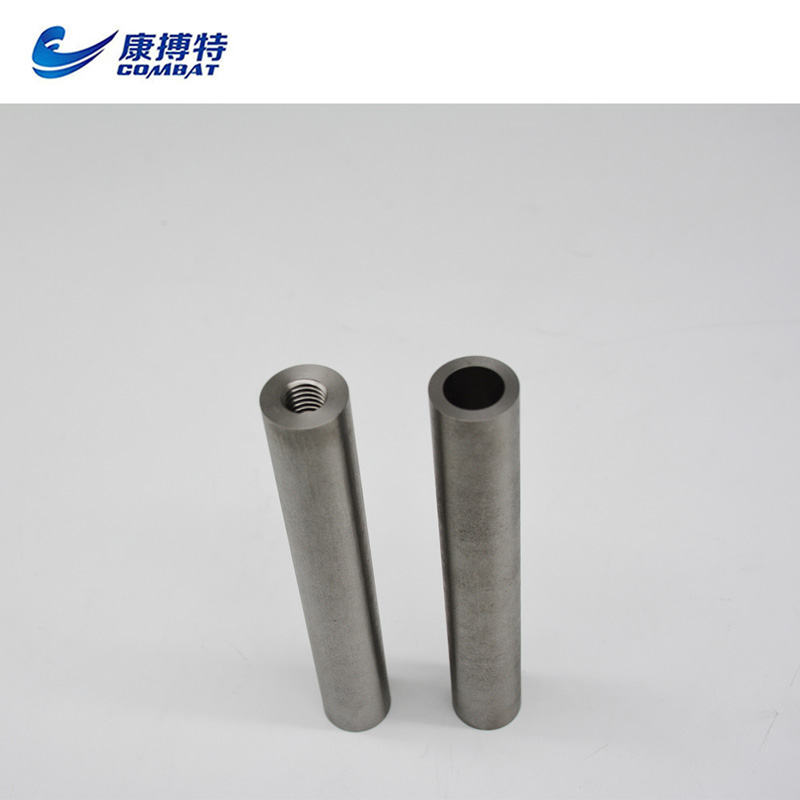
Thermal cycling presents one of the most demanding challenges in high-temperature industrial environments, where materials must endure repeated heating and cooling cycles without permanent deformation. A tungsten tube stands as one of the most reliable solutions for applications requiring exceptional dimensional stability across extreme temperature ranges. Understanding how a tungsten tube maintains its structural integrity during these thermal stresses is essential for engineers and manufacturers designing systems for aerospace, nuclear reactors, furnace components, and semiconductor processing equipment.

The remarkable performance of a tungsten tube during thermal cycling stems from its unique combination of material properties, crystalline structure, and mechanical characteristics that distinguish it from conventional stainless steel or nickel-based alloys. When engineers evaluate materials for extreme thermal duty, a tungsten tube consistently demonstrates superior resistance to deformation, creep, and permanent dimensional change—even after thousands of thermal cycles.
Material Properties That Enable Deformation Resistance
Exceptional Melting Point and Thermal Stability
Tungsten possesses the highest melting point of any metal at approximately 3,695 degrees Celsius, which directly translates to outstanding thermal stability when fabricated into a tungsten tube. This extraordinary melting point means that even at the extreme temperatures encountered in furnace linings, rocket nozzles, and semiconductor processing chambers, the material remains in its solid state with minimal atomic mobility. When a tungsten tube is subjected to thermal cycling from room temperature to 2,500 degrees Celsius and back repeatedly, the material does not undergo phase transformations or recrystallization events that would compromise dimensional accuracy.
The thermal cycling process itself induces stress through differential expansion and contraction, yet a tungsten tube resists permanent deformation because tungsten has a relatively low coefficient of thermal expansion compared to most engineering materials. This coefficient of approximately 4.5 × 10⁻⁶ per degree Celsius remains stable across the entire operating temperature range, meaning expansion and contraction occur in predictable, reversible increments.
Crystalline Structure and Lattice Stability
A tungsten tube maintains its deformation resistance through a body-centered cubic crystal structure that provides exceptional strength at elevated temperatures. Unlike face-centered cubic structures found in copper or aluminum alloys, the body-centered cubic lattice of tungsten exhibits increasing yield strength as temperature rises within the normal operating range. This property is counterintuitive—most metals weaken as they heat—but a tungsten tube strengthens, providing superior deformation resistance precisely when thermal stresses peak.
The crystalline lattice structure in a tungsten tube also resists creep, which is the gradual permanent deformation that occurs under sustained stress at elevated temperature. During each thermal cycle, when a tungsten tube reaches peak temperature, the material experiences maximum thermal stress, yet the lattice structure prevents atomic rearrangement and slip that would cause plastic deformation. The dislocation movement that would normally cause creep is suppressed by the strong metallic bonding characteristic of tungsten.
Mechanisms of Deformation Resistance During Cycling
Elastic Recovery and Reversible Strain
When a tungsten tube undergoes thermal cycling, the stress-strain behavior remains predominantly elastic rather than plastic throughout the process. During the heating phase, thermal expansion stresses develop, but a tungsten tube accommodates these stresses through elastic strain—the material temporarily deforms but stores the strain energy elastically. When temperature decreases during the cooling phase, elastic recovery occurs automatically, restoring the original dimensions without any permanent deformation accumulation.
This elastic-dominated behavior contrasts sharply with materials that accumulate residual plastic strain with each thermal cycle. A tungsten tube can endure thousands of complete thermal cycles from cryogenic temperatures to 2,500 degrees Celsius with dimensional tolerance drift measured in less than one percent. For precision equipment in semiconductor manufacturing or nuclear applications, this level of dimensional stability is indispensable, and only a tungsten tube and similar refractory materials can reliably deliver such performance.
Prevention of Crack Initiation and Propagation
Thermal cycling induces cyclic stress patterns that can initiate fatigue cracks in many materials through repeated stress concentration at surface defects or grain boundaries. A tungsten tube resists crack initiation through its inherent toughness at elevated temperatures and its excellent fatigue resistance. The material's high yield strength remains stable across temperature transitions, preventing the stress concentration ratios that typically drive crack nucleation in less stable materials.
Furthermore, a tungsten tube exhibits exceptional fracture toughness characteristics that prevent rapid crack propagation even if microstructural defects exist. The metallic bonding in tungsten provides extensive plastic deformation capability ahead of crack tips, which absorbs energy and prevents brittle failure modes. During thermal cycling, this mechanism ensures that a tungsten tube maintains structural integrity even after millions of temperature transitions.
Industrial Performance and Practical Implications
Real-World Thermal Cycling Applications
Aerospace and defense industries rely on a tungsten tube for rocket engine nozzles and heat shields specifically because of its unmatched deformation resistance during repeated launch and re-entry cycles. A tungsten tube experiences extreme thermal gradients and rapid temperature transitions—conditions that would cause catastrophic deformation in conventional materials within hours. The material performs reliably for dozens of launch cycles without requiring replacement or dimensional correction.
In nuclear reactor design, a tungsten tube serves critical containment and shielding functions in environments where neutron bombardment and thermal cycling create compounded material challenges. The combination of radiation hardening requirements and thermal cycling duty is met by a tungsten tube, which maintains dimensional stability and structural integrity far better than austenitic stainless steels or other traditional nuclear materials. This performance directly increases reactor efficiency and extends maintenance intervals.
Cost-Benefit Analysis and Material Selection
While the initial material cost of a tungsten tube is substantially higher than conventional steel tubing, the long-term cost of ownership favors tungsten tube selection in applications with demanding thermal cycling profiles. A tungsten tube requires minimal maintenance, replacement cycles extend from years to decades, and performance degradation remains negligible even after thermal cycling regimens that would exhaust other materials. For furnace linings, laboratory equipment, and industrial heating chambers, a tungsten tube represents superior value despite higher upfront investment.
The deformation resistance of a tungsten tube also enables tighter dimensional tolerances in critical assemblies. Where conventional materials require larger safety margins and more frequent recalibration, a tungsten tube maintains predictable dimensions that simplify downstream manufacturing processes and reduce scrap rates. Engineers can design more compact, efficient systems around a tungsten tube than would be feasible with less thermally stable materials.
FAQ
What makes a tungsten tube superior to ceramic tubes for thermal cycling applications?
A tungsten tube combines excellent deformation resistance with superior thermal conductivity and electrical conductivity, which ceramic tubes lack. While ceramic materials offer high-temperature stability, a tungsten tube conducts heat efficiently away from hot zones, reducing thermal gradients that drive deformation. Additionally, a tungsten tube exhibits superior impact resistance and can be welded or machined into complex geometries, whereas ceramic tubes are brittle and difficult to work with in precision manufacturing environments.
How many thermal cycles can a tungsten tube endure before performance degradation occurs?
A properly engineered tungsten tube can endure tens of thousands of complete thermal cycles with minimal performance degradation. The exact cycling capability depends on the temperature range, heating rate, and operational stresses, but a tungsten tube maintains dimensional stability and mechanical properties far longer than competitive materials. Degradation typically occurs through surface oxidation or contamination rather than through bulk material deformation, and these effects develop gradually over years of continuous use.
Can a tungsten tube be used in oxidizing environments at high temperature?
Pure tungsten oxidizes at temperatures above approximately 1,100 degrees Celsius in air, so a tungsten tube must operate in inert atmosphere or vacuum environments at peak temperatures, or be coated with protective materials. For applications requiring oxidation resistance, a tungsten tube can be used with ceramic coatings or operated in controlled atmospheres. Many aerospace and nuclear applications specifically employ a tungsten tube in non-oxidizing environments where the material can reach its full potential for deformation resistance without oxidation concerns.