
 EN
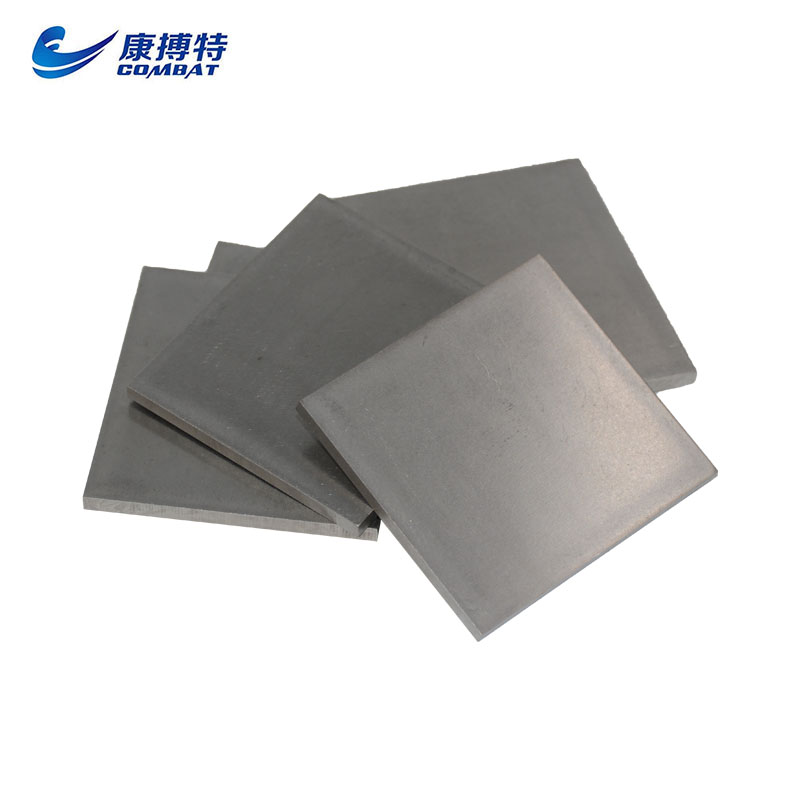
Tungsten plate stands as one of the most exceptional materials in modern engineering when thermal stress conditions demand absolute reliability. The exceptional performance of tungsten plate under extreme heat results from its unique metallurgical properties that make it fundamentally different from conventional metals and alloys. Understanding how tungsten plate resists deformation under thermal stress requires examining the material science principles that govern its behavior at elevated temperatures.
The thermal resistance capabilities of tungsten plate emerge directly from its atomic structure and crystalline arrangement. When subjected to thermal stress, most materials experience grain growth, phase transformation, and progressive loss of mechanical strength. Tungsten plate, however, maintains dimensional stability and structural integrity across temperature ranges where aluminum alloys, steel, and titanium would fail catastrophically. This exceptional thermal behavior makes tungsten plate the preferred choice for applications where deformation cannot be tolerated.
Fundamental Material Properties That Enable Thermal Resistance
Exceptional Melting Point and Thermal Stability
Tungsten plate possesses the highest melting point of any metal at 3,422°C, a property that directly influences how tungsten plate resists deformation under thermal stress. This extraordinarily high melting temperature means that tungsten plate remains in a solid crystalline state under conditions where other metals transition through phase changes. When tungsten plate is exposed to thermal stress, the metal's lattice structure resists the atomic agitation and rearrangement that cause dimensional instability in conventional materials. The atomic bonds in tungsten plate are particularly strong, requiring substantial thermal energy to overcome the forces holding atoms in their crystalline positions.
Low Thermal Expansion Coefficient
A critical factor explaining how tungsten plate resists deformation involves its remarkably low thermal expansion coefficient. When materials heat up, atoms vibrate more intensely, pushing against neighboring atoms and causing the material to expand. Tungsten plate expands at approximately 4.5 micrometers per meter per degree Celsius, significantly lower than steel at 12 micrometers or aluminum at 23 micrometers. This minimal expansion means that tungsten plate maintains dimensional accuracy even after multiple thermal cycling events. The restricted dimensional change of tungsten plate directly translates into superior resistance to the warping, buckling, and stress concentration that plague other materials under thermal stress conditions.
Structural Integrity Under Thermal Cycling
Resistance to Thermal Fatigue and Cracking
Thermal stress does not simply involve sustained heating; it frequently includes rapid temperature transitions and cyclical heating and cooling patterns. When materials experience these temperature cycles, differential expansion and contraction create internal stresses that accumulate with each cycle. Tungsten plate demonstrates exceptional resistance to thermal fatigue because its low thermal expansion minimizes the internal stress gradients. The crystalline structure of tungsten plate also exhibits remarkable tolerance for repeated thermal cycling without initiating microcracking or progressive material degradation. Applications requiring thousands of thermal cycles benefit from how tungsten plate resists deformation through this inherent fatigue resistance mechanism.
Mechanical Strength Retention at Elevated Temperatures
Most engineering materials lose significant strength as temperature increases. Steel loses approximately 50% of its room-temperature strength by 500°C, while aluminum becomes nearly unusable above 300°C. Tungsten plate maintains approximately 90% of its tensile strength even at 1,500°C, demonstrating how tungsten plate resists deformation through retained mechanical properties. The material science behind this phenomenon involves tungsten plate's strong metallic bonding and refractory character. When tungsten plate is subjected to thermal stress at elevated temperatures, the material continues to support mechanical loads without significant permanent deformation or creep, unlike conventional metals that gradually yield and flow under sustained thermal stress.
Industrial Applications Demonstrating Thermal Deformation Resistance
Aerospace and High-Temperature Engine Components
Aerospace applications represent a primary domain where tungsten plate resists deformation under thermal stress conditions that would be intolerable in commercial materials. Rocket nozzles, re-entry heat shields, and advanced propulsion systems routinely employ tungsten plate because these environments exceed 3,000°C in localized regions. The aerospace industry chose tungsten plate specifically because it maintains structural geometry and mechanical properties under these extreme thermal stresses. Engineering teams rely on tungsten plate to prevent the catastrophic failures that would result if engine components warped or deformed during operation. The thermal deformation resistance of tungsten plate enables aerospace systems to operate continuously without thermal management constraints that would otherwise limit performance.
Industrial Furnace Components and Heat Treatment Equipment
Industrial furnaces processing ceramics, semiconductors, and specialty alloys employ tungsten plate in heating elements, support structures, and thermal chamber components. Furnace operators depend on tungsten plate to resist deformation because even minor dimensional changes compromise product quality and equipment reliability. When tungsten plate is installed as a heating element or thermal support, its resistance to thermal stress ensures that the furnace maintains precise temperature profiles and geometric consistency throughout extended operational cycles. The industrial sector has validated that tungsten plate consistently delivers superior performance compared to molybdenum, tantalum, and other refractory metals when thermal stress demands absolute deformation resistance.
Semiconductor Processing and Chemical Reactor Applications
Semiconductor manufacturing involves rapid thermal cycling between temperature extremes, conditions where most materials fail through thermal stress accumulation. Tungsten plate components in semiconductor processing equipment resist the deformation that would otherwise cause equipment misalignment and process variability. Chemical reactors operating at extreme temperatures similarly depend on tungsten plate to maintain structural integrity during transient heating and cooling events. These applications demonstrate that tungsten plate resists deformation not only under sustained thermal stress but particularly under the cyclic thermal conditions most likely to cause conventional materials to fail through creep, warping, or thermal fatigue mechanisms.
FAQ
Why does tungsten plate resist deformation better than molybdenum or tantalum under thermal stress?
Tungsten plate possesses a higher melting point than molybdenum or tantalum, combined with superior mechanical strength retention at elevated temperatures. While molybdenum and tantalum are also refractory metals, tungsten plate exhibits lower creep rates and better dimensional stability under sustained thermal stress. The atomic structure of tungsten plate provides stronger resistance to the atomic rearrangement and grain growth mechanisms that cause deformation in competing materials. For applications requiring maximum thermal deformation resistance, tungsten plate consistently outperforms alternative refractory metals when thermal stress conditions approach extreme limits.
Can tungsten plate develop deformation if thermal stress cycles become extremely frequent?
While tungsten plate demonstrates exceptional resistance to thermal fatigue, extremely rapid cycling or shock temperature changes could theoretically cause surface-level deformation if stress concentrations become severe. However, tungsten plate tolerates thermal cycling conditions that would destroy conventional materials through thermal fatigue. Modern applications using tungsten plate typically operate within the material's thermal stress tolerance limits, where deformation remains negligible even after thousands of cycles. Proper design engineering ensures that the application thermal stresses remain within tungsten plate's proven operational envelope.
What maintenance or monitoring is required to ensure tungsten plate maintains deformation resistance?
Tungsten plate requires minimal maintenance to maintain its thermal stress resistance properties because the material does not degrade under normal operational thermal conditions. Periodic visual inspection for contamination or surface oxidation helps verify that tungsten plate components remain in proper condition. Unlike materials that progressively lose strength through thermal cycling, tungsten plate maintains consistent properties throughout its service life. Most applications using tungsten plate need only standard maintenance protocols to ensure equipment continues delivering reliable thermal deformation resistance.