Unmatched Durability in Extreme Operating Environments
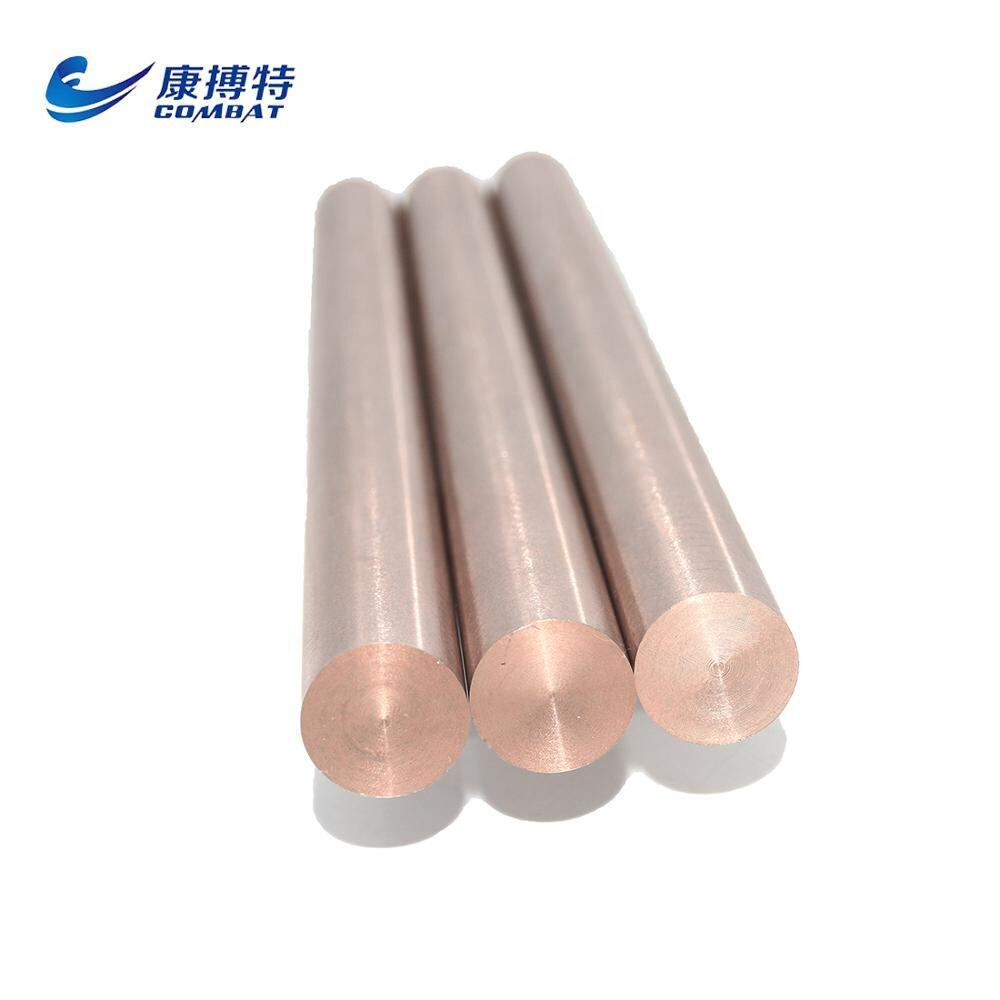
Tungsten copper rods demonstrate remarkable longevity in operating conditions that rapidly degrade alternative materials, delivering cost savings through extended service life and reduced replacement frequency. The material's resistance to thermal fatigue stems from the complementary thermal expansion characteristics of its constituent phases, which accommodate thermal cycling without developing internal stresses that lead to cracking. Components subjected to repeated heating and cooling cycles, such as welding electrodes and electrical contacts, maintain structural integrity through thousands of thermal cycles that would fracture brittle materials or cause ductile materials to soften and deform. The wear resistance of tungsten copper rods in sliding contact applications exceeds that of bronze, brass, and aluminum alloys by substantial margins. Electrical brush applications in motors and generators benefit from the material's ability to maintain contact pressure and electrical continuity while resisting abrasive wear from commutator surfaces. The self-lubricating properties of copper reduce friction and prevent galling, while tungsten particles provide load-bearing capacity that prevents excessive wear. In erosive environments where high-velocity particles or fluids impinge on component surfaces, tungsten copper rods resist material loss through the hardness of the tungsten phase and the ductility of the copper matrix. Nozzles, orifices, and flow control devices maintain dimensional accuracy and flow characteristics longer than stainless steel or ceramic alternatives. The material's performance in radiation environments makes it valuable for nuclear applications where neutron and gamma radiation damage material structures. Tungsten's high atomic number provides effective radiation shielding while copper conducts heat generated by radiation absorption. Research reactors, medical radiation therapy equipment, and industrial radiography systems incorporate tungsten copper components that maintain functionality in radiation fields that would embrittle or activate other materials. The chemical stability of tungsten copper rods in oxidizing atmospheres at elevated temperatures prevents the rapid degradation seen in pure copper, which forms thick oxide scales that impair thermal and electrical performance. Components operating in furnace atmospheres, combustion environments, and high-temperature process streams maintain surface integrity and functional properties. The material resists sulfidation, a common failure mode in petrochemical processing environments where sulfur compounds attack metal surfaces. Tungsten copper rods serve in catalyst support structures, reactor internals, and heat exchanger components where sulfur resistance extends equipment life and reduces maintenance costs.

 EN