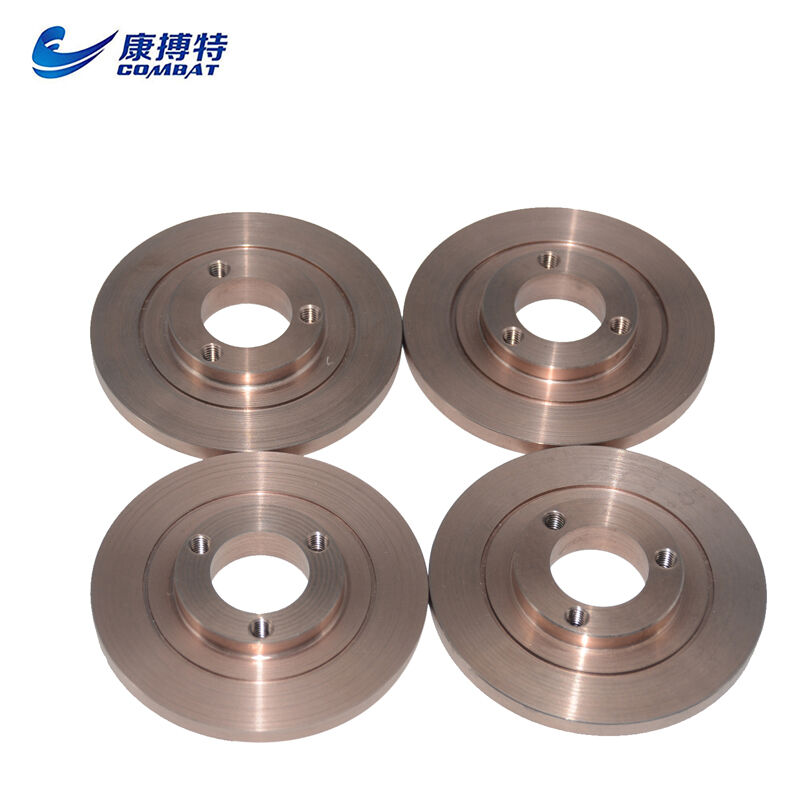
Tungsten copper alloy delivers measurable performance improvements that directly impact operational efficiency and equipment longevity. The material withstands temperatures exceeding 1000 degrees Celsius without softening or deforming, which means your equipment maintains precision and reliability even under punishing thermal conditions. This temperature resistance translates to fewer replacements, reduced downtime, and lower maintenance costs over the equipment lifecycle. The electrical conductivity of tungsten copper alloy reaches 45 to 60 percent of pure copper's conductivity, depending on composition ratios. This level of conductivity ensures efficient current transfer while the tungsten component provides the mechanical strength needed to resist contact welding and erosion. Your electrical systems benefit from stable contact resistance, minimal voltage drop, and consistent performance across millions of switching cycles. The thermal expansion coefficient of tungsten copper alloy closely matches semiconductor materials and ceramics, which prevents stress-induced failures in electronic assemblies. When components heat and cool during operation, matched thermal expansion rates eliminate the cracking, delamination, and connection failures that plague mismatched material combinations. This compatibility extends product lifespans and improves reliability in mission-critical applications. Arc erosion resistance stands as another practical advantage. During electrical switching operations, arcs form between contacts and gradually erode material surfaces. Tungsten copper alloy resists this erosion far better than pure copper or silver-based contacts, maintaining contact geometry and electrical performance throughout extended service periods. You see this advantage as stable contact resistance measurements and predictable equipment behavior over time. The material machines cleanly using electrical discharge machining processes, allowing fabrication of complex geometries with tight tolerances. Manufacturers can produce intricate cooling channels, precise contact surfaces, and optimized shapes that enhance performance without the tool wear and processing difficulties associated with pure tungsten. This machinability reduces production costs and enables design flexibility. Density control represents another benefit. By adjusting tungsten content, engineers tailor the alloy density from 11 to 17 grams per cubic centimeter. Applications requiring compact mass benefit from higher tungsten percentages, while thermal management applications optimize the copper content for maximum heat transfer. This adjustability lets you specify material properties that match your exact requirements rather than compromising with standard materials. The non-magnetic properties of tungsten copper alloy prevent interference with sensitive electronic equipment and measurement devices. In applications where magnetic fields would disrupt operations or corrupt data, this alloy provides structural support and thermal management without introducing magnetic complications. Corrosion resistance in many environments exceeds that of pure copper, particularly in applications involving electrical arcing where copper oxide formation would degrade performance. The tungsten component stabilizes the surface and maintains electrical contact quality throughout the service life.

24
Apr
24
Apr
24
Apr

 EN


