High-Performance Moly Wire: Superior Molybdenum Wire Solutions for Industrial Applications

Get a Free Quote

Our representative will contact you soon.
Email
Name
Country/Region
Mobile/WhatsApp
Product Name
Message
0/1000

moly wire

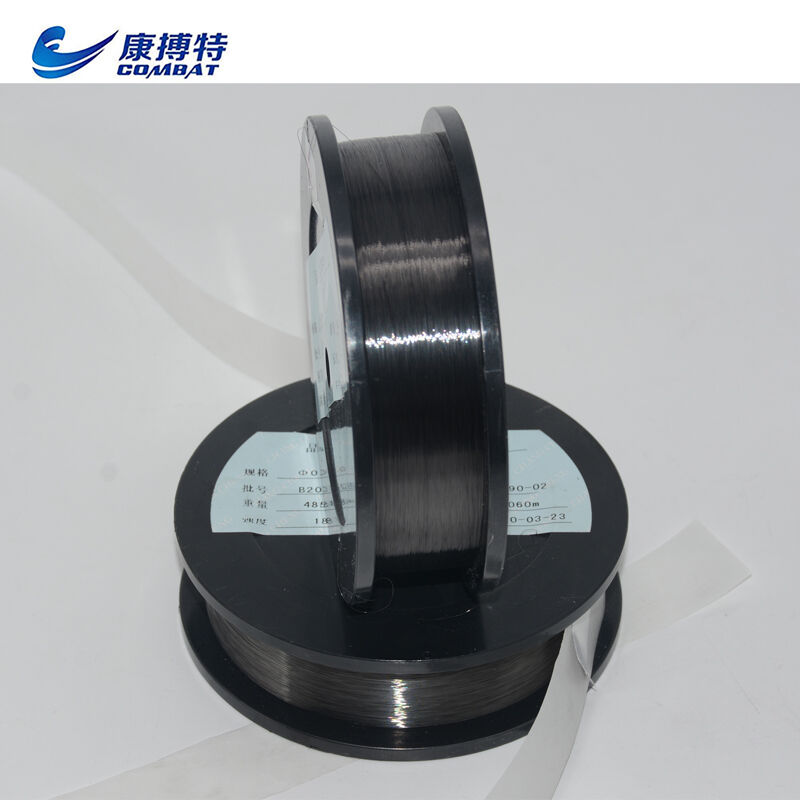
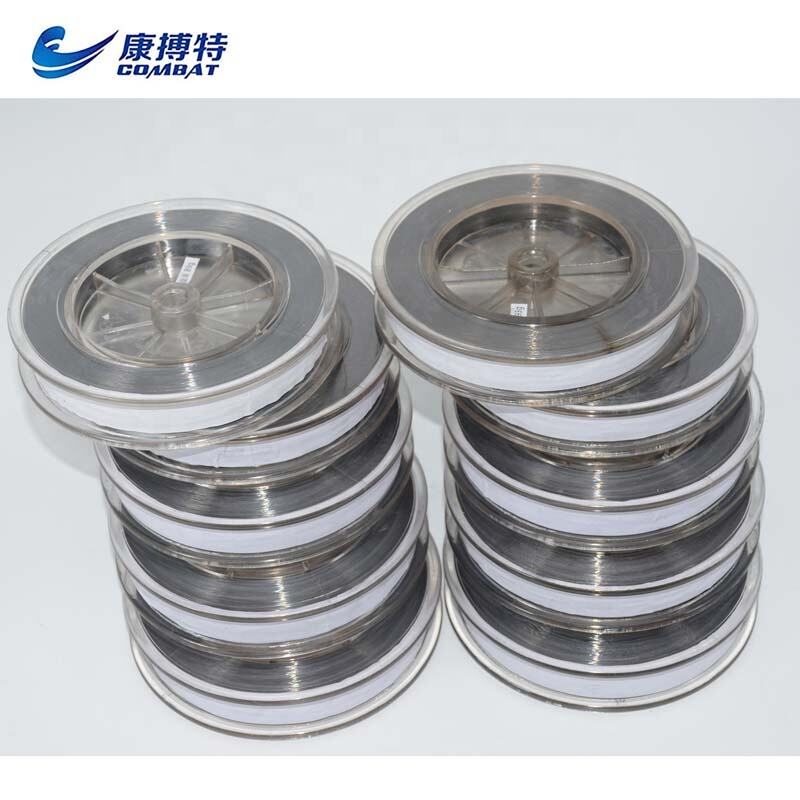
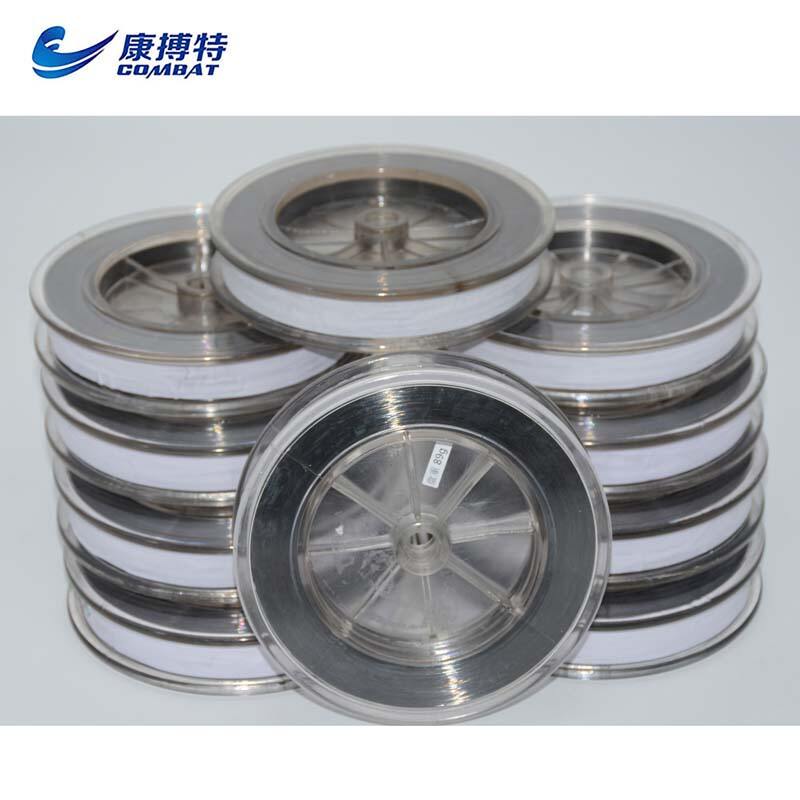
Moly wire, also known as molybdenum wire, represents a specialized metallic filament manufactured from pure molybdenum or molybdenum alloys. This high-performance material has become indispensable across numerous industrial sectors due to its exceptional physical and chemical properties. The wire exhibits remarkable strength retention at elevated temperatures, making it suitable for applications where conventional materials would fail. Molybdenum's atomic structure provides inherent stability, allowing the wire to maintain its integrity in environments exceeding 2000 degrees Celsius. The manufacturing process involves careful refinement of molybdenum ore, followed by precise drawing techniques that create wires ranging from ultra-fine diameters measured in micrometers to thicker gauges for heavy-duty applications. The main functions of moly wire span thermal management, electrical conduction, and structural support in extreme conditions. In thermal applications, the wire serves as heating elements in high-temperature furnaces, where its ability to withstand prolonged exposure to intense heat without degradation proves invaluable. The material's low thermal expansion coefficient ensures dimensional stability during temperature fluctuations, preventing warping or structural failure. For electrical applications, moly wire offers excellent conductivity combined with mechanical strength, making it ideal for specialized electronic components and power transmission systems. The wire's technological features include superior tensile strength, exceptional creep resistance, and minimal vapor pressure at high temperatures. These characteristics enable moly wire to function reliably in vacuum environments, semiconductor manufacturing equipment, and aerospace applications. The material resists oxidation at moderate temperatures and maintains its mechanical properties across a wide temperature range. Industries utilizing moly wire include glass manufacturing, where it supports molten glass handling; lighting production, particularly in halogen and specialized bulb filaments; medical equipment manufacturing for radiation shielding components; and metallurgical processing for high-temperature furnace construction. The aerospace sector employs moly wire in rocket nozzles and heat shields, while the electronics industry incorporates it into semiconductor fabrication tools and precision instruments.

New Product Recommendations

The advantages of moly wire extend far beyond basic material properties, offering tangible benefits that directly impact operational efficiency and cost-effectiveness for businesses across multiple sectors. One primary advantage lies in its exceptional durability under extreme conditions. Unlike standard metal wires that degrade rapidly when exposed to high temperatures, moly wire maintains its structural integrity and performance characteristics even when subjected to temperatures approaching its melting point of 2623 degrees Celsius. This durability translates to extended service life, reducing the frequency of replacements and minimizing downtime in critical industrial processes. Companies using moly wire in their furnaces and heating systems report significantly lower maintenance costs compared to alternative materials, as the wire resists sagging, breaking, and oxidation that typically plague conventional heating elements. The material's strength-to-weight ratio provides another practical advantage, particularly in applications where minimizing mass is crucial. Moly wire delivers robust mechanical performance without adding excessive weight to assemblies, making it valuable in aerospace components and portable equipment where every gram matters. This characteristic also simplifies installation procedures, as the wire can be handled and positioned more easily than heavier alternatives while still providing superior load-bearing capacity. Energy efficiency represents a compelling benefit for operations utilizing moly wire in heating applications. The wire's excellent electrical conductivity ensures efficient power conversion to heat, minimizing energy waste and reducing operational costs. Its low thermal expansion means less energy is lost to dimensional changes during heating cycles, and the material's ability to reach target temperatures quickly shortens warm-up periods, further conserving energy. Manufacturing facilities have documented energy savings of up to 15 percent after switching to moly wire heating elements from traditional materials. The versatility of moly wire accommodates diverse industrial requirements without compromising performance. It can be formed into various configurations, including coils, meshes, and custom shapes, allowing engineers to design solutions tailored to specific applications. This adaptability eliminates the need for multiple material types in complex systems, simplifying inventory management and procurement processes. The wire's compatibility with vacuum environments and inert atmospheres expands its utility in specialized manufacturing processes, including semiconductor production and advanced materials research. Reliability in harsh chemical environments provides additional value, as moly wire resists corrosion from many aggressive substances that would rapidly degrade other metals. This chemical stability ensures consistent performance in applications involving reactive gases or corrosive atmospheres, protecting investments in equipment and reducing the risk of unexpected failures that could halt production.

Practical Tips

The 31st Russia International Metal and Metallurgy Industry Exhibition 2025 (Metal-Expo)

24

Apr

The 31st Russia International Metal and Metallurgy Industry Exhibition 2025 (Metal-Expo)

View More
International Ferroalloys 2025

24

Apr

International Ferroalloys 2025

View More
The Grand Opening Of The 2025 China International Powder Metallurgy, Hard Alloy And Advanced Ceramics Exhibition

24

Apr

The Grand Opening Of The 2025 China International Powder Metallurgy, Hard Alloy And Advanced Ceramics Exhibition

View More
Luoyang Combat Tungsten & Molybdenum Materials Co., Ltd. Shines at Asia Ferroalloys 2025 Conference to Forge Global Collaboration Opportunities

24

Apr

Luoyang Combat Tungsten & Molybdenum Materials Co., Ltd. Shines at Asia Ferroalloys 2025 Conference to Forge Global Collaboration Opportunities

View More

Get a Free Quote

Our representative will contact you soon.
Email
Name
Country/Region
Mobile/WhatsApp
Product Name
Message
0/1000

moly wire

Unmatched High-Temperature Performance for Critical Industrial Applications

Unmatched High-Temperature Performance for Critical Industrial Applications

The exceptional high-temperature performance of moly wire stands as its most distinguishing characteristic, setting it apart from virtually all other metallic wire materials available in the industrial marketplace. This capability stems from molybdenum's fundamental atomic structure and crystalline properties, which enable the material to retain mechanical strength and electrical conductivity at temperatures where most metals would melt or lose structural integrity. When industrial processes demand reliable performance in environments exceeding 1500 degrees Celsius, moly wire emerges as one of the few viable solutions. The wire maintains approximately 80 percent of its room-temperature tensile strength even at 1400 degrees Celsius, a performance level unattainable with steel, copper, or nickel-based alloys. This strength retention proves critical in applications such as sapphire crystal growth furnaces, where heating elements must support their own weight plus additional loads while operating continuously at extreme temperatures. The material's low vapor pressure at elevated temperatures prevents contamination issues that plague other high-temperature materials, making moly wire essential in vacuum furnaces and controlled-atmosphere processing equipment. Manufacturing facilities producing specialized glass products rely on moly wire electrodes because the material does not introduce impurities into molten glass, ensuring product quality and optical clarity. The aerospace industry leverages this high-temperature capability in rocket engine components and thermal protection systems, where materials must withstand the intense heat generated during atmospheric re-entry or propulsion system operation. Beyond simple temperature resistance, moly wire exhibits remarkable thermal shock resistance, allowing it to endure rapid temperature changes without cracking or failing. This property proves invaluable in applications involving cyclic heating and cooling, such as heat treatment furnaces that must be brought up to temperature quickly and cooled efficiently between production runs. The wire's thermal conductivity facilitates uniform heat distribution, eliminating hot spots that could damage workpieces or compromise process consistency. Research laboratories conducting materials science experiments at extreme temperatures depend on moly wire heating elements because they provide stable, controllable heat without introducing variables that could skew experimental results. The longevity of moly wire in high-temperature service delivers substantial economic benefits, as replacement intervals extend from weeks or months with conventional materials to years with properly maintained molybdenum components.
Superior Mechanical Strength and Dimensional Stability Across Temperature Ranges

Superior Mechanical Strength and Dimensional Stability Across Temperature Ranges

The mechanical strength and dimensional stability of moly wire provide critical advantages in precision applications where maintaining exact specifications is non-negotiable. Molybdenum possesses one of the highest elastic modulus values among metallic elements, meaning the wire resists deformation under load more effectively than softer metals. This stiffness enables moly wire to maintain tension in applications such as wire EDM machining, where even slight variations in wire position would compromise cutting accuracy and surface finish quality. Manufacturers of precision components for medical devices, aerospace systems, and electronics rely on moly wire EDM processes to achieve tolerances measured in micrometers, confident that the wire will not stretch or deflect during cutting operations. The material's low coefficient of thermal expansion ensures that moly wire components maintain their dimensions across wide temperature ranges, a property essential in applications where thermal cycling occurs regularly. Furnace support structures fabricated from moly wire retain their geometry through countless heating and cooling cycles, preventing misalignment issues that would arise with materials exhibiting greater thermal expansion. This dimensional stability extends to electrical applications, where consistent spacing between conductors must be maintained to prevent short circuits or performance degradation. Semiconductor manufacturing equipment incorporates moly wire components specifically because the material's dimensional consistency ensures repeatable process results across thousands of production cycles. The wire's creep resistance at elevated temperatures prevents the gradual deformation that affects many metals under sustained load and heat, ensuring that moly wire structures maintain their intended shape throughout their service life. Lighting manufacturers utilize this property in halogen lamp filaments, where the wire must maintain precise coil geometry to ensure consistent light output and prevent premature failure. The combination of high tensile strength and ductility allows moly wire to be formed into complex shapes without sacrificing structural integrity, enabling engineers to design intricate heating elements, support structures, and electrical components that would be impossible to fabricate from more brittle high-temperature materials. Quality control in moly wire production ensures consistent mechanical properties throughout each spool, eliminating the performance variations that can occur with less rigorously manufactured materials. This consistency allows engineers to design systems with confidence, knowing that replacement wire will perform identically to the original installation.
Cost-Effective Long-Term Solution with Minimal Maintenance Requirements

Cost-Effective Long-Term Solution with Minimal Maintenance Requirements

While the initial investment in moly wire may exceed that of conventional materials, the long-term cost-effectiveness of this high-performance material becomes evident through extended service life, reduced maintenance requirements, and improved operational efficiency. The exceptional durability of moly wire in demanding applications translates directly to lower total cost of ownership, as replacement frequency decreases dramatically compared to alternative materials. Industrial furnaces equipped with moly wire heating elements typically operate for three to five years between element replacements, whereas conventional resistance wire may require replacement every six to twelve months under similar conditions. This extended service interval reduces not only material costs but also the labor expenses and production downtime associated with maintenance activities. Manufacturing facilities can schedule replacements during planned maintenance windows rather than responding to unexpected failures that disrupt production schedules and compromise delivery commitments. The reliability of moly wire reduces the need for backup systems and redundant components, simplifying equipment design and reducing capital expenditure on spare parts inventory. The material's resistance to oxidation and chemical attack minimizes degradation during storage, allowing companies to maintain reasonable spare parts inventories without concern about shelf-life limitations that affect reactive metals. Energy efficiency gains achieved through moly wire implementation contribute to ongoing operational savings, as the material's superior electrical and thermal properties reduce power consumption in heating applications. Companies operating multiple furnaces or heating systems report annual energy cost reductions of thousands of dollars after converting to moly wire elements, with payback periods typically ranging from 18 to 36 months depending on usage intensity and energy costs. The wire's ability to reach operating temperature quickly reduces warm-up time, increasing equipment utilization and throughput in production environments where time-to-temperature impacts productivity. Maintenance simplicity represents another economic advantage, as moly wire installations typically require minimal adjustment or calibration once properly installed. The material's dimensional stability eliminates the need for periodic tension adjustments common with materials that creep or stretch over time, reducing maintenance labor requirements and the technical expertise needed for system upkeep. This simplicity allows companies to redeploy skilled maintenance personnel to more complex tasks while routine inspections can be performed by less specialized staff. The environmental benefits of moly wire contribute to corporate sustainability goals while potentially reducing regulatory compliance costs, as the material's longevity reduces waste generation and its energy efficiency lowers carbon footprints associated with industrial heating processes. Companies pursuing environmental certifications or responding to customer demands for sustainable manufacturing practices find that moly wire adoption supports these initiatives while delivering measurable performance improvements.

Get a Free Quote

Our representative will contact you soon.
Email
Name
Country/Region
Mobile/WhatsApp
Product Name
Message
0/1000