
 EN
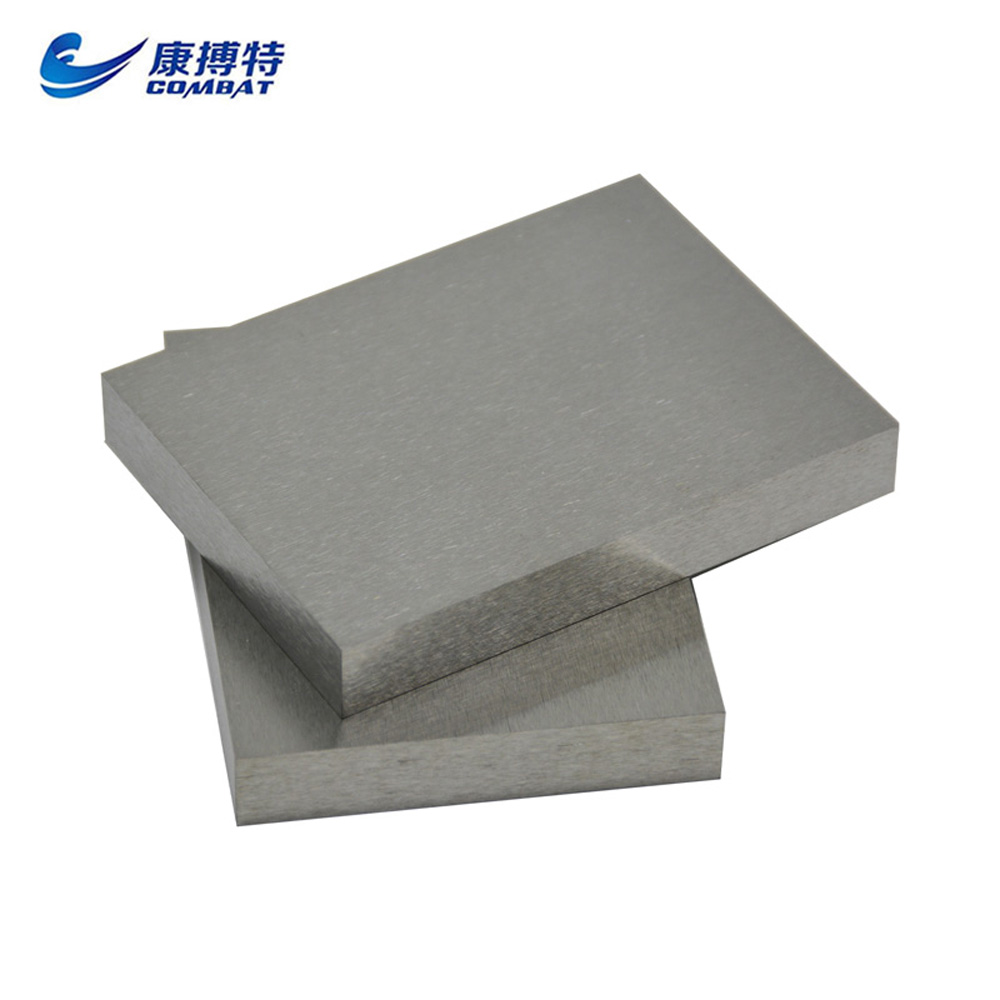
When industrial components are subjected to extreme heat over extended periods, one of the most destructive and insidious failure modes is creep deformation — a slow, progressive distortion that occurs even when applied stress is well below the material's yield strength. Engineers working with refractory metals understand this challenge intimately, and for many high-temperature applications, the tzm plate has emerged as a material of choice precisely because of its exceptional resistance to this phenomenon. Understanding how this resistance works at a fundamental level is essential for making informed material selection decisions in aerospace, semiconductor manufacturing, and high-performance industrial furnace design.
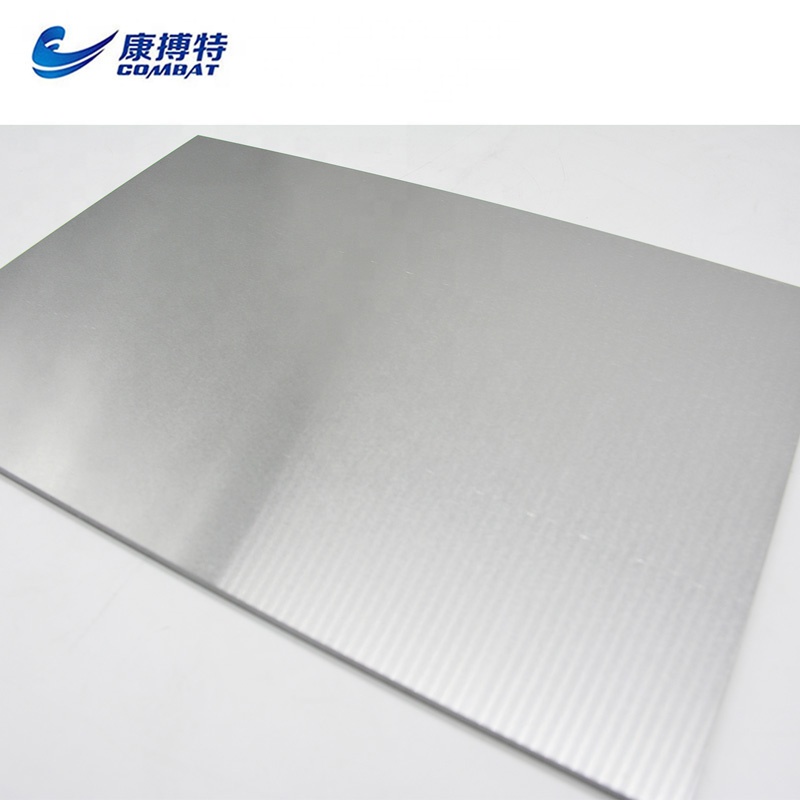
The tzm plate is an alloy composed primarily of molybdenum, with small but critically important additions of titanium, zirconium, and carbon. These additions, though modest in percentage, transform the mechanical behavior of the base metal in ways that are highly relevant to creep performance. At temperatures ranging from 700°C to well above 1200°C, the tzm plate maintains dimensional stability and load-bearing capacity that pure molybdenum or many competing refractory materials simply cannot match. This article explores the specific metallurgical mechanisms that give tzm plate its anti-creep characteristics and why those mechanisms remain effective during prolonged thermal exposure.
Understanding Creep Deformation in Refractory Metals
What Creep Actually Means in a High-Temperature Context
Creep is a time-dependent plastic deformation that occurs when a material is held under constant stress at elevated temperatures. Unlike sudden fracture or elastic deformation, creep progresses gradually and can be particularly difficult to detect until significant dimensional change has occurred. For components like support structures in vacuum furnaces, rocket nozzle liners, or semiconductor process chambers, even small amounts of creep can compromise function, alignment, and safety.
The rate at which creep occurs depends heavily on temperature, stress level, and the material's microstructural resistance to dislocation movement. In metals, creep is fundamentally driven by the motion of dislocations through the crystal lattice, grain boundary sliding, and atomic diffusion. All three of these mechanisms accelerate significantly as temperature rises, which is why materials like aluminum or steel are unsuitable for sustained high-temperature load-bearing applications.
Refractory metals, with their inherently high melting points and strong atomic bonding, offer a natural advantage. However, even within the refractory metal family, there is a significant hierarchy of creep resistance. Pure molybdenum, for example, begins to show measurable creep at temperatures above approximately 700°C under moderate stress. The tzm plate overcomes this limitation through deliberate alloying strategies that restrain dislocation movement and stabilize the grain structure.
Why Standard Molybdenum Falls Short Without Alloying
Pure molybdenum has excellent thermal properties — a melting point of approximately 2623°C, high thermal conductivity, and a low coefficient of thermal expansion. But in its unalloyed form, the metal's creep resistance degrades noticeably at sustained operating temperatures. This is because pure molybdenum lacks the microstructural pinning mechanisms needed to prevent dislocation glide and grain boundary migration over time.
When molybdenum is used in the form of a tzm plate, the situation changes substantially. The titanium, zirconium, and carbon additions create fine carbide and oxide dispersoids within the metal matrix. These dispersoids act as obstacles to dislocation motion — a mechanism known as dispersion strengthening — and they remain stable at high temperatures where conventional solid-solution strengthening elements would lose their effectiveness through diffusion.
This stability is one of the core reasons why the tzm plate is specifically engineered for prolonged high-temperature service rather than just short-duration thermal spikes. The alloy's design reflects a deep understanding of how microstructural features must behave over time, not just at the moment of initial heating.
Metallurgical Mechanisms Behind Creep Resistance in TZM Plate
Dispersion Strengthening Through Carbide and Oxide Precipitates
The most significant contributor to the creep resistance of tzm plate is the presence of finely dispersed TiC, ZrC, and ZrO2 particles distributed throughout the molybdenum matrix. These particles are typically on the order of nanometers to tens of nanometers in size and form during the powder metallurgy processing and subsequent thermomechanical treatments used to produce commercial tzm plate.
When dislocations attempt to move through the lattice under applied stress and thermal activation, they encounter these dispersoids and are effectively pinned or forced to bow around them through a mechanism described by the Orowan bypass model. This bowing requires additional stress beyond what would be needed in a particle-free matrix, which means the material can sustain higher loads without undergoing creep deformation at the same rate.
Critically, the carbide and oxide particles in tzm plate retain their structure and distribution at elevated temperatures. Unlike precipitates in nickel superalloys or aluminum alloys that can coarsen rapidly through Ostwald ripening, the TiC and ZrC phases in tzm plate are thermodynamically stable at the temperatures where this alloy is commonly used. This thermal stability of the dispersoids is what allows the tzm plate to maintain its anti-creep performance during prolonged exposure rather than seeing rapid degradation of its strengthening mechanisms.
Grain Boundary Stabilization and Its Role in Limiting Creep
Another important mechanism in tzm plate is the stabilization of grain boundaries against high-temperature migration. Grain boundary sliding is one of the dominant creep mechanisms in metals at temperatures above approximately 0.4 to 0.5 of the melting temperature in Kelvin. For molybdenum, this threshold is well within the operating range of typical high-temperature applications, making grain boundary control a critical design consideration.
The zirconium and titanium additions in tzm plate segregate preferentially to grain boundaries, where they reduce grain boundary energy and increase the resistance to sliding. Additionally, small carbide particles at grain boundaries act as physical barriers that limit boundary migration and sliding under stress. The combined effect is a grain boundary structure that is significantly more resistant to creep-driven deformation than would be found in pure molybdenum or lower-grade molybdenum alloys.
This grain boundary engineering aspect of tzm plate is particularly valuable for components that must maintain tight dimensional tolerances during service. In applications such as TFT-LCD glass substrate carriers or precision vacuum furnace fixtures, even micron-scale distortion from grain boundary sliding can compromise the entire process or component stack. The tzm plate addresses this by providing grain boundary stability that persists through thousands of hours of thermal cycling.
How Processing Conditions Influence Creep Performance of TZM Plate
Powder Metallurgy and Thermomechanical Processing Effects
The final creep performance of a tzm plate is not solely determined by its chemical composition. The processing route used to manufacture the plate plays an equally important role in determining the distribution, size, and morphology of the strengthening dispersoids, as well as the resulting grain structure. Commercial tzm plate is typically produced through powder metallurgy followed by hot rolling, stress relief annealing, and precision surface finishing.
During powder metallurgy consolidation, the fine alloying additions are incorporated in a highly uniform distribution, and sintering conditions are carefully controlled to achieve full density while preserving fine microstructural features. The subsequent hot rolling imparts a worked microstructure with elongated grains and a refined dispersoid distribution that further enhances resistance to dislocation movement. The degree of reduction during rolling, the rolling temperature, and intermediate annealing steps all influence the final microstructure and thus the creep behavior of the finished tzm plate.
For applications involving prolonged service above 1000°C, it is important to understand the thermal history of the tzm plate being used, as plates that have been inadequately processed may exhibit larger grain sizes or less uniform dispersoid distributions that reduce creep resistance. Specifying tzm plate from suppliers who maintain rigorous process control is therefore directly relevant to service performance in demanding applications.
Recrystallization Temperature and Its Practical Importance
The worked microstructure of a tzm plate provides strengthening through stored dislocation density and refined grain structure, but this strengthening is only maintained as long as the material remains below its recrystallization temperature. Recrystallization, the process by which new strain-free grains grow to replace the deformed worked structure, causes a dramatic reduction in mechanical properties including creep resistance.
One of the critical advantages of tzm plate over pure molybdenum is that the alloying additions raise the recrystallization temperature significantly — typically to above 1300°C for tzm plate compared to approximately 900 to 1000°C for pure molybdenum. This means that in applications where operating temperatures reach 1100 to 1200°C, a tzm plate retains its worked microstructure and all the associated creep resistance benefits, while a pure molybdenum plate would have fully recrystallized and lost much of its strength.
This elevated recrystallization threshold is not an accident — it is a direct result of the dispersoid pinning effect on grain boundaries, which inhibits the nucleation and growth of recrystallized grains. The same particles that resist creep during service also protect the microstructure from recrystallization-induced property degradation, making the tzm plate an internally consistent design solution for high-temperature structural integrity.
Applications Where TZM Plate Creep Resistance Delivers Critical Value
High-Temperature Furnace Components and Structural Fixtures
The high-temperature vacuum and atmosphere furnace industry is one of the primary beneficiaries of the creep resistance offered by tzm plate. Furnace components such as hot zones, radiation shields, support boats, and fixture plates must maintain their geometry through thousands of heating and cooling cycles at temperatures that can reach 1400°C and above. Any creep-driven distortion in these components leads to part misalignment, inconsistent heat treatment results, or in severe cases, component collapse.
A tzm plate used as a furnace fixture or support structure maintains its flatness and dimensional integrity over service lives that would cause pure molybdenum components to warp measurably. This directly translates into reduced maintenance frequency, lower component replacement costs, and more consistent process outcomes for the end user. The economics of using tzm plate in these applications are therefore strongly favorable when total cost of ownership is considered rather than just initial material cost.
In sintering furnaces used for advanced ceramics, hard metals, and specialty metallurgical powders, the dimensional stability of tzm plate fixtures is particularly important because the parts being processed often require controlled atmosphere exposure with very precise dimensional constraints during the thermal cycle. Any fixture distortion introduces variability that the process cannot absorb without affecting product quality.
Aerospace and Defense High-Temperature Structural Uses
Aerospace and defense applications impose some of the most demanding combinations of high temperature, high stress, and long service duration encountered in engineering. Rocket nozzle throat inserts, hypersonic vehicle structural panels, and certain re-entry vehicle components are areas where tzm plate has been evaluated or deployed because of its creep resistance under sustained thermal loading.
In rocket propulsion applications, the throat region of a nozzle experiences temperatures and pressure loads that demand a material capable of maintaining its geometry without creeping, since any dimensional change directly affects the thrust coefficient and combustion efficiency. The tzm plate provides the combination of high melting point, thermal conductivity for heat management, and creep resistance that makes it viable in such extreme duty cycles.
For hypersonic applications, sustained aerodynamic heating creates surface temperatures and thermal gradients that would cause most structural metals to soften and deform. The tzm plate's elevated recrystallization temperature and dispersoid-strengthened microstructure allow it to maintain structural performance in these environments, provided appropriate oxidation protection is applied, since molybdenum-based alloys require surface coatings or controlled atmosphere in oxidizing conditions.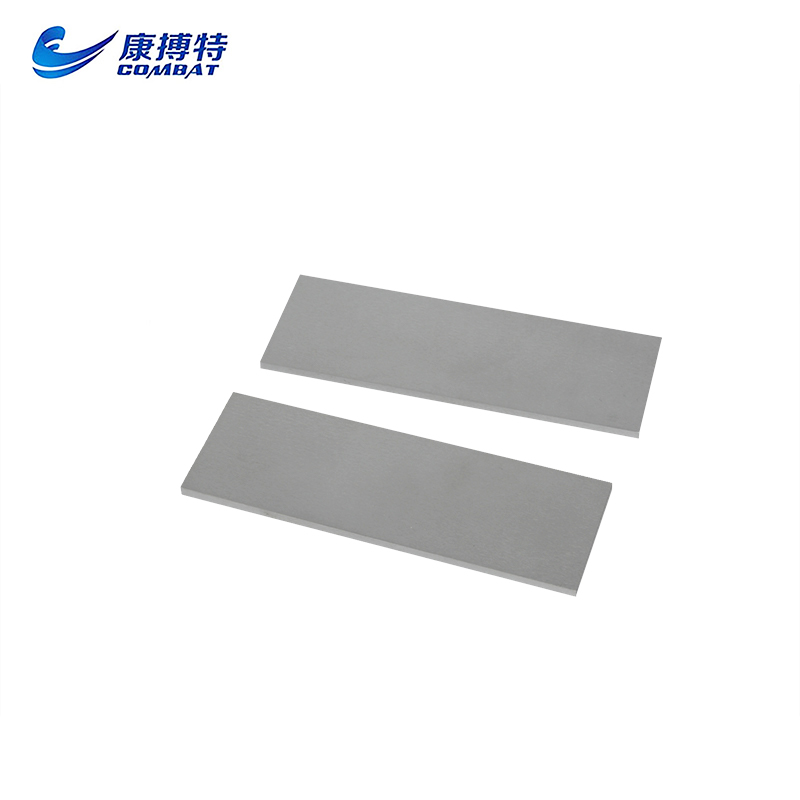
FAQ
At what temperature range does tzm plate provide effective creep resistance?
The tzm plate provides meaningful creep resistance advantages over pure molybdenum starting around 700°C, and it maintains effective structural performance up to approximately 1400°C in non-oxidizing or protected environments. The elevated recrystallization temperature — typically above 1300°C — means the worked microstructure and its associated dispersoid-pinning mechanisms remain intact through the typical operating temperature range of most high-temperature industrial and aerospace applications. Beyond 1400°C, creep rates begin to rise more steeply, and alternative ultra-high-temperature materials may need to be considered depending on the specific stress and time requirements.
How does tzm plate compare to pure molybdenum in terms of creep resistance?
The tzm plate offers substantially superior creep resistance compared to pure molybdenum, primarily because of the dispersion strengthening provided by TiC and ZrC precipitates and the grain boundary stabilization effect of titanium and zirconium additions. Pure molybdenum undergoes recrystallization at approximately 900 to 1000°C and loses much of its strength above this point, while tzm plate retains its microstructural integrity to significantly higher temperatures. Under equivalent stress and temperature conditions, the creep rate of tzm plate can be an order of magnitude lower than that of pure molybdenum, which translates directly into longer component service life and better dimensional stability.
Does prolonged thermal exposure degrade the creep resistance of tzm plate over time?
Over very extended service periods at temperatures near the upper end of the alloy's operating range, some coarsening of the dispersoid particles in tzm plate can occur, which gradually reduces their effectiveness as dislocation barriers. However, this coarsening process is much slower than in conventional precipitation-hardened alloys because TiC and ZrC have very low solubility in the molybdenum matrix and high thermodynamic stability. For most practical industrial applications, a tzm plate maintains adequate creep resistance throughout its expected service life, and degradation is typically managed by selecting operating conditions within the alloy's design envelope and by using appropriately processed material with the correct initial microstructure.
What surface condition or protective treatment is recommended when using tzm plate at high temperatures in air?
The tzm plate, like all molybdenum-based alloys, is susceptible to oxidation in air at temperatures above approximately 400 to 500°C due to the formation of volatile MoO3. For applications where air or oxidizing atmospheres are present, a tzm plate must be protected by suitable coatings such as silicide-based systems, or the component must be operated in a vacuum or inert gas environment. The creep resistance properties discussed in this article apply most directly to service in controlled atmospheres or vacuum conditions. Oxidation protection is a parallel design requirement that does not diminish the alloy's intrinsic creep resistance but is a necessary consideration for application engineering.
Table of Contents
- Understanding Creep Deformation in Refractory Metals
- Metallurgical Mechanisms Behind Creep Resistance in TZM Plate
- How Processing Conditions Influence Creep Performance of TZM Plate
- Applications Where TZM Plate Creep Resistance Delivers Critical Value
-
FAQ
- At what temperature range does tzm plate provide effective creep resistance?
- How does tzm plate compare to pure molybdenum in terms of creep resistance?
- Does prolonged thermal exposure degrade the creep resistance of tzm plate over time?
- What surface condition or protective treatment is recommended when using tzm plate at high temperatures in air?