
 EN
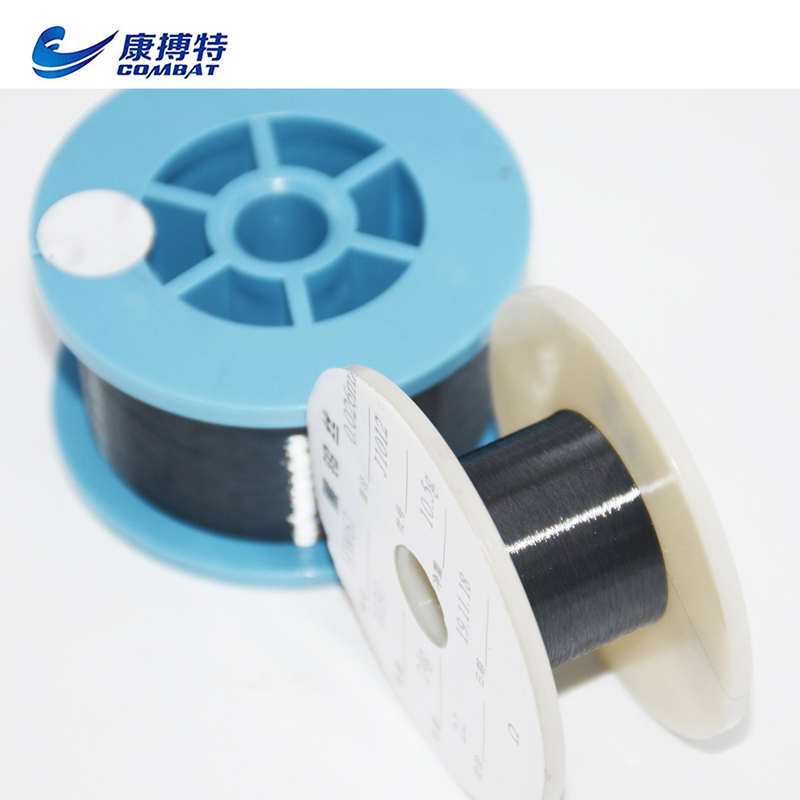
Thermal expansion represents one of the most critical challenges in high-temperature industrial applications where tungsten wire serves as a primary material choice. When tungsten wire undergoes repeated heating cycles, it experiences dimensional changes that can significantly affect equipment performance, precision tolerances, and operational reliability. Understanding how tungsten wire behaves during these thermal stress events is essential for engineers, manufacturers, and equipment designers who depend on this exceptional material for mission-critical applications.

Tungsten wire exhibits unique thermal characteristics that set it apart from conventional materials used in industrial heating and electrical applications. With a coefficient of linear thermal expansion of approximately 4.5 micrometers per meter per degree Celsius, tungsten wire demonstrates relatively modest expansion compared to many competing materials. This favorable property, combined with tungsten wire's extraordinary melting point of 3,422 degrees Celsius, makes it an ideal candidate for applications requiring stable performance across extreme temperature ranges and repeated thermal cycling conditions.
Thermal Expansion Mechanisms in Tungsten Wire
Understanding Atomic Movement During Heating
When tungsten wire is heated, atomic vibrations increase at the material's crystal lattice structure. This increased atomic motion causes atoms to occupy slightly larger average positions within the lattice, resulting in measurable dimensional expansion. During cooling, tungsten wire contracts back toward its original dimensions as atomic vibration decreases. In repeated heating cycles, this expansion and contraction cycle occurs many times, and the consistency of tungsten wire's response is what makes this material invaluable for precision applications where dimensional stability matters most.
Coefficient of Thermal Expansion and Performance
The coefficient of thermal expansion for tungsten wire is one of the lowest among high-temperature materials, which directly translates to superior dimensional stability during thermal cycling. Unlike materials with higher expansion coefficients, tungsten wire undergoes minimal length changes during heating, reducing mechanical stress on surrounding components and connections. This characteristic means that equipment designed with tungsten wire can maintain tighter tolerances and experience less mechanical fatigue from thermal stress. The low expansion rate of tungsten wire allows engineers to design more precise heating elements, welding electrodes, and electronic components without accounting for massive dimensional changes between hot and cold states.
Response to Repeated Thermal Cycles
Cyclic Loading and Material Stability
Repeated heating and cooling cycles create cyclic thermal stress on tungsten wire, yet this material demonstrates exceptional resistance to thermal fatigue degradation. Each time tungsten wire expands and contracts, the material experiences mechanical strain, but the crystalline structure of tungsten remains remarkably stable across thousands of cycles. Industrial equipment using tungsten wire in furnaces, lamps, and resistance heating applications can operate through countless thermal cycles without significant performance degradation. The stability of tungsten wire under cyclic conditions reflects its robust metallurgical structure and high melting point, which together minimize structural changes that might occur in less thermally stable materials.
Residual Stress and Long-Term Performance
As tungsten wire undergoes repeated thermal cycling, residual stress can accumulate within the material if expansion and contraction rates differ between tungsten wire and surrounding materials or components. However, tungsten wire's predictable thermal behavior minimizes unexpected residual stress development compared to materials with less consistent thermal properties. Equipment designers can anticipate the expansion behavior of tungsten wire and incorporate design features that accommodate these dimensional changes without creating dangerous stress concentrations. Over extended operational periods, tungsten wire maintains its dimensional characteristics and mechanical properties, ensuring that equipment performance remains consistent whether the device has completed ten thermal cycles or ten thousand cycles.
Industrial Applications and Thermal Management
High-Temperature Heating Elements
Tungsten wire finds extensive use in industrial furnaces and laboratory heating equipment where materials must withstand extreme temperatures while responding predictably to thermal cycling. The tungsten wire used in heating elements must expand and contract uniformly to prevent breakage and maintain electrical contact throughout the heating process. In resistance furnaces operating at temperatures exceeding 2,500 degrees Celsius, tungsten wire provides consistent performance through hundreds of operational cycles. Equipment designers select tungsten wire specifically because they can predict its expansion behavior and engineer systems that accommodate these predictable dimensional changes without failure.
Precision Applications Requiring Dimensional Stability
Beyond heating applications, tungsten wire serves critical functions in precision instruments where thermal expansion must remain minimal and predictable. In vacuum tubes, halogen lamps, and electronic devices, tungsten wire components must maintain precise spacing and alignment despite temperature fluctuations during operation and power cycling. The low thermal expansion coefficient of tungsten wire allows manufacturers to achieve tight tolerances and ensure that thermal cycling does not gradually shift component positions or degrade performance. Industries relying on tungsten wire for precision applications benefit from decades of established thermal property data that enables confident engineering predictions.
FAQ
What happens to tungsten wire when it cools after heating?
When tungsten wire cools after heating, it contracts back toward its original dimensions as atomic vibrations decrease and atoms return to closer average positions within the crystal lattice. The contraction rate mirrors the expansion rate, making the cooling process predictable and reversible. Unlike materials that exhibit permanent dimensional changes after thermal cycling, tungsten wire returns reliably to consistent dimensions, allowing equipment to function with stable performance across multiple thermal cycles.
How does repeated thermal cycling affect tungsten wire's mechanical properties?
Repeated thermal cycling has minimal adverse effects on tungsten wire's mechanical properties when the material is used within its designed operating parameters. The exceptional thermal stability of tungsten wire means that thousands of heating cycles cause negligible changes to strength, ductility, or other critical mechanical properties. Equipment manufacturers can rely on tungsten wire to maintain consistent performance characteristics throughout the device's operational lifetime, making it an economical choice for applications requiring extended service life under demanding thermal conditions.
Why is tungsten wire preferred over other materials for thermal cycling applications?
Tungsten wire is preferred for thermal cycling applications because it combines the lowest thermal expansion coefficient among refractory metals with the highest melting point of all elements. This combination means tungsten wire experiences minimal dimensional change during heating while remaining structurally stable at extreme temperatures. The predictability of tungsten wire's thermal response allows engineers to design simpler, more reliable systems without complex compensation mechanisms. Additionally, tungsten wire's proven performance across millions of operating hours in industrial applications provides confidence that the material will continue performing reliably through repeated thermal cycles throughout the equipment's service life.