
 EN
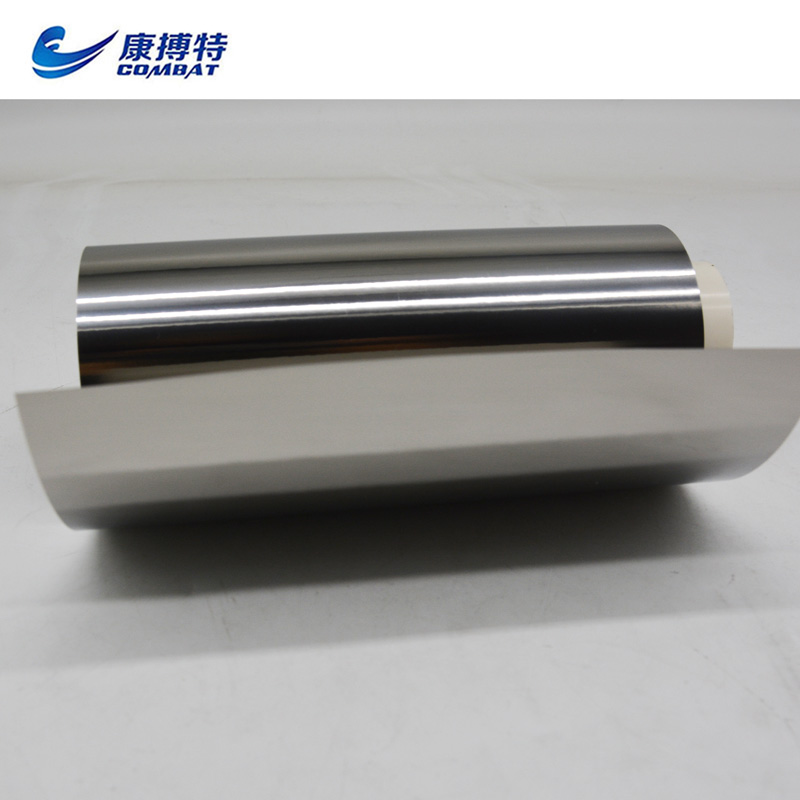
Tungsten foil has become an essential material in industries requiring extreme thermal protection and radiation shielding. The exceptional performance of tungsten foil in high temperature shielding applications stems from its remarkable physical properties, including one of the highest melting points of any metal and superior density that provides effective barrier capabilities. Engineers and thermal designers increasingly turn to tungsten foil because it combines reliability, longevity, and proven effectiveness in demanding environments where conventional materials fail.
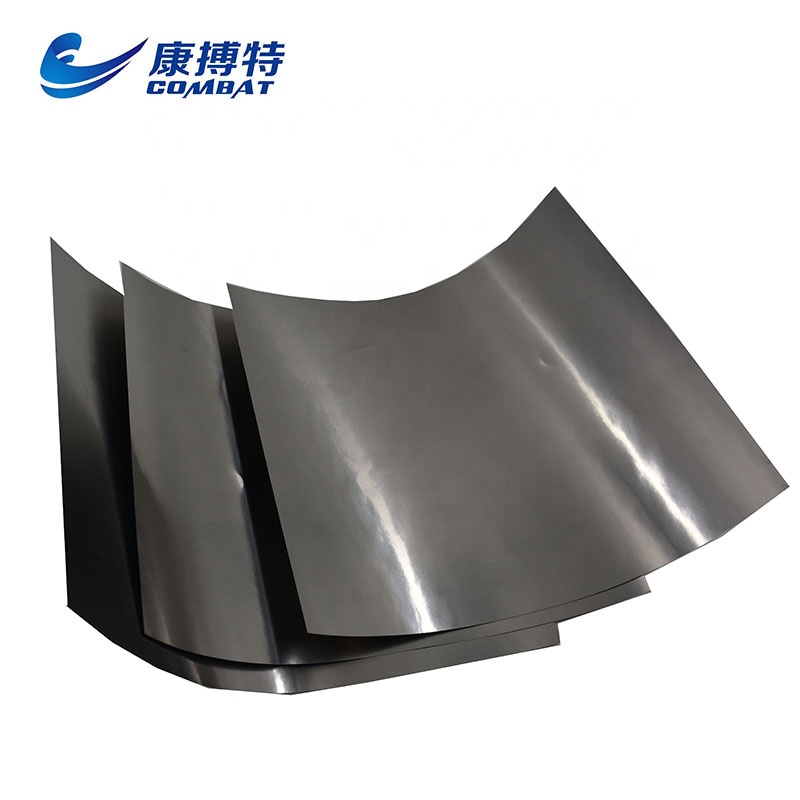
High temperature shielding applications demand materials that maintain structural integrity, dimensional stability, and protective capability when exposed to extreme heat, radiation, or both simultaneously. Tungsten foil delivers on all these requirements, making it the preferred choice for aerospace thermal management, nuclear reactors, plasma confinement systems, and industrial furnace protection. Understanding how tungsten foil performs under these conditions is critical for engineers selecting materials for mission-critical applications where failure is not an option.
Thermal Properties and Heat Resistance of Tungsten Foil
Melting Point and Temperature Stability
Tungsten foil maintains structural integrity at temperatures where most metals become plastic or melt entirely. With a melting point of 3,422 degrees Celsius, tungsten foil stands alone among commercial shielding materials, enabling performance in applications exceeding 2,500 degrees Celsius continuously. This extraordinary thermal stability means tungsten foil does not degrade, warp, or lose mechanical properties during extended high temperature exposure. The thermal expansion coefficient of tungsten foil remains remarkably low, preventing the material from experiencing stress-induced cracking common in materials with high thermal expansion rates.
Thermal Conductivity and Heat Dissipation
Beyond simply withstanding heat, tungsten foil actively conducts thermal energy away from protected components, distributing heat evenly across its surface. The thermal conductivity of tungsten foil at high temperatures enables efficient heat management in dual-wall shielding systems where outer tungsten foil layers transfer heat to cooling systems while inner layers protect sensitive equipment. This heat dissipation characteristic of tungsten foil distinguishes it from purely passive shielding materials, as it can reduce localized hot spots that might damage adjacent components. In rocket engines and plasma reactors, tungsten foil's thermal conductivity proves critical for maintaining operational temperatures within safe equipment tolerances.
Radiation Shielding and Material Density Advantages
Gamma Ray and Particle Radiation Protection
Tungsten foil provides exceptional radiation shielding due to its extremely high atomic number and material density, roughly 19.3 grams per cubic centimeter. This density makes tungsten foil significantly more effective than lead or steel at stopping high-energy photons and particles with thinner material thicknesses. In nuclear applications, tungsten foil layers require less total thickness than traditional shielding materials while delivering equivalent or superior protection, reducing overall system weight and complexity. The radiation attenuation properties of tungsten foil have established it as the preferred material in medical imaging equipment, nuclear fuel storage, and space radiation protection systems.
Multi-Layer Shielding Systems Using Tungsten Foil
Engineers frequently combine tungsten foil with other materials in layered shielding architectures to optimize performance and cost-effectiveness across multiple threat spectra. Tungsten foil acts as the primary barrier against hard radiation, often paired with polyethylene layers for neutron moderation or boron-containing materials for thermal neutron capture. This multi-material approach leverages the specific strengths of tungsten foil while using complementary materials for secondary radiation types. The versatility of tungsten foil in composite shielding systems has made it indispensable in contemporary nuclear and space applications where comprehensive protection protocols demand multiple defense layers.
Industrial Application Performance and Durability
Furnace Linings and Refractory Applications
Industrial furnaces operating above 2,000 degrees Celsius increasingly employ tungsten foil components for critical shielding and containment applications. Unlike ceramic refractories, tungsten foil maintains dimensional accuracy and does not develop the micro-fractures that lead to refractory failure and maintenance shutdowns. The durability of tungsten foil in industrial furnace environments translates directly to extended equipment service intervals and reduced replacement costs. Semiconductor and metallurgical processing facilities rely on tungsten foil components because they prevent contamination while resisting thermal shock better than traditional refractory materials.
Aerospace Propulsion and Engine Bay Insulation
Rocket engines and advanced aircraft propulsion systems depend on tungsten foil shielding to protect fuel systems, electronic controls, and structural components from catastrophic thermal damage. Tungsten foil maintains its protective effectiveness throughout the entire flight envelope, from launch through sustained high-temperature operation. The weight efficiency of tungsten foil compared to thicker conventional shielding materials helps engineers meet strict aerospace weight budgets while maintaining mission-critical thermal protection. Test data consistently demonstrates that tungsten foil performs reliably across thousands of thermal cycles, making it essential for reusable launch systems and hypersonic vehicle applications.
FAQ
Can tungsten foil be used as a standalone shielding material or must it be combined with other materials?
Tungsten foil can function as a standalone high temperature shielding material for applications requiring primarily thermal or gamma radiation protection. However, comprehensive shielding systems typically employ tungsten foil as a primary barrier within multi-layer architectures that address different radiation types and energy spectra. The specific application requirements, thermal environment, radiation types present, and budget constraints determine whether tungsten foil serves alone or as part of a composite system. Engineers should evaluate the complete threat environment before deciding whether tungsten foil standalone suffices or integration with complementary materials is necessary.
What thickness of tungsten foil is typically required for effective high temperature shielding?
Tungsten foil thickness requirements depend on the specific application, radiation energy levels, temperature environment, and desired attenuation performance. For high temperature thermal shielding, tungsten foil thicknesses typically range from 0.1 millimeters to 2 millimeters depending on heat intensity and exposure duration. For radiation protection, thicker tungsten foil provides greater attenuation, though the high density means even thin tungsten foil layers deliver significant shielding effectiveness. Performance calculations and application-specific engineering analysis determine the optimal tungsten foil thickness for each unique high temperature shielding scenario.
How does tungsten foil compare to other refractory and shielding materials in terms of longevity?
Tungsten foil substantially outperforms ceramic refractories, graphite, and molybdenum materials in thermal cycling resistance and high temperature longevity. While ceramic materials can withstand extreme temperatures, tungsten foil maintains mechanical properties and resists degradation mechanisms like thermal shock cracking and oxidation that affect alternatives. Tungsten foil components typically remain in service five to ten times longer than conventional refractory materials in equivalent extreme temperature environments. The superior durability of tungsten foil justifies higher material costs through dramatically reduced maintenance requirements and fewer unplanned equipment failures.