
 EN
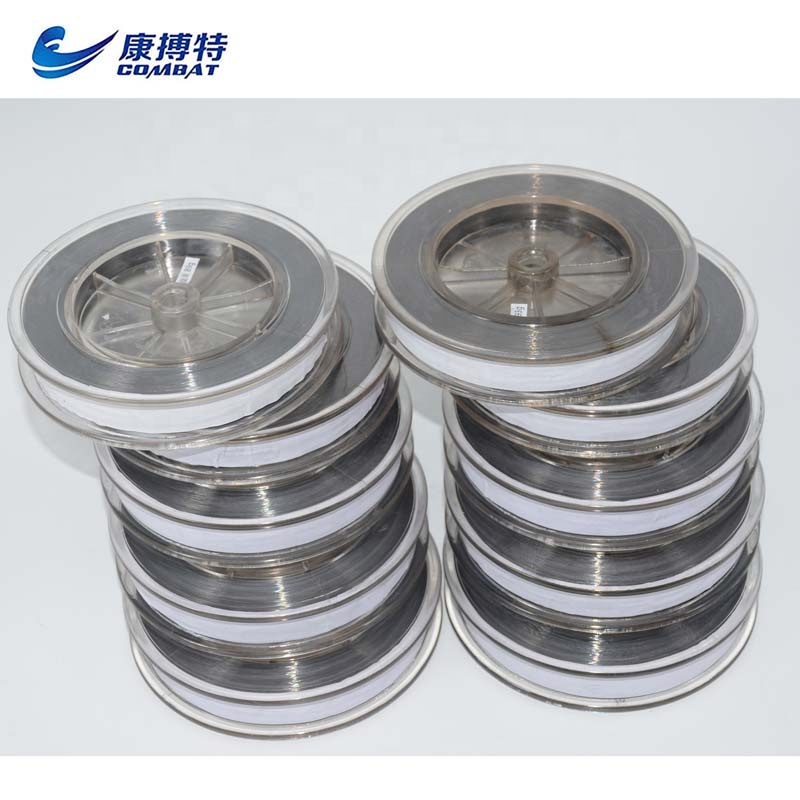
In high-performance industrial environments, materials are routinely subjected to extreme and repeated temperature changes. Among the various refractory metals used in such conditions, molybdenum wire has earned a reputation for exceptional resilience. Understanding how this material responds to repeated thermal cycling is essential for engineers, materials scientists, and procurement specialists who rely on it in critical applications ranging from furnace heating elements to semiconductor manufacturing equipment.
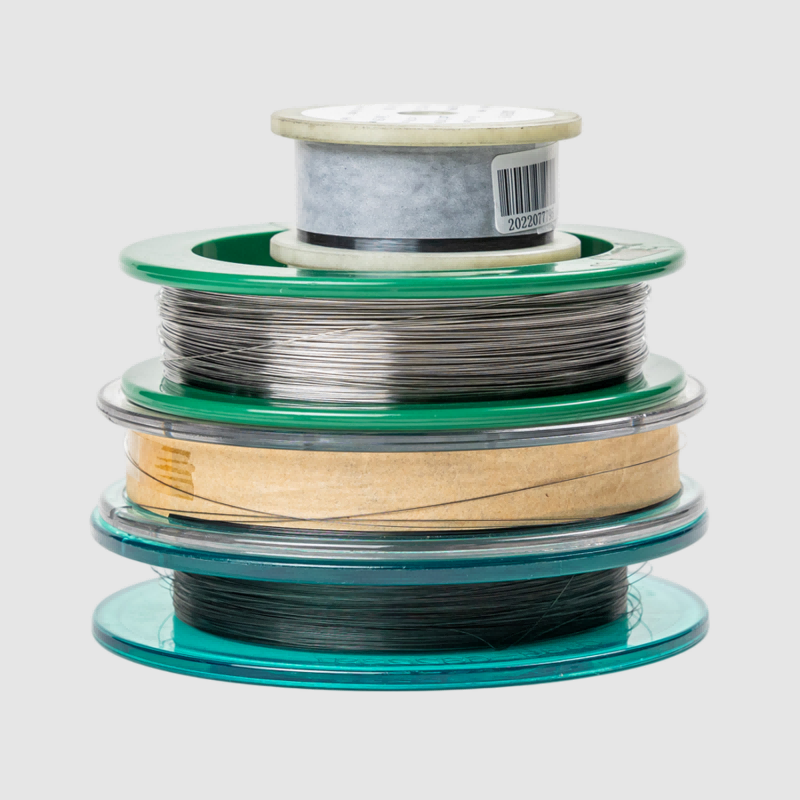
Thermal cycling — the process of repeatedly heating a material to elevated temperatures and then cooling it back down — places enormous mechanical and structural demands on any conductor or structural element. molybdenum wire is specifically valued in these scenarios because of its unique combination of high melting point, low thermal expansion coefficient, and retained mechanical strength at elevated temperatures. This article explores the underlying mechanisms of how molybdenum wire handles these cycles and what that means for real-world applications.
The Thermal Properties That Define Molybdenum Wire Performance
High Melting Point and Thermal Stability
Molybdenum has a melting point of approximately 2,623 degrees Celsius, making molybdenum wire one of the most thermally stable metallic conductors available for industrial use. This extraordinary tolerance for heat means that even under aggressive thermal cycling conditions, the material does not approach phase transitions or softening points that would compromise its structural integrity. Most metals begin to lose tensile strength well before they melt, but molybdenum wire retains a significant portion of its mechanical properties at temperatures that would render other metals unusable.
In practical terms, this means that when molybdenum wire is heated rapidly to 1,200 degrees Celsius and then cooled, the core material remains largely unchanged in terms of grain structure during the early stages of its service life. The wire continues to carry loads, maintain geometry, and conduct electricity reliably, cycle after cycle. This thermal stability is not merely theoretical — it has been validated through decades of industrial deployment in sintering furnaces, vacuum furnaces, and high-temperature testing chambers.
The consistency of molybdenum wire under thermal load also means that designers can create systems with predictable performance envelopes. When you know the material will not creep, sag, or deform unpredictably during thermal cycling, the engineering design process becomes far more reliable. This predictability is a key reason why molybdenum wire continues to be specified in precision applications where dimensional stability matters.
Low Thermal Expansion Coefficient
One of the most critical responses of molybdenum wire to thermal cycling is related to its thermal expansion coefficient, which is approximately 4.8 micrometers per meter per degree Celsius. This is significantly lower than many other metals, including stainless steel, nickel alloys, and even tungsten in certain configurations. A low thermal expansion coefficient means that molybdenum wire undergoes relatively minimal dimensional change as it heats and cools, which is crucial for maintaining dimensional accuracy and mechanical fit in precision assemblies.
In applications such as electrical discharge machining (EDM), this property is directly relevant to cutting accuracy. When the wire expands and contracts minimally across temperature cycles, it maintains tension and alignment more effectively, resulting in more precise cuts and fewer process interruptions. Similarly, in heating element applications within controlled atmosphere furnaces, the reduced thermal expansion helps molybdenum wire maintain its coiled or wound geometry over thousands of on-off cycles.
The low expansion also reduces thermally induced stress at connection points, joints, and anchors. In contrast, a material with a high thermal expansion coefficient would generate significant stress at its attachment points during each heating and cooling cycle, eventually leading to fatigue cracking or joint failure. Molybdenum wire's minimal expansion behavior thus translates directly into extended component service life in thermally dynamic environments.
Structural and Microstructural Changes During Thermal Cycling
Grain Growth and Recrystallization Behavior
While molybdenum wire exhibits impressive macroscopic stability, its microstructure does evolve with repeated thermal cycling, particularly at temperatures above the recrystallization threshold — typically around 1,100 to 1,200 degrees Celsius for standard grades of molybdenum wire. Recrystallization involves the formation and growth of new, strain-free grains within the metallic structure, replacing the elongated, work-hardened grains created during wire drawing. This process has a direct effect on mechanical properties.
After recrystallization, molybdenum wire typically shows reduced tensile strength and increased ductility compared to its as-drawn state. While this shift in properties is significant, it does not necessarily mean the wire becomes unsuitable for its application. In many furnace heating element scenarios, designers already account for the post-recrystallization properties of molybdenum wire when specifying wire gauge and configuration. The challenge arises when thermal cycling repeatedly drives the material through and out of the recrystallization temperature range, which can accelerate grain coarsening over time.
Grain coarsening — where individual grains grow larger with successive high-temperature exposures — can reduce the room-temperature ductility of molybdenum wire significantly. This is a well-documented phenomenon, and it is why many applications that subject molybdenum wire to severe thermal cycling choose doped or alloyed variants, such as potassium-doped molybdenum wire, which is engineered to resist grain coarsening through the pinning effect of fine oxide particles dispersed throughout the metal matrix.
Thermally Induced Stress and Fatigue Mechanisms
Even with its favorable thermal expansion characteristics, molybdenum wire is not immune to thermally induced stress. Rapid thermal cycling — where heating and cooling rates are high — can introduce differential thermal stresses across the cross-section of the wire. The outer surface heats and cools faster than the inner core, creating momentary internal stress gradients. Over thousands of cycles, these gradients contribute to thermal fatigue, which can manifest as surface cracking or eventual wire failure.
The severity of this effect depends on several factors: the rate of temperature change, the maximum temperature reached, the ambient atmosphere, and the mechanical tension applied to the wire during service. In vacuum or inert-gas environments, molybdenum wire is protected from oxidation, which would otherwise accelerate surface degradation. In open-air or oxidizing atmospheres, however, repeated thermal cycling promotes the formation and spallation of molybdenum oxide layers, which can compromise surface integrity and reduce the effective cross-section of the wire over time.
For applications where thermal fatigue is a recognized concern, increasing the wire diameter, reducing heating and cooling rates, or selecting a higher-purity or alloyed grade of molybdenum wire can significantly extend operational life. The design of the support and anchoring system also plays a role — allowing the wire modest freedom of movement to accommodate thermal expansion minimizes the stress transmitted to any fixed connection points.
Application-Specific Responses to Thermal Cycling
Behavior in High-Temperature Furnace Applications
In furnace heating element applications, molybdenum wire is typically used in coiled or wound configurations within vacuum furnaces or hydrogen atmosphere furnaces. These furnaces may undergo multiple thermal cycles per day, heating work zones to temperatures between 1,000 and 1,800 degrees Celsius before controlled cooling. In this context, molybdenum wire must withstand not only the thermal stresses of cycling but also mechanical loading from its own weight and the interaction with support structures.
Field experience indicates that molybdenum wire heating elements in well-maintained vacuum furnaces can sustain thousands of full thermal cycles before requiring replacement, provided that the atmosphere remains non-oxidizing and that the wire is operated within its design temperature limits. The degradation that does occur tends to be gradual and predictable: slow grain growth, minor sagging as the recrystallized wire becomes slightly more compliant, and eventually the need for element replacement as part of routine furnace maintenance.
In contrast, furnaces that experience accidental air ingress or that operate in more aggressive chemical environments will see significantly accelerated degradation of molybdenum wire elements. This underscores the importance of atmosphere control and system integrity in extending the service life of molybdenum wire components in cyclic thermal environments.
Performance in EDM and Precision Cutting Applications
In electrical discharge machining, molybdenum wire serves as the cutting electrode in wire-EDM machines. While the wire is not subjected to the same extreme temperature range as furnace heating elements, it does experience intense and highly localized thermal pulses during each electrical discharge event. Each spark creates a micro-zone of extreme temperature on the wire surface, and the cumulative effect of thousands of discharges per second constitutes a form of rapid thermal cycling at a microscopic scale.
Molybdenum wire's response to this micro-scale thermal cycling is largely favorable. Its high melting point means that wire breakage due to thermal overload occurs far less frequently than with lower-melting-point alternatives. Its consistent electrical resistivity and mechanical stiffness allow the wire to be fed through the cutting zone with precise tension control, contributing to dimensional accuracy in the finished workpiece. These characteristics make molybdenum wire a preferred choice in precision EDM applications, particularly for cutting hardened tool steels and carbide materials.
The diameter of molybdenum wire used in EDM is typically quite small — often in the range of 0.05 to 0.25 millimeters — meaning that even modest material degradation per cycle is significant relative to the wire's total mass. High-quality molybdenum wire with tightly controlled diameter tolerances and surface finish is therefore essential in EDM to ensure consistent performance throughout the cutting operation.
Extending Service Life Through Material Selection and System Design
The Role of Alloying and Doping in Thermal Cycling Resistance
Standard commercially pure molybdenum wire is suitable for many thermal cycling applications, but for the most demanding environments, alloyed or doped variants offer measurable performance advantages. Potassium-doped molybdenum wire, for example, incorporates fine potassium-filled bubbles that segregate to grain boundaries during recrystallization. These bubbles act as pinning agents that retard grain boundary migration, thereby slowing grain coarsening and preserving mechanical properties through a greater number of thermal cycles.
Molybdenum-lanthanum oxide (Mo-La) alloy wire is another variant used in high-cycling applications. The finely dispersed lanthanum oxide particles in the matrix serve a similar grain-boundary-pinning function and additionally improve the high-temperature creep resistance of the molybdenum wire. In applications such as high-cycle furnace elements or long-duration thermal spray equipment, Mo-La wire can extend element life by a meaningful margin compared to pure molybdenum wire operated under the same conditions.
Selecting the appropriate grade of molybdenum wire for a given thermal cycling regime requires understanding the maximum service temperature, the frequency and rate of thermal cycles, the operating atmosphere, and the mechanical loads imposed on the wire. Consulting with materials specialists who have application-specific experience with molybdenum wire is advisable when specifying wire for high-cycle or safety-critical installations.
System Design Practices That Support Long-Term Wire Integrity
Beyond material selection, the design of the system in which molybdenum wire operates has a profound effect on its thermal cycling performance. One of the most important design considerations is the management of thermal gradients along the length of the wire. If one section of a molybdenum wire heating element runs significantly hotter than adjacent sections — due to uneven current distribution or localized heat loss — that hot spot will experience more severe and frequent microstructural changes, leading to premature failure.
Proper current distribution, balanced element geometry, and symmetrical furnace design all contribute to uniform temperature profiles along the length of molybdenum wire heating elements. Similarly, support systems that allow the wire to expand and contract freely — rather than constraining it rigidly at multiple points — reduce the accumulation of thermally induced mechanical stress over successive cycles.
Monitoring systems that track element resistance over time provide early warning of progressive degradation in molybdenum wire heating elements. As grain structure evolves and resistivity changes slightly, resistance measurements provide actionable data that can inform planned maintenance before catastrophic element failure occurs. This approach is particularly valuable in industrial furnaces where unplanned downtime carries significant operational costs.
FAQ
Does molybdenum wire break easily during thermal cycling?
Molybdenum wire is not inherently fragile during thermal cycling when used within its intended temperature and atmosphere specifications. However, after recrystallization, it becomes more susceptible to brittle fracture at room temperature, meaning it should be handled carefully during cold maintenance. In-service breakage is most commonly associated with oxidation, mechanical overloading, or thermal shock from excessively rapid heating or cooling rates rather than from normal cyclic operation.
How many thermal cycles can molybdenum wire typically withstand?
The exact number of thermal cycles that molybdenum wire can sustain depends heavily on the temperature range of each cycle, the rate of heating and cooling, the operating atmosphere, and the mechanical loads applied. In well-controlled vacuum furnace applications, molybdenum wire heating elements routinely achieve thousands of thermal cycles before replacement is required. In more aggressive environments or under higher thermal stress conditions, the serviceable cycle count may be considerably lower, which is why proper system design and material grade selection are so important.
What atmosphere is best for preserving molybdenum wire during thermal cycling?
Vacuum and inert or reducing atmospheres — such as hydrogen or argon — are ideal for preserving the integrity of molybdenum wire through repeated thermal cycling. These environments prevent the formation of volatile molybdenum oxides that would otherwise erode the wire surface during each heating phase. Exposure to air or oxidizing atmospheres at elevated temperatures accelerates surface degradation significantly and should be avoided in applications that require long service life from molybdenum wire components.
Is doped molybdenum wire always a better choice for thermal cycling applications?
Doped or alloyed variants of molybdenum wire offer specific advantages in applications involving very high temperatures and frequent thermal cycling, particularly where resistance to grain coarsening and creep is paramount. However, these grades are typically more expensive than standard molybdenum wire, and for many moderate-temperature or lower-frequency cycling applications, standard commercially pure molybdenum wire provides entirely adequate and cost-effective performance. The selection should always be based on a careful assessment of the specific operating conditions rather than a blanket assumption that higher-grade materials are always necessary.