
 EN
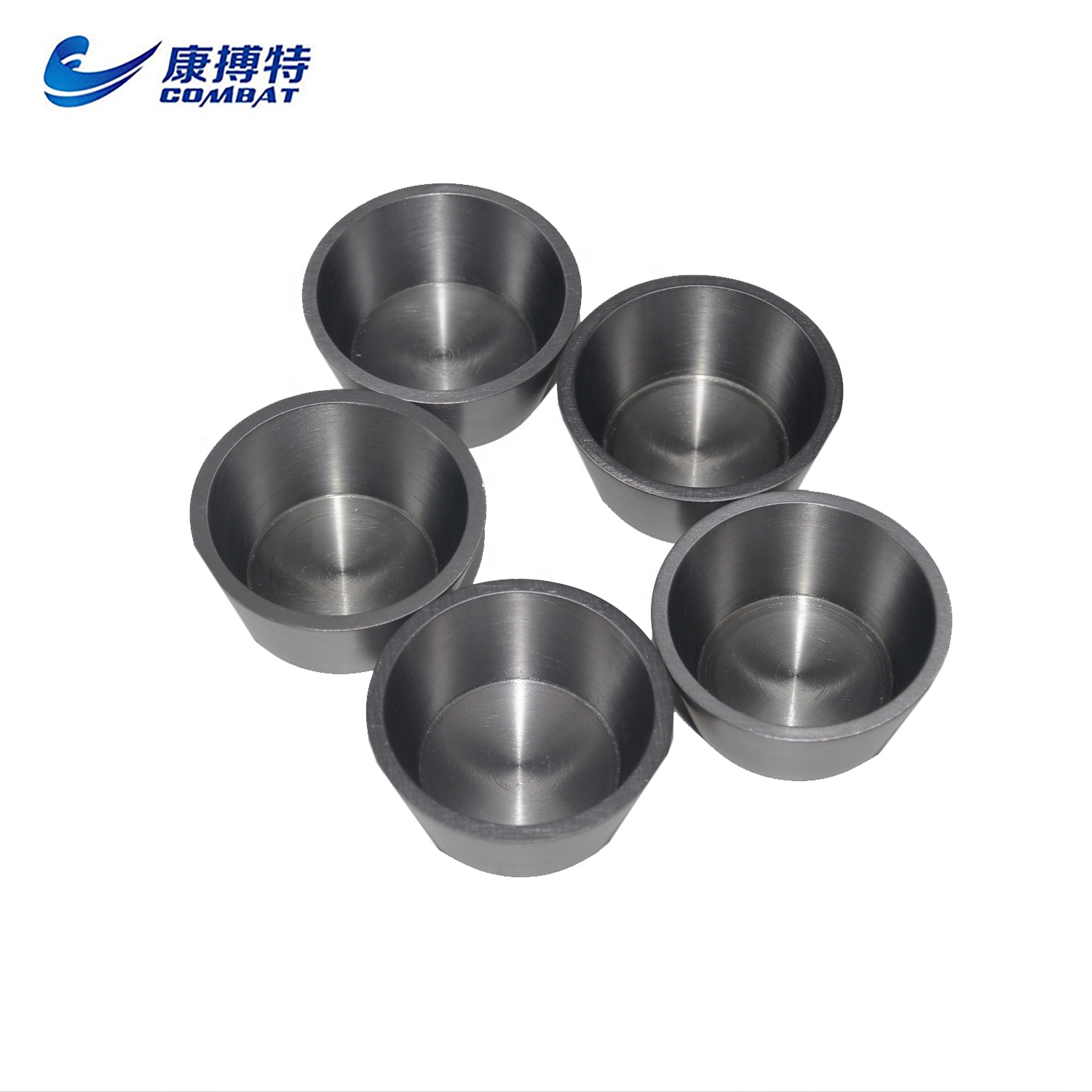
The quality of a tungsten crucible directly determines its performance in high-temperature applications, metallurgical processes, and demanding industrial environments. Understanding the manufacturing processes that affect tungsten crucible quality is essential for procurement professionals, material engineers, and production managers who rely on these precision vessels for critical operations. A tungsten crucible must withstand extreme temperatures, corrosive molten materials, and rapid thermal cycling without degradation, making the manufacturing process fundamentally important to overall performance and longevity.

Manufacturing a tungsten crucible involves multiple precision stages, each contributing to the final product's reliability and durability. The processes employed during fabrication directly influence material density, structural integrity, thermal conductivity, and resistance to chemical attack. Quality issues often stem not from raw material deficiency but from inadequate processing techniques, inconsistent quality control, and suboptimal manufacturing workflows that compromise the tungsten crucible's functional properties.
Material Selection and Raw Material Preparation
Tungsten Powder Quality Standards
The foundation of any high-quality tungsten crucible begins with rigorous material selection. Raw tungsten powder must meet strict purity specifications, typically exceeding 99.9% purity, to ensure that the finished tungsten crucible performs reliably under extreme conditions. Particle size distribution is equally critical; inconsistent particle sizes within the tungsten crucible manufacturing batch lead to uneven sintering, porosity formation, and weak structural zones. Manufacturers who invest in premium tungsten feedstock and employ particle classification processes produce superior tungsten crucible products with enhanced density and reduced defect rates.
Contaminant Control During Preparation
Before sintering, tungsten powder undergoes careful preparation to eliminate moisture, oxygen, and foreign materials that would degrade the tungsten crucible. Vacuum drying and inert atmosphere handling prevent oxidation of tungsten powder particles, which would create weak oxide phases within the finished tungsten crucible. The cleanliness of preparation facilities and the precision of handling procedures directly affect the chemical composition and mechanical properties of each tungsten crucible produced. Any contamination introduces weaknesses that compromise performance in molten metal environments.
Sintering and Densification Techniques
Temperature Control and Sintering Profiles
The sintering process is where the tungsten crucible takes its final form and acquires its mechanical strength. Temperature control during sintering dramatically affects tungsten crucible density, grain structure, and thermal conductivity. Precise temperature ramping, hold times at specific temperature plateaus, and controlled cooling rates determine whether the tungsten crucible achieves optimal densification or develops internal voids and weak grain boundaries. Manufacturers using advanced furnace systems with real-time temperature monitoring produce tungsten crucible products with superior consistency compared to facilities relying on basic equipment.
Pressure Application and Compaction Methods
Hot isostatic pressing (HIP) and pressure sintering techniques enhance tungsten crucible quality by reducing residual porosity and eliminating internal voids. These high-pressure processes force tungsten crucible particles into tighter contact, creating denser microstructures that resist thermal shock and chemical attack more effectively. Cold isostatic pressing before sintering also improves green density, meaning the tungsten crucible compact holds together better and sinters more uniformly. The investment in pressure-assisted manufacturing techniques distinguishes premium tungsten crucible suppliers from budget manufacturers who rely on passive sintering alone.
Finishing and Quality Assurance Processes
Machining, Polishing, and Surface Treatment
After sintering, each tungsten crucible undergoes precision machining to achieve exact dimensional tolerances and uniform wall thickness. Careful machining prevents stress concentration points that would promote cracking during thermal cycling. Polishing the interior surfaces of the tungsten crucible reduces surface irregularities that can trigger oxidation or react with molten materials. Some advanced tungsten crucible manufacturers apply protective coatings or surface treatments that enhance chemical resistance and extend service life in corrosive environments, further optimizing tungsten crucible performance beyond baseline specifications.
Non-Destructive Testing and Inspection Standards
Rigorous quality control ensures every tungsten crucible meets published specifications before shipment. Ultrasonic testing, X-ray imaging, and thermal conductivity measurement identify internal defects, porosity levels, and material consistency within each tungsten crucible batch. Dimensional verification with precision gauges confirms that the tungsten crucible maintains required tolerances for reliable performance in client applications. Facilities implementing comprehensive inspection protocols for every tungsten crucible unit deliver products with predictable performance and minimal field failures, building customer trust and reducing operational disruptions.
Environmental and Process Consistency Factors
Humidity, Atmosphere, and Ambient Conditions
Manufacturing environment conditions significantly impact tungsten crucible quality during all production stages. Humidity control prevents moisture absorption into tungsten powder, which would cause oxidation during sintering and compromise the tungsten crucible's structural integrity. Inert atmosphere furnaces protect tungsten crucible components from oxygen exposure that would create brittle tungsten oxide phases. Temperature-controlled manufacturing facilities ensure that thermal expansion coefficients remain consistent, preventing dimensional drift in the finished tungsten crucible and enabling precise tolerance compliance.
Batch Consistency and Traceability Systems
Manufacturers maintaining detailed records of raw material sourcing, process parameters, and test results for each tungsten crucible production run enable traceability and process optimization. Identifying variations in tungsten crucible quality and correlating them to specific processing conditions allows continuous improvement and defect prevention. Advanced quality management systems track every tungsten crucible from raw powder through final inspection, creating an audit trail that supports compliance requirements and facilitates root-cause analysis if performance issues occur in the field.
FAQ
How does powder particle size affect tungsten crucible density?
Inconsistent particle sizes in tungsten powder create voids and weak packing during sintering, resulting in lower density in the finished tungsten crucible. Uniform particle size distribution allows tighter particle packing and more efficient sintering, producing a denser tungsten crucible with better mechanical strength and thermal conductivity. Manufacturers employing particle classification ensure that each tungsten crucible batch achieves consistent density and superior performance.
Can surface treatments extend tungsten crucible service life?
Yes, protective surface treatments applied to a tungsten crucible can enhance resistance to chemical attack and oxidation, extending service life in corrosive environments. Coatings on the tungsten crucible interior may prevent reactions between the crucible material and specific molten metals or reactive substances. While not universally necessary, surface-treated tungsten crucible products offer distinct advantages for specialized high-corrosion applications where standard tungsten crucible performance would be insufficient.
What role does atmosphere control play in tungsten crucible manufacturing?
Atmosphere control during sintering prevents oxidation of the tungsten crucible and maintains the purity necessary for optimal mechanical properties. Inert or reducing atmospheres protect tungsten from forming brittle oxides, ensuring the finished tungsten crucible retains maximum ductility and strength. Poor atmosphere management during production results in contaminated, brittle tungsten crucible products prone to cracking under thermal stress.