Premium Tantalum Foil - Corrosion Resistant Metal for Industrial & Medical Applications

Get a Free Quote

Our representative will contact you soon.
Email
Name
Country/Region
Mobile/WhatsApp
Product Name
Message
0/1000

tantalum foil

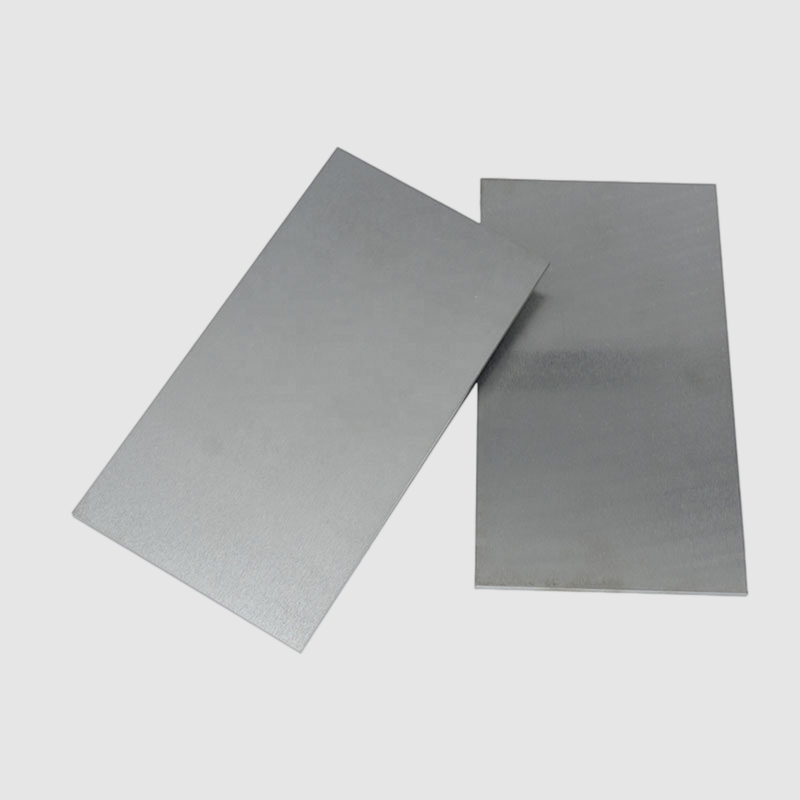
Tantalum foil represents a specialized metal product manufactured from high-purity tantalum, offering exceptional performance characteristics that make it indispensable across multiple industrial sectors. This thin, flexible material combines remarkable corrosion resistance with outstanding thermal stability, positioning it as a critical component in demanding applications where conventional metals fail to deliver adequate performance. The manufacturing process involves rolling tantalum metal to precise thicknesses, typically ranging from 0.025mm to 0.5mm, creating a product that maintains structural integrity while providing flexibility for various fabrication requirements. Tantalum foil exhibits extraordinary resistance to chemical attack, remaining stable when exposed to most acids, including hydrochloric, sulfuric, and nitric acids at elevated temperatures. This chemical inertness stems from the formation of a protective oxide layer that regenerates automatically when damaged, ensuring long-term reliability in corrosive environments. The material demonstrates excellent biocompatibility, making it suitable for medical implants and surgical instruments where tissue compatibility is paramount. Its high melting point of 3017 degrees Celsius enables tantalum foil to function effectively in extreme temperature applications, from cryogenic conditions to high-heat industrial processes. The foil maintains dimensional stability across wide temperature ranges, preventing warping or degradation that compromises performance in precision applications. Electrical properties of tantalum foil include low resistivity and stable conductivity, supporting its use in electronic components and capacitor manufacturing. The material can be easily formed, welded, and machined using standard metalworking techniques, facilitating integration into complex assemblies and custom configurations. Tantalum foil serves critical functions in chemical processing equipment, where it provides corrosion barriers and reaction vessel linings that extend equipment lifespan significantly. The aerospace industry relies on tantalum foil for rocket nozzles, heat shields, and other components requiring exceptional heat resistance combined with minimal weight. Medical device manufacturers incorporate tantalum foil into pacemaker cases, bone repair plates, and surgical mesh products, leveraging its biocompatibility and radiopacity for improved patient outcomes and diagnostic imaging capabilities.

New Products

Choosing tantalum foil delivers substantial practical benefits that directly impact operational efficiency, cost management, and product performance across diverse applications. The primary advantage lies in its unmatched corrosion resistance, which eliminates the need for protective coatings or frequent replacements that burden maintenance budgets and cause production downtime. Equipment lined with tantalum foil operates reliably for decades in aggressive chemical environments, reducing total cost of ownership while maintaining consistent process quality. This longevity translates to predictable maintenance schedules and reduced inventory requirements for spare parts, streamlining operations and improving financial planning. The material's exceptional purity, typically exceeding 99.95 percent, ensures contamination-free processing in pharmaceutical manufacturing, semiconductor fabrication, and food production where product purity directly affects quality and regulatory compliance. Tantalum foil enables manufacturers to meet stringent industry standards without implementing complex contamination control measures that increase operational complexity. Its biocompatibility advantage eliminates rejection risks in medical applications, reducing patient complications and improving surgical success rates while simplifying regulatory approval processes for medical device manufacturers. The material's radiopacity provides clear visibility in X-ray and CT imaging, helping surgeons verify implant placement without additional imaging agents or procedures. Thermal stability advantages allow tantalum foil to maintain mechanical properties and dimensional accuracy at temperatures where alternative materials soften, oxidize, or fail completely, enabling process optimization and expanded operating parameters. This temperature resilience supports higher throughput in chemical reactors and more efficient heat transfer in thermal management applications. The foil's formability advantage simplifies manufacturing processes, allowing fabricators to create complex geometries through standard forming operations without specialized equipment or extensive tooling investments. Welding and joining procedures for tantalum foil use conventional techniques, reducing training requirements and enabling repairs in the field without returning components to specialized facilities. Weight advantages become critical in aerospace applications where every gram affects fuel efficiency and payload capacity, with tantalum foil providing necessary protection without the mass penalties associated with thicker materials or heavier alloys. The material's electrical properties support miniaturization in electronic devices, enabling smaller capacitors with higher capacitance values that drive innovation in portable electronics and medical devices. Environmental advantages include complete recyclability, allowing manufacturers to recover and reuse tantalum foil at end-of-life, reducing raw material costs and supporting sustainability initiatives. The absence of toxic degradation products means tantalum foil poses no environmental hazards during use or disposal, simplifying waste management and reducing regulatory compliance burdens. Supply chain advantages stem from tantalum's stability during storage and transportation, with no special handling requirements or degradation concerns that complicate logistics for reactive materials.

Practical Tips

Gathering in Luoyang for Tungsten & Molybdenum, Uniting Hearts to Forge a New Dream Forward​

24

Apr

Gathering in Luoyang for Tungsten & Molybdenum, Uniting Hearts to Forge a New Dream Forward​

View More
Indian Delegation Visits Youbo, Signs Molybdenum Bar and Tungsten Alloy Procurement Agreement​​

24

Apr

Indian Delegation Visits Youbo, Signs Molybdenum Bar and Tungsten Alloy Procurement Agreement​​

View More
The Grand Opening Of The 2025 China International Powder Metallurgy, Hard Alloy And Advanced Ceramics Exhibition

24

Apr

The Grand Opening Of The 2025 China International Powder Metallurgy, Hard Alloy And Advanced Ceramics Exhibition

View More
Luoyang Combat Tungsten & Molybdenum Materials Co., Ltd. Shines at Asia Ferroalloys 2025 Conference to Forge Global Collaboration Opportunities

24

Apr

Luoyang Combat Tungsten & Molybdenum Materials Co., Ltd. Shines at Asia Ferroalloys 2025 Conference to Forge Global Collaboration Opportunities

View More

Get a Free Quote

Our representative will contact you soon.
Email
Name
Country/Region
Mobile/WhatsApp
Product Name
Message
0/1000

tantalum foil

Superior Corrosion Resistance for Extended Equipment Life

Superior Corrosion Resistance for Extended Equipment Life

Tantalum foil delivers unparalleled corrosion resistance that fundamentally transforms equipment reliability and operational economics in chemical processing, pharmaceutical manufacturing, and industrial applications. The material resists attack from virtually all acids, alkalis, and organic compounds at concentrations and temperatures that rapidly destroy stainless steel, titanium, and other conventional materials. This resistance originates from tantalum's ability to form a dense, adherent oxide layer that self-heals when scratched or damaged, providing continuous protection without degradation over time. Chemical processors using tantalum foil linings in reactors, heat exchangers, and storage vessels eliminate corrosion-related failures that cause unplanned shutdowns, product contamination, and safety incidents. The economic impact proves substantial, with equipment lifespans extending from years to decades, dramatically reducing capital expenditure cycles and improving return on investment. Maintenance teams benefit from predictable inspection schedules rather than reactive repairs, allowing better resource allocation and reduced overtime costs. The corrosion resistance of tantalum foil remains effective across extreme pH ranges, from concentrated sulfuric acid to strong caustic solutions, providing design flexibility for multi-product facilities that process diverse chemical streams. Temperature effects that accelerate corrosion in other materials have minimal impact on tantalum foil, enabling higher process temperatures that improve reaction kinetics and production rates. Pharmaceutical manufacturers particularly value this corrosion resistance because it prevents metallic contamination that compromises product purity and triggers costly batch rejections. Regulatory compliance becomes simpler when tantalum foil eliminates corrosion products from process streams, reducing analytical testing requirements and documentation burdens. The material's stability in chloride-containing environments addresses a critical weakness in stainless steels, which suffer pitting and stress corrosion cracking that leads to catastrophic failures. Tantalum foil maintains smooth surfaces that resist fouling and facilitate cleaning, reducing downtime for maintenance and improving overall equipment effectiveness. This corrosion resistance extends to biological environments, where tantalum foil resists degradation from bodily fluids, tissue contact, and sterilization procedures, making it ideal for long-term medical implants that must function reliably for patient lifetimes without revision surgeries.
Exceptional Thermal Stability for High-Performance Applications

Exceptional Thermal Stability for High-Performance Applications

The thermal stability of tantalum foil enables performance in extreme temperature environments where conventional materials fail, opening possibilities for process intensification, efficiency improvements, and innovative product designs. With a melting point exceeding 3000 degrees Celsius, tantalum foil maintains structural integrity and mechanical properties at temperatures that cause other metals to soften, oxidize, or melt completely. This stability proves essential in aerospace applications where rocket nozzles and heat shields encounter temperatures exceeding 2000 degrees Celsius during operation, requiring materials that withstand thermal stress without degradation. The foil's low thermal expansion coefficient minimizes dimensional changes during heating and cooling cycles, preventing warping and maintaining tight tolerances in precision assemblies. Chemical processors leverage this thermal stability to operate reactors at elevated temperatures that accelerate reaction rates and improve yields, directly enhancing productivity and profitability. The material resists oxidation at high temperatures, unlike many refractory metals that form loose oxide scales requiring protective atmospheres or coatings. Tantalum foil functions effectively in vacuum environments at extreme temperatures, supporting applications in vacuum furnaces, electron beam welding, and semiconductor processing equipment. Thermal cycling resistance prevents fatigue failures that plague materials experiencing repeated heating and cooling, extending component life in applications with frequent temperature fluctuations. The foil's thermal conductivity, while lower than copper or aluminum, remains stable across temperature ranges, providing predictable heat transfer characteristics for thermal management designs. Cryogenic applications benefit from tantalum foil's retention of ductility at extremely low temperatures, avoiding the brittle fracture that affects many metals in liquid nitrogen or liquid helium environments. This temperature versatility allows single material solutions across wide operating ranges, simplifying inventory management and reducing design complexity. Electronics manufacturers use tantalum foil in high-temperature capacitors that function reliably in automotive underhood environments and industrial control systems where ambient temperatures exceed limits for conventional components. The material's thermal stability supports lead-free soldering processes that require higher temperatures than traditional tin-lead solders, facilitating compliance with environmental regulations. Furnace builders incorporate tantalum foil into heating elements and thermal barriers that withstand continuous high-temperature operation without degradation, reducing maintenance requirements and improving process consistency.
Outstanding Biocompatibility for Medical Device Innovation

Outstanding Biocompatibility for Medical Device Innovation

Tantalum foil's exceptional biocompatibility positions it as a premier material for medical implants and surgical devices, offering unique advantages that improve patient outcomes while simplifying regulatory pathways for medical device manufacturers. The material exhibits no cytotoxic effects, allowing direct tissue contact without inflammatory responses or rejection reactions that compromise healing and require immunosuppressive medications. Bone tissue readily integrates with tantalum foil surfaces through osseointegration, creating strong mechanical bonds that stabilize implants and eliminate loosening problems associated with other implant materials. Orthopedic surgeons use tantalum foil in bone repair applications where its porous structure, when appropriately processed, encourages bone ingrowth and accelerates healing compared to solid metal implants. The material's radiopacity provides excellent visibility in X-ray, CT, and fluoroscopic imaging, allowing surgeons to verify implant positioning during procedures and monitor integration during follow-up examinations without additional contrast agents. Cardiovascular applications benefit from tantalum foil's compatibility with blood contact, with no thrombogenic effects that trigger clot formation or require aggressive anticoagulation therapy. Pacemaker manufacturers incorporate tantalum foil into device housings that protect sensitive electronics while maintaining biocompatibility for decades of implantation without adverse tissue reactions. The material's corrosion resistance in physiological environments ensures stable performance despite exposure to chloride-rich bodily fluids, proteins, and cellular activity that corrode less stable metals. Sterilization compatibility allows tantalum foil devices to undergo repeated autoclaving, gamma irradiation, or ethylene oxide treatment without material degradation, supporting reusable surgical instruments and multi-use medical equipment. Magnetic resonance imaging compatibility eliminates artifacts that obscure diagnostic images when patients with tantalum foil implants undergo MRI scans, unlike ferromagnetic materials that create dangerous heating or image distortion. Dental applications leverage tantalum foil's biocompatibility for bone augmentation procedures and implant components that integrate with jaw bone while resisting oral bacteria and acidic conditions. The material's flexibility allows fabrication of custom implant shapes that conform to individual patient anatomy, improving surgical outcomes and reducing procedure times. Regulatory advantages stem from tantalum's long history of safe medical use, with extensive biocompatibility data supporting faster approval processes compared to novel materials requiring comprehensive testing. Manufacturers benefit from reduced liability risks associated with biocompatible materials that demonstrate consistent safety profiles across diverse patient populations and extended implantation periods.

Get a Free Quote

Our representative will contact you soon.
Email
Name
Country/Region
Mobile/WhatsApp
Product Name
Message
0/1000